


The Care Robot assessment helps UK care homes evaluate whether care robots are suitable for their environment, residents, and staff by exploring key areas such as staffing challenges, resident interaction needs, daily task support requirements, and overall technology readiness.
We’re moving beyond reactive maintenance to a more intelligent, preventative approach — designed to keep robots working reliably, reduce downtime, and remove uncertainty.
This isn’t theoretical support. It’s shaped by hands-on experience deploying, maintaining, and supporting robots in live environments — where reliability actually matters.
By registering your interest, you’ll be first to access this new robot care model, receive early insights, and have priority as we roll it out.
Frequently Asked Questions (FAQ)
Care robots in the UK typically range from £5,000 to £40,000, depending on the type of robot, functionality, and level of autonomy. Simple social or telepresence robots are at the lower end, while advanced service or mobile assistance robots cost more. Many suppliers also offer rental, leasing, or subscription models, which reduce upfront costs and include support and updates. Total cost should also consider training, integration, and ongoing maintenance. For most care homes, the right robot is selected based on use case and return on impact, rather than price alone.
Yes, care robots used in the UK are designed with resident safety as a priority. They include features such as obstacle avoidance, low-speed movement, emergency stop functions, and compliance with UK and EU safety standards. Care robots do not perform medical procedures and are not physically invasive. When properly deployed, they operate under staff supervision and within clearly defined roles. Safety also depends on correct assessment, setup, and staff training, ensuring the robot fits the care environment and resident needs without causing distress or disruption.
No, care robots are designed to support carers, not replace them. Their role is to assist with repetitive tasks, provide information, encourage engagement, or offer companionship, allowing human carers to focus on personal, emotional, and clinical care. Robots help reduce workload pressure and staff burnout rather than removing jobs. In practice, care homes that use robots often find they improve care quality and staff satisfaction by freeing time for meaningful human interaction instead of routine or administrative tasks.
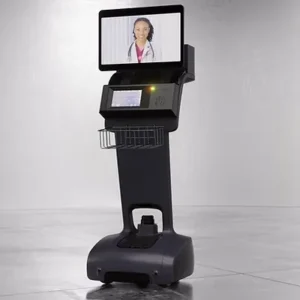
The UK market offers several types of care robots, including social companion robots, telepresence robots, service robots, and information or guidance robots. Some focus on resident engagement and wellbeing, while others support staff by delivering items, sharing information, or assisting with communication. Availability depends on supplier partnerships, UK compliance, and support infrastructure. Not all robots are suitable for every care home, which is why selection should be based on environment, resident profile, and operational needs, rather than choosing the most advanced option.
Choosing the right care robot starts with understanding your specific challenges and goals. This includes staffing pressures, resident needs, daily tasks, and your care home’s technology readiness. A structured assessment helps identify where a robot will add genuine value rather than create complexity. The right choice balances functionality, ease of use, safety, and support availability in the UK. It is often better to start with a focused, practical robot that solves one problem well, then expand as confidence and experience grow.