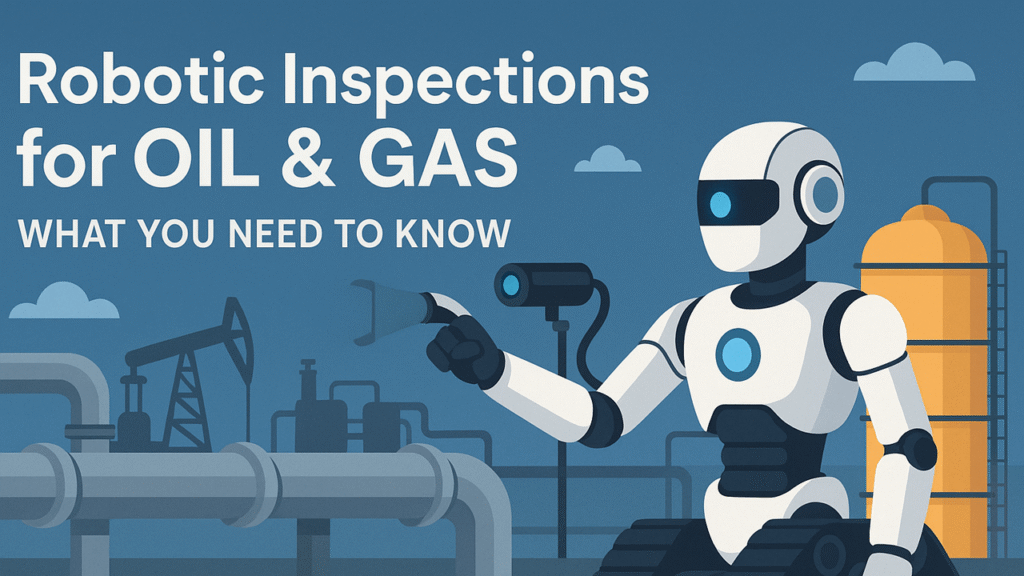
Robotic Inspections for Oil & Gas: What You Need to Know
The oil and gas industry operates in some of the world’s most challenging environments, where safety, efficiency, and regulatory compliance are paramount. Traditional inspection methods often expose workers to dangerous conditions, require costly shutdowns, and struggle to reach critical infrastructure components. Enter robotic inspections – a transformative technology that’s revolutionizing how energy companies monitor, maintain, and protect their assets.
The Evolution of Industrial Inspections
For decades, the oil and gas sector has relied on manual inspections, rope access technicians, and basic monitoring systems to assess equipment integrity. While these methods served their purpose, they came with significant limitations: human risk exposure, accessibility challenges, time constraints, and inconsistent data quality. The industry needed a solution that could deliver comprehensive, reliable inspections while keeping personnel safe and operations running smoothly.
Robotic inspection technology has emerged as that solution, offering unprecedented capabilities in asset monitoring and condition assessment. These sophisticated systems combine advanced sensors, artificial intelligence, and autonomous navigation to perform detailed inspections in environments that would be impossible or extremely hazardous for human inspectors.
Types of Robotic Inspection Systems
The diversity of robotic inspection platforms reflects the varied challenges faced across oil and gas operations. Aerial drones have become increasingly popular for external facility inspections, pipeline surveys, and flare stack monitoring. These unmanned aerial vehicles can cover vast areas quickly, capturing high-resolution imagery and thermal data while maintaining safe distances from potentially dangerous equipment.
Crawler robots excel in confined spaces and pipeline inspections. These ground-based systems can navigate through pipes, tanks, and other enclosed structures, providing detailed internal assessments without requiring human entry. Their ability to operate in hazardous atmospheres makes them invaluable for inspecting areas with toxic gases or explosive vapors.
Underwater remotely operated vehicles (ROVs) serve the offshore sector, performing subsea pipeline inspections, platform foundation assessments, and marine environment monitoring. These systems can operate at depths and in conditions that would be impossible for human divers, providing critical data on underwater infrastructure integrity.
Climbing robots represent a specialized category designed for vertical inspections of storage tanks, drilling rigs, and processing towers. These systems can ascend and navigate complex geometric structures while carrying sophisticated sensor payloads for comprehensive condition monitoring.
Key Technologies and Capabilities
Modern robotic inspection systems integrate multiple advanced technologies to deliver comprehensive asset assessments. Computer vision and machine learning algorithms enable real-time defect detection and classification, identifying issues such as corrosion, cracks, leaks, and structural anomalies with remarkable accuracy. These systems continuously improve their detection capabilities through exposure to diverse inspection scenarios.
Multi-sensor integration allows robots to simultaneously collect visual, thermal, acoustic, and chemical data during inspections. This comprehensive approach provides a more complete picture of asset condition than any single inspection method could achieve. Advanced sensors can detect gas leaks, temperature variations, structural vibrations, and material degradation indicators.
Autonomous navigation systems enable robots to operate independently in complex environments, following predetermined inspection routes while adapting to unexpected obstacles or changing conditions. GPS, LiDAR, and sophisticated mapping algorithms ensure precise positioning and comprehensive coverage of inspection areas.
Real-time data transmission capabilities allow inspection results to be immediately available to engineering teams and decision-makers. This instant access to critical information enables rapid response to identified issues and supports proactive maintenance strategies.
Industry Applications and Use Cases
The versatility of robotic inspection systems has led to widespread adoption across various oil and gas operations. Pipeline integrity management represents one of the most significant applications, with robots capable of detecting corrosion, third-party damage, and potential failure points along thousands of miles of infrastructure. These inspections can be performed without service interruption, maintaining continuous energy supply while ensuring safety and compliance.
Refinery inspections benefit enormously from robotic systems, particularly in high-temperature, high-pressure, and chemically aggressive environments. Robots can inspect reactor vessels, distillation columns, heat exchangers, and piping systems without requiring plant shutdowns, saving millions in lost production while maintaining thorough safety oversight.
Offshore platform monitoring utilizes both aerial and marine robotic systems to assess topside equipment, underwater foundations, and subsea connections. These inspections are critical for preventing catastrophic failures in harsh marine environments where human access is limited and weather conditions can be unpredictable.
Storage tank inspections have been transformed by climbing robots that can assess both internal and external conditions without requiring tank emptying or extensive scaffolding. This capability significantly reduces inspection costs and environmental impact while providing more comprehensive data than traditional methods.
Benefits and ROI
The adoption of robotic inspection technology delivers substantial returns on investment across multiple dimensions. Safety improvements represent the most significant benefit, with dramatic reductions in worker exposure to hazardous environments, high-altitude work, and confined space entry. This enhanced safety profile not only protects human lives but also reduces insurance costs and regulatory liabilities.
Operational efficiency gains come from the ability to perform inspections without shutting down production systems. Traditional inspections often require costly plant shutdowns, equipment isolation, and extensive preparation time. Robotic systems can operate during normal production, eliminating these disruptions and maintaining revenue streams.
Data quality and consistency improvements enable better maintenance decision-making and more accurate condition assessments. Robotic systems provide standardized, repeatable inspections with detailed documentation and quantitative measurements. This consistency supports more effective asset management strategies and helps optimize maintenance schedules.
Cost reduction occurs through decreased labor requirements, reduced inspection frequency needs, and prevention of major equipment failures. While initial robotic system investments may be significant, the long-term savings from improved efficiency and prevented incidents typically provide attractive returns within 12-24 months.
Implementation Challenges and Solutions
Successfully deploying robotic inspection systems requires careful consideration of several key factors. Regulatory compliance remains a primary concern, as oil and gas operations are subject to strict safety and environmental regulations. Robotic systems must be designed and operated to meet industry standards such as ATEX certification for explosive atmospheres and API specifications for oil and gas equipment.
Integration with existing systems can present technical challenges, particularly in older facilities with legacy infrastructure. Successful implementations require careful planning to ensure robotic systems can interface with existing control systems, data management platforms, and maintenance workflows.
Personnel training and change management are critical success factors often overlooked during initial planning. Operations teams need comprehensive training on robotic system operation, data interpretation, and maintenance procedures. Organizations must also address cultural resistance to new technologies and demonstrate clear value propositions to ensure adoption.
Data management and analysis capabilities must be developed to handle the substantial volumes of information generated by robotic inspections. Advanced analytics platforms, cloud storage solutions, and automated reporting systems are essential for transforming raw inspection data into actionable insights.
Future Trends and Developments
The robotic inspection landscape continues evolving rapidly, with several emerging trends promising even greater capabilities and value. Artificial intelligence advancement is enabling more sophisticated defect detection, predictive maintenance capabilities, and autonomous decision-making. Future systems will likely predict equipment failures before they occur, enabling truly proactive maintenance strategies.
Swarm robotics concepts are being explored for large-scale inspections, where multiple coordinated robots work together to assess complex facilities simultaneously. This approach could dramatically reduce inspection times while providing more comprehensive coverage than single-robot systems.
Digital twin integration represents another frontier, where robotic inspection data feeds directly into virtual facility models, enabling real-time condition monitoring and scenario modeling. This integration will support more sophisticated asset management strategies and operational optimization.
Enhanced sensor technologies continue advancing, with new capabilities in chemical detection, material analysis, and structural health monitoring. Future robotic systems will likely provide even more detailed condition assessments and identify issues that current technologies cannot detect.
Making the Business Case
Building a compelling business case for robotic inspection technology requires comprehensive analysis of current inspection costs, safety risks, and operational impacts. Organizations should evaluate direct costs including labor, equipment, and downtime expenses, as well as indirect costs such as insurance premiums, regulatory compliance efforts, and potential incident impacts.
The value proposition extends beyond simple cost reduction to include strategic advantages such as competitive differentiation, enhanced safety reputation, and improved regulatory relationships. Companies that adopt advanced inspection technologies often find themselves better positioned for future industry challenges and regulatory requirements.
Return on investment calculations should consider both quantifiable benefits like reduced inspection costs and qualitative advantages such as improved safety culture and enhanced operational visibility. Most organizations find that comprehensive ROI analysis strongly supports robotic inspection adoption, particularly when long-term operational benefits are included.
Getting Started with Robotic Inspections
Implementing robotic inspection technology requires careful planning and expert guidance to ensure success. The complexity of modern oil and gas operations demands specialized knowledge in both robotics technology and industry-specific applications. Organizations need partners who understand the unique challenges of energy sector operations and can provide comprehensive support throughout the implementation process.
Professional consulting services can help organizations assess their specific inspection needs, evaluate available technologies, and develop implementation strategies tailored to their operational requirements. These services should include technology assessment, vendor evaluation, pilot program design, and full-scale deployment planning.
Skilled personnel recruitment becomes critical as organizations build internal capabilities for robotic inspection operations. The intersection of robotics expertise and oil and gas industry knowledge represents a specialized skill set that requires careful recruitment and development strategies.
For organizations ready to explore robotic inspection opportunities, expert guidance can make the difference between successful implementation and costly mistakes. The rapidly evolving technology landscape requires current industry knowledge and practical implementation experience.
Ready to Transform Your Inspection Operations?
The future of oil and gas inspections is robotic, and the time to begin your transformation is now. Whether you’re evaluating initial implementation strategies or looking to expand existing robotic capabilities, expert guidance ensures optimal results and maximum return on investment.
Contact our robotics consulting specialists to discuss your specific inspection challenges and explore tailored solutions for your operations. Our team combines deep industry knowledge with cutting-edge robotics expertise to deliver implementation strategies that work.
Phone: 0845 528 0404
Email: sales@robotcenter.co.uk
Book a consultation call to discover how robotic inspections can enhance your operational safety, efficiency, and profitability. Our experts are ready to help you navigate the technology landscape and develop implementation strategies perfectly suited to your organization’s needs.
Article Sponsors
This article is proudly sponsored by leading robotics specialists serving the oil and gas industry:
Robot Center – Your comprehensive source for robot procurement, robotics consultancy, and expert guidance on robotic system implementation. Specializing in helping organizations buy robots and develop effective robotics strategies.
Robots of London – Premier robot hire and rental services for inspection projects, events, and temporary deployments. Whether you need short-term robot rental or want to evaluate systems before purchase, Robots of London provides flexible solutions.
Robot Philosophy – Expert robot consultancy and recruitment services connecting organizations with robotics talent and strategic insights. Specializing in robot recruitment, advisory services, and innovative robotics concepts for industrial applications.