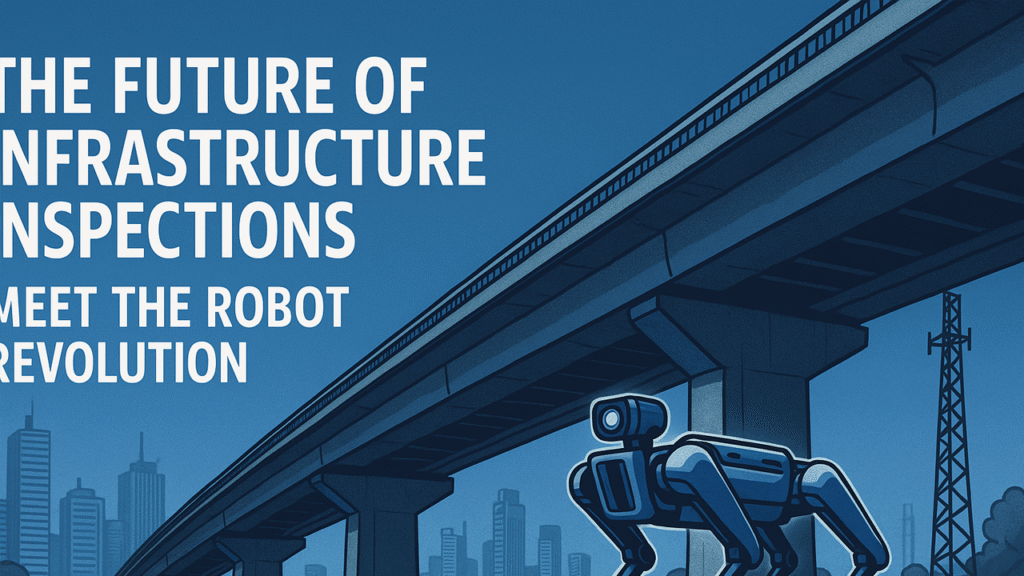
The Future of Infrastructure Inspections – Meet the Robot Revolution
Infrastructure maintenance has long been one of society’s most critical yet challenging endeavors. From towering bridges and sprawling highway networks to underground pipelines and electrical grids, the sheer scale and complexity of modern infrastructure demands innovative solutions for effective monitoring and maintenance. Traditional inspection methods, while reliable, are increasingly proving insufficient for the demands of our interconnected world.
The solution? A robotic revolution that’s transforming how we approach infrastructure inspections, making them safer, more efficient, and dramatically more cost-effective.
The Challenge of Traditional Infrastructure Inspections
Infrastructure inspection has historically relied on human inspectors equipped with basic tools, often requiring them to work in dangerous conditions. Bridge inspectors rappelling from heights, pipeline technicians entering confined spaces, and utility workers climbing transmission towers all face significant safety risks. These traditional methods also suffer from several limitations:
Human Error and Inconsistency: Manual inspections are subject to human fatigue, varying expertise levels, and subjective interpretation of damage or wear. What one inspector might classify as minor wear, another might categorize as requiring immediate attention.
Access Limitations: Many infrastructure components are located in hazardous or hard-to-reach areas. Underwater bridge supports, high-voltage power lines, and deep pipeline systems often require specialized equipment and create safety concerns that can limit inspection thoroughness.
Time and Cost Constraints: Traditional inspections are labor-intensive and time-consuming. A comprehensive bridge inspection might take weeks to complete, during which traffic disruptions and safety concerns persist. The costs associated with mobilizing inspection teams, equipment, and ensuring safety measures can be substantial.
Limited Data Collection: Human inspectors typically rely on visual assessment and basic measurement tools, potentially missing early signs of structural issues that could be detected through advanced sensors or imaging technology.
Enter the Robot Revolution
Robotic technology is fundamentally changing infrastructure inspection paradigms. Modern inspection robots combine advanced sensors, artificial intelligence, and autonomous navigation capabilities to deliver unprecedented inspection capabilities. These systems can operate in environments too dangerous for humans while collecting vastly more detailed data than traditional methods allow.
Autonomous Inspection Drones: Unmanned aerial vehicles equipped with high-resolution cameras, thermal imaging sensors, and LiDAR technology can thoroughly inspect bridge structures, power lines, and building facades. These drones can navigate complex geometries, capture detailed imagery from multiple angles, and identify potential issues that might be missed by ground-based inspectors.
Crawling and Climbing Robots: Specialized robots designed to traverse pipe interiors, climb tower structures, or navigate confined spaces can access areas previously requiring significant safety measures or remaining uninspected altogether. These robots can carry various sensors to detect corrosion, measure wall thickness, or identify structural anomalies.
Underwater Inspection Vehicles: Remotely operated underwater vehicles equipped with sonar, cameras, and manipulator arms can inspect bridge foundations, pipeline crossings, and marine infrastructure without requiring human divers to enter potentially dangerous underwater environments.
AI-Powered Analysis: Perhaps most importantly, modern inspection robots incorporate artificial intelligence systems that can analyze collected data in real-time, identifying patterns and anomalies that indicate developing problems. Machine learning algorithms trained on vast datasets of infrastructure conditions can spot early warning signs that human inspectors might overlook.
Transformative Benefits of Robotic Inspections
The adoption of robotic inspection technology delivers compelling advantages across multiple dimensions:
Enhanced Safety: Robots eliminate human exposure to hazardous environments. No longer do inspectors need to work at dangerous heights, in confined spaces, or near high-voltage equipment. This dramatic reduction in safety risks protects workers while ensuring inspections can proceed without safety-related delays or limitations.
Improved Accuracy and Consistency: Robotic systems equipped with calibrated sensors provide consistent, objective measurements. AI analysis systems apply the same criteria across all inspections, eliminating subjective interpretation variations. This consistency enables more reliable condition assessments and better-informed maintenance decisions.
Comprehensive Data Collection: Modern inspection robots collect far more data than traditional methods. High-resolution imagery, thermal profiles, vibration measurements, and material composition analysis provide detailed infrastructure condition pictures. This comprehensive data supports both immediate assessment and long-term trend analysis.
Cost Efficiency: While initial robotic system investments may be substantial, the long-term cost benefits are significant. Robotic inspections typically require smaller crews, reduce inspection time, minimize traffic disruptions, and enable more frequent monitoring that can prevent costly emergency repairs.
Predictive Maintenance Capabilities: The detailed data collected by robotic systems enables sophisticated predictive maintenance programs. By tracking condition changes over time, infrastructure managers can schedule maintenance activities proactively, extending asset lifespans and preventing unexpected failures.
Real-World Applications and Success Stories
Robotic inspection technology is already delivering impressive results across various infrastructure sectors:
Transportation Infrastructure: Highway departments are using drone swarms to inspect bridge structures, identifying maintenance needs more quickly and safely than traditional methods. Some systems can complete comprehensive bridge inspections in hours rather than weeks, with minimal traffic impact.
Energy Sector: Utility companies deploy robotic systems to inspect power transmission lines, wind turbine installations, and pipeline networks. These inspections can be conducted more frequently, enabling proactive maintenance that reduces outage risks and extends equipment life.
Water and Wastewater Systems: Pipeline inspection robots equipped with advanced sensors can detect leaks, corrosion, and structural issues in water distribution and sewer systems. This capability is particularly valuable for aging urban infrastructure where traditional inspection methods are challenging and disruptive.
Building and Facility Management: Commercial and industrial facilities use robotic inspection systems to monitor structural elements, HVAC systems, and safety equipment. Regular robotic inspections help maintain compliance with safety regulations while identifying efficiency improvement opportunities.
Overcoming Implementation Challenges
Despite their clear advantages, robotic inspection systems face several implementation challenges that organizations must address:
Initial Investment Costs: High-quality inspection robots and associated software systems require significant upfront investments. However, the total cost of ownership often favors robotic systems when considering reduced labor costs, improved safety, and enhanced inspection capabilities.
Technical Expertise Requirements: Operating and maintaining robotic inspection systems requires specialized knowledge that many organizations lack internally. This skills gap necessitates training programs or partnerships with specialized service providers.
Integration with Existing Processes: Incorporating robotic inspections into established maintenance workflows requires careful planning and change management. Organizations must adapt their procedures, data management systems, and decision-making processes to fully leverage robotic capabilities.
Regulatory and Compliance Considerations: Some industries have specific inspection requirements that may need updates to accommodate robotic methods. Working with regulatory bodies to ensure compliance while adopting new technologies can be complex but necessary.
The Strategic Path Forward
Organizations considering robotic inspection adoption should approach implementation strategically:
Assessment and Planning: Begin by evaluating current inspection processes, identifying areas where robotic technology offers the greatest benefits, and developing implementation timelines that align with budget cycles and operational requirements.
Pilot Programs: Start with limited pilot deployments to demonstrate value and build internal expertise before committing to large-scale implementations. These pilots provide valuable learning opportunities and help refine processes.
Partnership Development: Consider partnerships with robotic technology providers, consulting firms, and service companies that can provide expertise and support during implementation phases.
Staff Development: Invest in training programs that help existing staff adapt to new technologies while recruiting specialists with relevant robotic systems experience.
Seizing the Robotic Advantage
The infrastructure inspection landscape is undergoing fundamental transformation. Organizations that embrace robotic technology now will gain significant competitive advantages through improved safety, enhanced inspection capabilities, and reduced operational costs. Those that delay adoption risk falling behind as robotic inspections become industry standards.
The robot revolution in infrastructure inspection isn’t a distant future possibility—it’s happening now. Forward-thinking organizations are already reaping the benefits of safer, more efficient, and more comprehensive inspection capabilities.
Ready to Transform Your Infrastructure Inspections?
Don’t let your organization fall behind in the robotic revolution. Our expert team specializes in robotic consulting services and robot recruitment, helping organizations successfully implement cutting-edge inspection technologies.
Contact us today to explore how robotic inspection solutions can transform your operations:
📧 Email: sales@robotcenter.co.uk
📞 Phone: 0845 528 0404
Book a consultation call to discover how robotic technology can enhance your infrastructure inspection capabilities while improving safety and reducing costs.
Article Sponsors
This article is proudly sponsored by leading robotics companies driving innovation in automated inspection solutions:
Robot Center – https://robotcenter.co.uk/
Your comprehensive destination for robot acquisition and robotics consultancy. Whether you’re looking to buy robots or need expert robotics consultancy services, Robot Center provides the expertise and technology solutions to transform your operations.
Robots of London – https://robotsoflondon.co.uk/
Premier robot hire and rental services for all your temporary robotics needs. From robot events to short-term project requirements, Robots of London offers flexible robot rental solutions that let you experience cutting-edge technology without long-term commitments.
Robot Philosophy – https://robophil.com/
Specialized robot consultancy and recruitment services combining strategic insights with practical implementation support. Robot Philosophy offers robot advice, insights, and innovative ideas while connecting organizations with top robotics talent through their specialized robot recruitment services.