
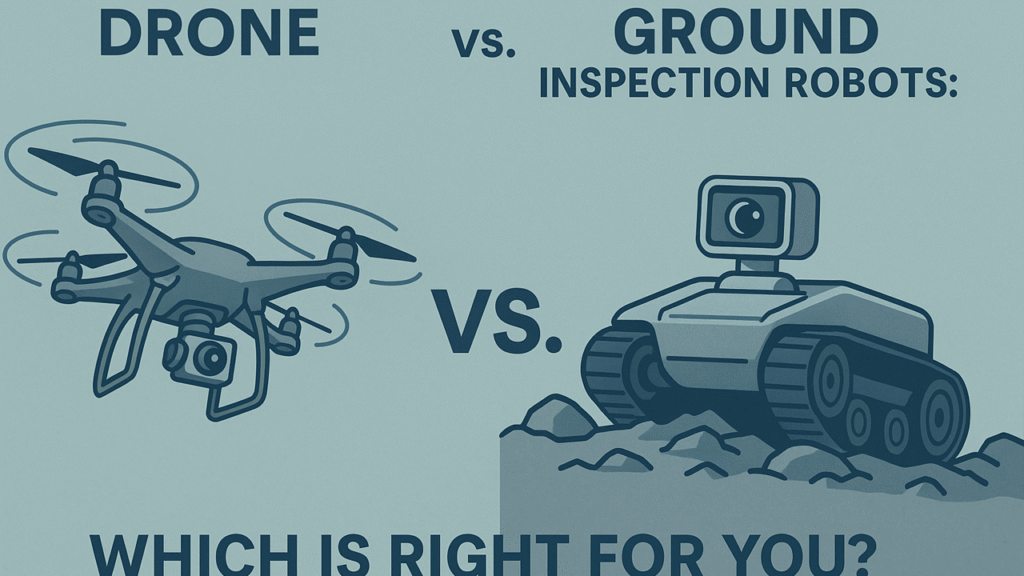
Drone vs Ground Inspection Robots: Which Is Right for You?
Choosing the right robotic inspection solution can transform your operations, reduce costs, and enhance safety. But with advanced drone technology and sophisticated ground inspection robots both offering compelling advantages, how do you determine which automated inspection system best serves your specific needs?
This comprehensive guide examines the key differences between drone inspections and ground-based robotic inspection systems, helping you make an informed decision for your industrial operations, infrastructure monitoring, or facility management requirements.
Understanding Modern Robotic Inspection Solutions
The robotics industry has revolutionized inspection processes across multiple sectors. From oil and gas facilities to manufacturing plants, construction sites to utility infrastructure, robotic inspection technology offers unprecedented precision, safety, and efficiency compared to traditional manual inspection methods.
Both aerial drones and ground inspection robots utilize advanced sensors, artificial intelligence, and automated navigation systems to conduct thorough inspections while minimizing human risk exposure and operational downtime.
Drone Inspection Technology: Advantages and Applications
Key Benefits of Drone Inspections
Aerial Accessibility and Speed Drone inspections excel in scenarios requiring rapid coverage of large areas or hard-to-reach locations. Industrial drones can quickly survey expansive facilities, tall structures, and hazardous environments that would be dangerous or time-consuming for human inspectors to access.
Cost-Effective Large-Scale Monitoring For infrastructure inspection needs spanning significant distances or heights, drone technology often provides the most economical solution. A single drone operator can inspect miles of pipeline, multiple building facades, or extensive solar installations in a fraction of the time required for traditional methods.
Advanced Sensor Integration Modern inspection drones incorporate thermal imaging cameras, high-resolution photography equipment, LiDAR sensors, and specialized detection instruments. This multi-sensor approach enables comprehensive data collection during single flight missions.
Optimal Drone Inspection Applications
- Pipeline and utility line monitoring
- Roof and building exterior assessments
- Solar panel installations
- Cell tower and telecommunications infrastructure
- Bridge and structural engineering inspections
- Agricultural and environmental monitoring
- Construction site progress tracking
Ground Inspection Robots: Precision and Detailed Analysis
Advantages of Ground-Based Robotic Inspection
Enhanced Precision and Detail Ground inspection robots can position sensors with millimeter accuracy, enabling detailed flaw detection, precise measurements, and thorough component analysis impossible with aerial systems. These robots can spend extended periods examining specific areas without battery limitations affecting flight time.
Controlled Environment Operations Unlike drones, which face weather restrictions and flight regulations, ground robots operate reliably in controlled indoor environments, underground facilities, and areas with overhead obstructions or electromagnetic interference.
Extended Operation Duration Ground inspection robots typically offer longer operational periods than battery-powered drones, making them ideal for comprehensive facility inspections requiring hours of continuous operation.
Direct Physical Interaction Many ground robots can manipulate objects, open panels, collect samples, or perform minor maintenance tasks during inspection procedures, adding operational value beyond simple monitoring.
Ideal Ground Robot Inspection Scenarios
- Manufacturing facility quality control
- Warehouse and storage area monitoring
- Underground utility inspections
- Chemical plant safety assessments
- Data center equipment monitoring
- Nuclear facility inspections
- Confined space examinations
Comparative Analysis: Drone vs Ground Inspection Robots
Coverage Area and Speed
Drones excel for large-area coverage and rapid initial assessments. They can survey extensive facilities quickly and identify areas requiring detailed examination.
Ground robots provide thorough, methodical inspection of specific areas with greater precision but cover smaller areas per unit time.
Environmental Adaptability
Drones face limitations in adverse weather, indoor spaces with low ceilings, and areas with significant electromagnetic interference.
Ground robots operate reliably in controlled environments but may struggle with uneven terrain, stairs, or outdoor conditions.
Data Quality and Precision
Drones capture excellent overview data and can identify major issues across large areas effectively.
Ground robots provide highly detailed, precise measurements and can detect subtle defects requiring close-proximity analysis.
Operational Costs
Drones typically require lower initial investment and have reduced operational complexity for basic inspections.
Ground robots may involve higher upfront costs but can provide more comprehensive data and perform additional tasks beyond inspection.
Selecting the Right Robotic Inspection Solution
Assessment Criteria
Inspection Scope and Frequency Consider whether you need regular, detailed inspections of specific equipment or periodic overview assessments of large facilities. High-frequency, detailed monitoring often favors ground robots, while periodic large-area surveys suit drone solutions.
Environmental Conditions Evaluate your operational environment. Indoor facilities, confined spaces, and weather-sensitive operations may benefit from ground robots, while outdoor infrastructure and elevated structures favor drone inspections.
Required Data Precision Determine the level of detail needed. Critical safety inspections requiring precise measurements typically demand ground robot capabilities, while monitoring for general condition assessment works well with drone technology.
Integration Requirements Consider how inspection data integrates with existing maintenance management systems, quality control processes, and operational workflows.
Hybrid Inspection Strategies
Many organizations discover that combining both drone and ground inspection robots creates the most comprehensive monitoring solution. Drones can provide rapid area surveys to identify potential issues, while ground robots conduct detailed examinations of flagged areas.
This hybrid approach maximizes inspection efficiency, ensures comprehensive coverage, and optimizes resource allocation across different inspection requirements.
Expert Robotic Inspection Consulting
Selecting and implementing the optimal robotic inspection solution requires expertise in robotics technology, operational requirements analysis, and integration planning. Professional consultation ensures you choose the right technology mix for your specific needs.
Our robot consulting services help organizations evaluate inspection requirements, compare robotic solutions, and develop implementation strategies that maximize return on investment while enhancing operational safety and efficiency.
Ready to explore robotic inspection solutions for your operations?
Contact our robotics experts for a comprehensive consultation:
- Email: sales@robotcenter.co.uk
- Phone: 0845 528 0404
We also provide specialized robot recruitment services to help you find skilled robotics professionals who can manage and optimize your automated inspection systems.
Implementation Success Factors
Technical Considerations
- Sensor requirements and compatibility
- Data processing and analysis capabilities
- Integration with existing systems
- Maintenance and support requirements
- Operator training and certification needs
Operational Planning
- Inspection scheduling and workflow optimization
- Safety protocols and regulatory compliance
- Data management and storage solutions
- Performance monitoring and quality assurance
- Scalability for future expansion
Future of Robotic Inspection Technology
The inspection robotics industry continues advancing rapidly, with developments in artificial intelligence, sensor technology, and autonomous navigation systems. Emerging trends include improved battery technology for extended drone operations, enhanced AI for automated defect detection, and better integration between different robotic inspection platforms.
Organizations investing in robotic inspection technology today position themselves advantageously for future technological developments while immediately benefiting from improved safety, efficiency, and inspection quality.
Conclusion
Both drone and ground inspection robots offer significant advantages over traditional inspection methods, but the optimal choice depends on your specific operational requirements, environmental conditions, and inspection objectives.
Drone inspections excel for large-area coverage, elevated structure monitoring, and rapid assessment needs. Ground inspection robots provide superior precision, detailed analysis capabilities, and extended operation duration for thorough facility examinations.
Many successful inspection programs combine both technologies, leveraging the strengths of each approach to create comprehensive monitoring solutions that enhance safety, reduce costs, and improve operational efficiency.
Take the next step toward optimizing your inspection operations. Contact our robotics consulting team today to discuss your specific requirements and develop a customized robotic inspection strategy.
This article is sponsored by:
Robot Center – Leading provider of robot purchasing, robot consulting, and comprehensive robotics consultancy services for businesses seeking automated solutions.
Robots of London – Premier robot hire and rental services, offering flexible robot rental solutions, professional robot events, and short-term robotics deployments.
Robot Philosophy – Specialized robot consultancy and recruitment services, providing expert robot advice, industry insights, and innovative robotics ideas for forward-thinking organizations.