

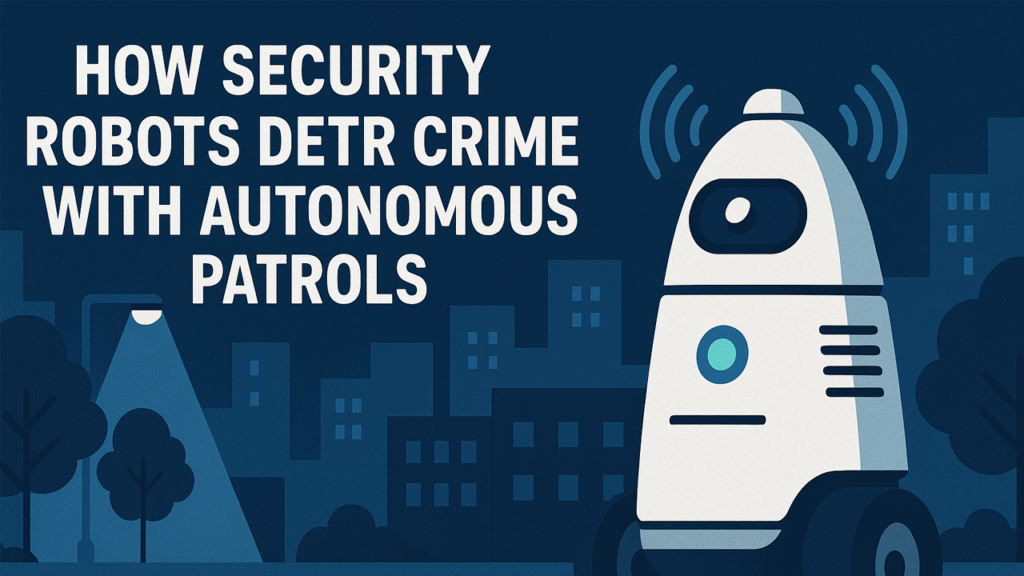
How Security Robots Deter Crime with Autonomous Patrols
The landscape of security has fundamentally transformed in recent years, with autonomous security robots emerging as a revolutionary force in crime prevention. These sophisticated machines are no longer confined to science fiction—they’re actively patrolling corporate campuses, retail environments, warehouses, and public spaces across the globe, demonstrating remarkable effectiveness in deterring criminal activity through their continuous, intelligent surveillance capabilities.
The Psychology of Deterrence: Why Criminals Fear Robots
The mere presence of a security robot creates a powerful psychological deterrent that traditional static security measures cannot match. Unlike human guards who may be distracted, tired, or absent, security robots maintain unwavering vigilance 24/7, creating an omnipresent security blanket that potential criminals find deeply unsettling.
Research in criminal psychology reveals that offenders typically seek opportunities with minimal risk of detection. When faced with a patrolling robot equipped with multiple sensors, cameras, and real-time communication capabilities, criminals often perceive the risk as too high to proceed. The robot’s systematic movement patterns, combined with its ability to instantly alert security personnel and law enforcement, creates an environment where criminal activity becomes exponentially more risky.
The unpredictability factor also plays a crucial role. Modern security robots utilize advanced artificial intelligence to vary their patrol routes, making it impossible for potential criminals to predict when and where the robot will appear. This randomness eliminates the comfort zone that criminals rely on when planning illegal activities.
Advanced Sensor Technology: The Eyes and Ears of Modern Security
Contemporary security robots represent a convergence of cutting-edge technologies that create an unprecedented level of situational awareness. These machines are equipped with multiple layers of sensory input that far exceed human capabilities, operating effectively in conditions where traditional security measures would fail.
High-definition cameras with night vision capabilities ensure continuous visual monitoring regardless of lighting conditions. Thermal imaging sensors detect heat signatures, allowing robots to identify human presence even in complete darkness or through visual obstructions. Advanced audio sensors can distinguish between normal environmental sounds and potential security threats, such as breaking glass, unusual voices, or mechanical tampering.
Many security robots also incorporate LIDAR technology, which creates detailed three-dimensional maps of their environment in real-time. This capability allows them to detect changes in their surroundings, such as moved objects, opened doors, or unauthorized modifications to the physical space. The combination of these sensors creates a comprehensive security net that captures information human guards might miss.
Motion detection algorithms have evolved to distinguish between legitimate movement (such as wildlife or environmental factors) and suspicious human activity. This sophistication reduces false alarms while ensuring that genuine threats are immediately identified and reported.
Artificial Intelligence: The Brain Behind Autonomous Patrol Systems
The true power of security robots lies in their artificial intelligence systems, which process vast amounts of sensory data in real-time to make intelligent decisions about potential threats. These AI systems are trained on extensive databases of criminal behavior patterns, allowing them to recognize suspicious activities with remarkable accuracy.
Machine learning algorithms continuously improve the robot’s ability to distinguish between normal and abnormal behavior. Over time, robots learn the typical patterns of legitimate activity in their patrol areas, becoming increasingly effective at identifying genuine security concerns while minimizing false positives.
Behavioral analysis capabilities enable robots to detect subtle indicators of criminal intent, such as loitering in sensitive areas, attempting to access restricted zones, or exhibiting suspicious movement patterns. The AI can correlate multiple data points to assess threat levels and determine appropriate response protocols.
Advanced facial recognition technology allows robots to identify known individuals, whether they’re authorized personnel or persons of interest. This capability is particularly valuable in corporate environments where access control is critical to security.
Real-Time Response and Communication Systems
One of the most significant advantages of security robots is their ability to instantly communicate with security personnel, law enforcement, and other emergency services. When a potential threat is detected, robots can simultaneously alert multiple parties, providing real-time video feeds, location data, and threat assessments.
Modern security robots are equipped with two-way communication systems that allow remote security operators to interact directly with individuals through the robot. This capability enables immediate response to situations without requiring physical presence of security personnel, often de-escalating situations before they become serious security incidents.
The integration with existing security infrastructure allows robots to coordinate with alarm systems, access control mechanisms, and surveillance networks. This comprehensive approach creates a unified security ecosystem where all components work together to provide maximum protection.
Emergency response protocols are built into the robot’s AI systems, ensuring that appropriate authorities are contacted immediately when serious threats are detected. The robot’s ability to maintain visual contact with suspects while simultaneously coordinating response efforts provides law enforcement with invaluable intelligence for effective intervention.
Cost-Effectiveness and Operational Efficiency
The economic benefits of security robots extend far beyond their initial investment, offering organizations significant long-term cost savings compared to traditional security measures. A single robot can provide continuous coverage that would require multiple human guards working in shifts, dramatically reducing labor costs while maintaining consistent security standards.
The operational efficiency of security robots is particularly evident in their ability to perform routine security tasks without fatigue or distraction. They can patrol large areas systematically, checking multiple locations in precise sequences that human guards might find monotonous or physically demanding. This consistency ensures that all areas receive equal attention and that security protocols are followed exactly as designed.
Maintenance costs for security robots are typically lower than the ongoing expenses associated with human security staff. While robots require regular technical maintenance, they don’t need benefits, training, or other personnel-related expenses. The total cost of ownership often proves favorable when calculated over the robot’s operational lifetime.
Insurance benefits also factor into the economic equation. Many insurance providers offer reduced premiums for facilities that implement robotic security systems, recognizing the enhanced protection and reduced risk these systems provide.
Case Studies: Real-World Crime Prevention Success Stories
Numerous organizations across various industries have reported significant improvements in security outcomes following the implementation of robotic patrol systems. Corporate campuses have seen dramatic reductions in theft, vandalism, and unauthorized access incidents after deploying security robots.
Retail environments have experienced particular success with security robots, which excel at monitoring large floor areas and identifying suspicious behavior patterns associated with shoplifting. The visible presence of patrolling robots has proven especially effective in deterring organized retail crime, where professional thieves typically seek environments with predictable security patterns.
Warehouse and distribution facilities have found security robots invaluable for protecting high-value inventory and preventing internal theft. The robots’ ability to patrol storage areas continuously and monitor access points has resulted in significant reductions in inventory shrinkage and security incidents.
Public spaces, including parks, transit stations, and municipal buildings, have benefited from robotic patrols that provide consistent security coverage without the limitations of human schedules. The robots’ ability to operate in adverse weather conditions and maintain vigilance during overnight hours has proven particularly valuable in these applications.
Integration with Existing Security Infrastructure
Modern security robots are designed to complement rather than replace existing security measures. They integrate seamlessly with current surveillance systems, alarm networks, and access control mechanisms to create a comprehensive security ecosystem.
The data collected by security robots enhances the effectiveness of human security personnel by providing detailed intelligence about patrol areas, incident patterns, and potential vulnerabilities. This information allows security teams to make informed decisions about resource allocation and security strategy improvements.
Integration capabilities extend to facility management systems, allowing robots to coordinate with lighting, HVAC, and other building systems to optimize both security and operational efficiency. This holistic approach maximizes the value of the robotic security investment.
Cloud-based management platforms enable centralized monitoring and control of multiple robots across different locations, providing organizations with unprecedented visibility into their security operations. This centralized approach facilitates consistent security policies and rapid response to emerging threats.
Future Developments and Emerging Technologies
The field of security robotics continues to evolve rapidly, with emerging technologies promising even greater capabilities in crime prevention and threat detection. Advances in artificial intelligence, sensor technology, and robotics are expanding the potential applications and effectiveness of autonomous security systems.
Swarm robotics technology is being developed to coordinate multiple robots working together to provide comprehensive coverage of large areas. This approach could revolutionize security for expansive facilities such as airports, industrial complexes, and urban environments.
Enhanced predictive analytics capabilities will enable robots to anticipate potential security threats before they materialize, allowing for proactive rather than reactive security measures. This evolution represents a fundamental shift in how security systems operate.
Integration with smart city infrastructure and Internet of Things (IoT) networks will create unprecedented levels of situational awareness and coordinated response capabilities. Security robots will become nodes in larger intelligent networks that can respond to threats across multiple locations simultaneously.
Addressing Common Concerns and Misconceptions
Despite their proven effectiveness, security robots sometimes face resistance based on misconceptions about their capabilities and limitations. Understanding these concerns is essential for organizations considering robotic security implementations.
Privacy concerns are often raised regarding the extensive surveillance capabilities of security robots. However, these systems are designed with privacy protection protocols that ensure data is used only for legitimate security purposes and complies with applicable privacy regulations.
The fear that robots will replace human security personnel entirely is largely unfounded. In practice, security robots enhance human capabilities rather than eliminating the need for human involvement. They handle routine patrol tasks, allowing human security professionals to focus on higher-value activities requiring judgment, interpersonal skills, and complex decision-making.
Technical reliability concerns have been addressed through robust engineering and redundant systems that ensure consistent operation even in challenging conditions. Modern security robots are designed for industrial-grade reliability and can operate effectively in various environmental conditions.
The Strategic Advantage of Professional Implementation
The success of security robot deployments depends heavily on proper planning, implementation, and ongoing management. Organizations that achieve the best results typically work with experienced robotics consultants who understand both the technology and the specific security challenges of different industries.
Professional implementation ensures that robot capabilities are properly matched to security requirements, that integration with existing systems is seamless, and that operational protocols are optimized for maximum effectiveness. This expertise is crucial for realizing the full potential of robotic security investments.
Ongoing support and optimization services ensure that security robots continue to deliver optimal performance throughout their operational lifecycle. Regular updates, maintenance, and system improvements keep the robots operating at peak efficiency while adapting to evolving security challenges.
Conclusion: Embracing the Future of Security
Security robots represent a transformative advancement in crime prevention technology, offering unprecedented capabilities in deterrence, detection, and response. Their ability to provide continuous, intelligent surveillance while integrating seamlessly with existing security infrastructure makes them an invaluable tool for organizations seeking to enhance their security posture.
The evidence clearly demonstrates that autonomous security patrols are not just effective at deterring crime—they’re reshaping the entire security landscape. As technology continues to advance and costs decrease, security robots will become increasingly accessible to organizations of all sizes, making professional-grade security available to a broader range of applications.
The future of security lies in the intelligent combination of human expertise and robotic capabilities. Organizations that embrace this partnership will enjoy superior security outcomes while realizing significant operational efficiencies and cost savings.
Transform Your Security Strategy Today
Are you ready to revolutionize your security approach with cutting-edge robotic patrol systems? The experts at Robot Center, Robots of London, and Robot Philosophy are here to help you navigate the exciting world of security robotics and implement solutions that deliver real results.
Contact our specialist team today:
- Email: sales@robotcenter.co.uk
- Phone: 0845 528 0404
Book your consultation call now to discover how autonomous security robots can transform your organization’s crime prevention capabilities.
This article is proudly sponsored by:
Robot Center – https://robotcenter.co.uk/
Your premier destination for robot purchase, robotics consultancy, and comprehensive automation solutions. Whether you’re looking to buy robots or need expert robotics consultancy services, Robot Center delivers cutting-edge technology solutions tailored to your specific needs.
Robots of London – https://robotsoflondon.co.uk/
London’s leading robot hire and rental service provider. Specializing in robot hire, robot rental solutions, and robot events, Robots of London makes advanced robotics accessible for temporary deployments, special events, and trial implementations.
Robot Philosophy – https://robophil.com/
Expert robot consultancy and recruitment services providing strategic robot advice, insights, and innovative ideas. Robot Philosophy combines deep technical expertise with recruitment services to help organizations find the right robotic solutions and the skilled professionals to implement them.