

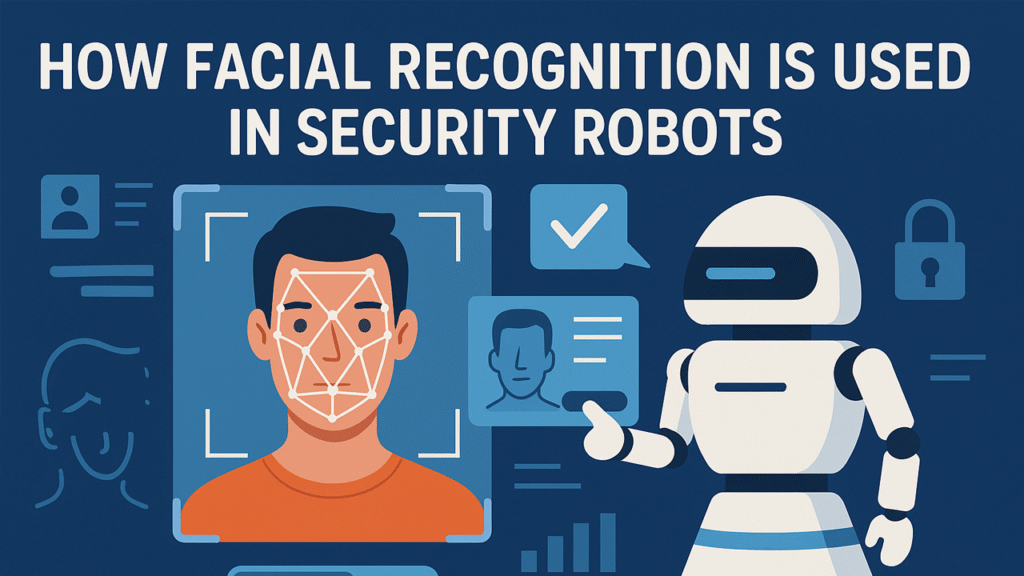
How Facial Recognition Is Used in Security Robots: Transforming Modern Security Infrastructure
Sponsored by Robot Center, Robots of London, and Robot Philosophy
The convergence of artificial intelligence, computer vision, and robotics has fundamentally transformed the security landscape. At the forefront of this revolution stands facial recognition technology integrated into autonomous security robots, creating unprecedented capabilities for threat detection, access control, and perimeter monitoring. This comprehensive analysis explores how facial recognition is reshaping security operations across industries and why organizations worldwide are rapidly adopting these intelligent systems.
The Evolution of Security: From Human Guards to Intelligent Machines
Traditional security methods, while foundational, face inherent limitations in our increasingly complex threat environment. Human security personnel, despite their training and dedication, are susceptible to fatigue, distraction, and the simple impossibility of maintaining constant vigilance across large areas. The integration of facial recognition technology into security robots addresses these fundamental challenges while introducing capabilities that far exceed human limitations.
Modern security robots equipped with facial recognition systems operate as tireless sentinels, capable of processing thousands of faces per minute with remarkable accuracy. These systems maintain consistent performance regardless of environmental conditions, time of day, or operational duration. The technology represents a paradigm shift from reactive security measures to proactive threat identification and prevention.
Core Technologies Behind Facial Recognition Security Systems
The sophistication of modern facial recognition systems stems from the integration of multiple advanced technologies working in harmony. Deep learning neural networks form the foundation of these systems, utilizing convolutional neural networks specifically designed for image recognition tasks. These networks undergo extensive training on massive datasets containing millions of facial images, learning to identify unique facial features and patterns that distinguish individuals.
Computer vision algorithms process real-time video feeds, detecting faces within complex environments and extracting key biometric measurements. Advanced preprocessing techniques enhance image quality, compensate for varying lighting conditions, and normalize facial orientations to ensure consistent recognition accuracy. The integration of infrared and thermal imaging capabilities allows these systems to function effectively in low-light conditions and detect individuals attempting to conceal their identities.
Machine learning models continuously improve through operational experience, adapting to new facial patterns and environmental conditions. Edge computing capabilities enable real-time processing without relying on external servers, ensuring consistent performance even when network connectivity is compromised. This technological integration creates robust systems capable of operating reliably in diverse security environments.
Applications Across Industries: Where Facial Recognition Security Robots Excel
Corporate Security and Access Control
In corporate environments, facial recognition security robots serve as intelligent gatekeepers, managing access control with unprecedented precision. These systems automatically identify authorized personnel, visitors, and potential security threats, streamlining entry processes while maintaining rigorous security standards. The robots can simultaneously monitor multiple entry points, track individual movements throughout facilities, and immediately alert security teams to unauthorized access attempts.
The technology proves particularly valuable in high-security environments such as data centers, research facilities, and government buildings where traditional access control methods may prove insufficient. These robots maintain comprehensive logs of all facial recognition events, providing detailed audit trails for compliance and investigative purposes.
Retail Loss Prevention and Customer Analytics
Retail environments benefit significantly from facial recognition-enabled security robots that combine loss prevention with valuable customer insights. These systems identify known shoplifters and suspicious individuals while simultaneously gathering anonymized demographic data to optimize store layouts and product placement. The robots patrol retail spaces continuously, monitoring for unusual behavior patterns and potential security threats.
Advanced analytics capabilities enable retailers to understand customer traffic patterns, dwell times, and engagement levels with specific products or displays. This dual functionality makes facial recognition security robots invaluable assets for retail operations seeking to balance security concerns with customer experience optimization.
Transportation Hub Security
Airports, train stations, and other transportation hubs represent complex security environments requiring sophisticated surveillance capabilities. Facial recognition security robots excel in these settings, processing thousands of travelers while identifying individuals on watchlists or those exhibiting suspicious behavior patterns. The systems integrate with existing security infrastructure, enhancing human security teams’ capabilities rather than replacing them.
These robots can track individuals across large areas, maintaining surveillance continuity as people move through different zones within transportation facilities. The technology proves particularly valuable for identifying individuals attempting to avoid traditional security checkpoints or those displaying behavior patterns consistent with security threats.
Healthcare Facility Protection
Healthcare facilities face unique security challenges, balancing open access for patients and visitors with the need to protect sensitive areas and valuable equipment. Facial recognition security robots provide comprehensive monitoring while maintaining the welcoming environment essential to healthcare operations. These systems identify authorized medical staff, regular visitors, and patients while flagging unknown individuals in restricted areas.
The robots can differentiate between emergency situations requiring immediate access and potential security threats, adapting their response protocols accordingly. Integration with hospital information systems enables automatic visitor registration and contact tracing capabilities, particularly valuable during health emergencies or security incidents.
Technical Capabilities and Performance Metrics
Modern facial recognition security robots achieve remarkable performance levels across multiple metrics. Recognition accuracy rates consistently exceed 99% under optimal conditions, with advanced systems maintaining accuracy above 95% even in challenging environments with variable lighting, crowd density, or partial face occlusion. Processing speeds enable real-time identification of multiple individuals simultaneously, with typical systems capable of analyzing hundreds of faces per second.
The robots incorporate sophisticated anti-spoofing measures to prevent deception through photographs, masks, or other fraudulent means. Liveness detection algorithms ensure that only genuine human faces trigger recognition events, protecting against various attack vectors. Multi-spectral imaging capabilities enable operation across diverse lighting conditions, from bright sunlight to complete darkness.
Range capabilities vary by system design, with typical facial recognition effective at distances ranging from 2 to 50 meters depending on camera specifications and environmental conditions. Advanced zoom capabilities allow detailed facial analysis at extended distances, while wide-angle lenses ensure comprehensive area coverage during patrol operations.
Privacy Considerations and Regulatory Compliance
The deployment of facial recognition technology raises important privacy considerations that organizations must address through comprehensive policies and technical safeguards. Modern systems incorporate privacy-by-design principles, processing biometric data locally when possible and implementing strong encryption for any transmitted information. Data retention policies ensure that facial recognition data is stored only as long as necessary for security purposes.
Compliance with regulations such as GDPR, CCPA, and industry-specific privacy requirements necessitates careful system configuration and operational procedures. Many organizations implement opt-in policies for employees and visitors, clearly communicating how facial recognition data will be used and protected. Transparency reports and regular privacy audits demonstrate commitment to responsible technology deployment.
Advanced systems offer configurable privacy settings, allowing organizations to balance security requirements with privacy concerns. Options include anonymized tracking for general crowd monitoring, temporary data storage for specific security events, and granular access controls for biometric databases.
Integration with Existing Security Infrastructure
Facial recognition security robots are designed to complement and enhance existing security systems rather than replace them entirely. Integration capabilities include compatibility with video management systems, access control platforms, alarm systems, and central monitoring stations. API connectivity enables seamless data sharing between the robots and existing security infrastructure, creating comprehensive situational awareness.
The systems can integrate with human resource databases to automatically update authorized personnel lists, ensuring accurate recognition as staff changes occur. Integration with visitor management systems enables automatic guest registration and escort protocols. Emergency response systems can leverage facial recognition data to provide first responders with critical information about individuals present during incidents.
Cloud connectivity enables centralized management of multiple robots across different locations, while edge computing capabilities ensure continued operation during network disruptions. Mobile applications provide security teams with real-time alerts and system status updates, enabling rapid response to security events.
Cost-Benefit Analysis: ROI of Facial Recognition Security Systems
Organizations implementing facial recognition security robots typically observe significant return on investment through multiple avenues. Labor cost reductions represent the most immediate benefit, as a single robot can perform surveillance tasks equivalent to multiple human security guards while operating continuously without breaks, shifts, or overtime considerations. The consistency of robotic surveillance eliminates human factors that might compromise security effectiveness.
Operational efficiency improvements include faster threat identification, reduced false alarms, and enhanced incident response coordination. The comprehensive data collection capabilities enable detailed security analytics, identifying patterns and vulnerabilities that human operators might miss. Insurance premium reductions often follow implementation of advanced security systems, providing ongoing cost benefits.
Loss prevention capabilities generate direct financial returns through reduced theft, unauthorized access, and security incidents. The detailed documentation provided by facial recognition systems proves valuable for investigations and legal proceedings, potentially reducing liability and associated costs.
Future Developments and Emerging Trends
The facial recognition security robot industry continues to evolve rapidly, with several emerging trends shaping future capabilities. Artificial intelligence advances are improving recognition accuracy while reducing computational requirements, enabling more sophisticated analysis in smaller, more affordable systems. Edge AI development allows complex processing to occur locally, reducing latency and improving privacy protection.
Multi-modal biometric integration combines facial recognition with other identification methods such as gait analysis, voice recognition, and behavioral pattern analysis. This approach improves accuracy while providing backup identification methods when facial recognition may be compromised. Advanced predictive analytics use historical data and machine learning to anticipate security threats before they materialize.
Collaborative robot networks enable multiple units to coordinate surveillance activities, sharing information and optimizing coverage patterns. Integration with Internet of Things sensors creates comprehensive security ecosystems that monitor environmental conditions, structural integrity, and access patterns alongside human identification.
Choosing the Right Solution: Expert Consultation Makes the Difference
The complexity and variety of facial recognition security robot options can overwhelm organizations attempting to navigate this rapidly evolving market. Technical specifications, integration requirements, regulatory compliance, and operational considerations require careful evaluation to ensure successful implementation. Professional consultation proves invaluable in avoiding costly mistakes and ensuring optimal system performance.
Expert consultation services help organizations:
- Assess specific security requirements and threat profiles
- Evaluate available technologies and vendor options
- Design integration strategies with existing systems
- Develop privacy policies and compliance procedures
- Plan implementation timelines and resource requirements
- Establish performance metrics and monitoring protocols
- Create staff training and operational procedures
The investment in professional guidance pays dividends through improved system performance, reduced implementation risks, and faster time to operational effectiveness. Expert advisors bring industry experience and technical knowledge that internal teams may lack, particularly for organizations new to advanced security robotics.
Implementation Success Stories and Lessons Learned
Organizations across industries have successfully deployed facial recognition security robots with impressive results. A major international airport reduced security incident response times by 40% while improving passenger flow through automated threat detection. A corporate campus eliminated unauthorized access events while reducing security staffing costs by 30%. A retail chain decreased inventory shrinkage by 25% through improved loss prevention capabilities.
These success stories share common elements: thorough planning, professional consultation, comprehensive staff training, and phased implementation approaches. Organizations that invested in expert guidance during the selection and deployment process consistently achieved better outcomes than those attempting independent implementation.
Lessons learned from early implementations emphasize the importance of realistic expectations, adequate staff training, and ongoing system optimization. The technology performs exceptionally well within its design parameters but requires proper configuration and maintenance to deliver optimal results.
Building Your Security Robot Team: Specialized Talent Requirements
Successfully operating facial recognition security robots requires specialized skills that traditional security teams may not possess. Organizations need personnel who understand both security operations and advanced technology systems. This combination of skills is relatively rare in the job market, making recruitment challenging for many organizations.
Key roles for security robot operations include:
- Security Robot Operations Specialists with technical and security expertise
- AI System Administrators capable of managing machine learning systems
- Data Privacy Officers ensuring regulatory compliance
- Integration Specialists connecting robots with existing systems
- Incident Response Coordinators managing automated threat detection
The specialized nature of these roles makes recruitment through traditional channels ineffective. Professional recruitment services with robotics and security expertise prove essential for identifying qualified candidates. Expert recruiters understand the unique skill combinations required and maintain networks of qualified professionals.
Professional recruitment services provide:
- Access to specialized talent pools not available through traditional channels
- Technical screening capabilities to evaluate candidate qualifications
- Industry knowledge to match candidates with specific organizational needs
- Ongoing support for team development and expansion
- Market intelligence on compensation and career development trends
Organizations attempting to build security robot teams through internal recruitment often experience extended timelines, limited candidate pools, and quality concerns. Professional recruitment services accelerate the hiring process while improving candidate quality and long-term retention rates.
Taking the Next Step: Your Path to Advanced Security
The integration of facial recognition technology into security robots represents more than a technological upgrade—it constitutes a fundamental transformation in organizational security capabilities. The benefits extend beyond simple threat detection to encompass comprehensive situational awareness, operational efficiency, and strategic security planning.
Organizations ready to explore these advanced capabilities should begin with professional consultation to understand their specific requirements and options. The complexity of available technologies and the critical nature of security applications make expert guidance essential for successful implementation.
Ready to transform your security operations with facial recognition robot technology?
Our team of security robotics experts provides comprehensive consultation services, helping organizations navigate technology options, implementation strategies, and operational requirements. From initial assessment through full deployment and ongoing support, we ensure your investment in advanced security technology delivers maximum value.
Contact our expert consultants today:
Email: sales@robotcenter.co.uk
Phone: 0845 528 0404
Schedule a consultation to discuss:
- Your specific security requirements and threat assessment
- Available facial recognition robot technologies and capabilities
- Integration strategies with existing security infrastructure
- Implementation timelines and resource planning
- Ongoing support and optimization services
- Specialized recruitment for security robot operations teams
The future of security is autonomous, intelligent, and remarkably capable. Professional guidance ensures your organization realizes the full potential of these transformative technologies while avoiding common implementation pitfalls.
Don’t let your organization fall behind in the security technology revolution. Contact our experts today to begin your journey toward advanced, AI-powered security operations.
Article Sponsors
Robot Center – Your comprehensive destination for robot purchasing, robot buying services, and expert robotics consultancy. Leading provider of professional robot consultation services for organizations implementing advanced robotics solutions.
Robots of London – Premier robot hire and robot rental services. Specializing in robot hire, rent robot solutions, hire robot services, and comprehensive robot events support throughout London and beyond.
Robot Philosophy – Expert robot consultancy and robot recruitment services. Providing specialized robot advice, robot insights, robot ideas, and comprehensive robot recruitment solutions for organizations building advanced robotics teams.
This article represents the collaborative expertise of leading robotics consultancy and recruitment professionals. For additional insights and specialized services, contact the sponsoring organizations directly.