
AI & Robotics – Predictive Maintenance for Energy Infrastructure
Introduction
In the global energy sector, where uptime, safety, and efficiency are non-negotiable, one technology is rapidly reshaping the landscape: AI-driven robotics for predictive maintenance. From wind farms and oil refineries to nuclear plants and power grids, energy infrastructure is both mission-critical and vulnerable. Equipment failures can lead to catastrophic downtime, environmental hazards, and multi-million-pound losses.
Traditionally, the sector has relied on scheduled inspections, manual monitoring, and reactive maintenance. But as infrastructure ages and the demand for clean, reliable power accelerates, these old methods no longer suffice. Enter predictive maintenance powered by artificial intelligence and robotics—a strategy that shifts energy companies from firefighting problems to preventing them before they occur.
In this article, we’ll explore the role of AI and robotics in predictive maintenance for energy infrastructure, the business benefits, the real-world use cases, and why SMEs and large operators alike must act now. Finally, we’ll show how Robot Center, Robots of London, and Robot Philosophy can help your organisation harness this revolution through robot consulting and robot recruitment services.
📞 To discuss how predictive maintenance robots can transform your business, book a consultation today at sales@robotcenter.co.uk or call 0845 528 0404.
What is Predictive Maintenance?
Predictive maintenance (PdM) is the practice of using real-time data, analytics, and machine learning to predict when equipment is likely to fail, and intervening before the breakdown occurs. Unlike reactive maintenance (fix after failure) or preventive maintenance (regular scheduled servicing regardless of condition), PdM ensures maintenance is only performed when it’s needed.
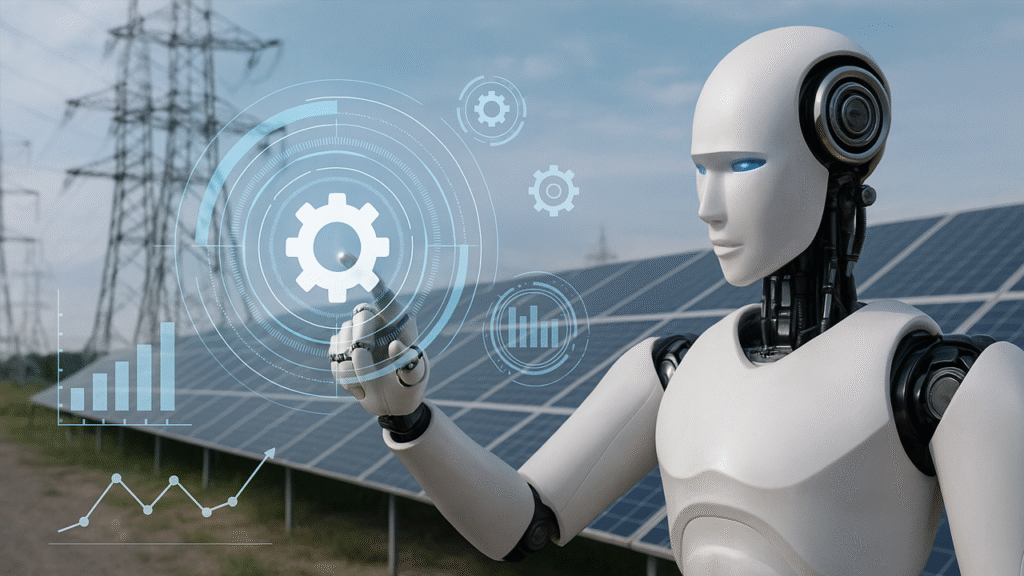
When robotics and AI are layered into this approach, the possibilities multiply. Robots equipped with advanced sensors, computer vision, and autonomous mobility can inspect assets, monitor conditions, and send back critical performance data without human risk. AI then processes this flood of data, learning to identify early signs of wear, corrosion, vibration anomalies, or temperature changes.
The result: a leaner, safer, and more efficient maintenance ecosystem.
Why Energy Infrastructure Needs Predictive Maintenance
Energy assets are among the most expensive, hazardous, and long-lived systems on Earth. Whether you’re managing an offshore wind farm, a nuclear reactor, or a gas pipeline, maintenance costs consume a huge portion of operating budgets.
Here are four reasons predictive maintenance is mission-critical for the energy sector:
Downtime is enormously costly
A single day offline for a power plant can cost millions in lost output and contractual penalties. Predictive maintenance reduces unscheduled downtime dramatically.
Infrastructure is aging
Much of the world’s energy infrastructure was built decades ago. With extended lifecycles, predictive monitoring ensures safety and longevity.
Workplace safety demands innovation
Traditional inspections often expose workers to high-risk environments (radiation, extreme temperatures, heights). Robots remove people from danger zones.
Net-zero and ESG pressures
Governments, regulators, and stakeholders demand cleaner and more efficient energy. Preventing leaks, spills, and inefficiencies helps firms meet sustainability goals.
In short, predictive maintenance isn’t optional—it’s a necessity.
The Role of Robotics in Predictive Maintenance
AI alone can’t deliver predictive maintenance at scale. It needs eyes, ears, and hands in the field—and that’s where robots come in.
Types of Robots Used in Energy Predictive Maintenance
Inspection Drones
Aerial drones equipped with LiDAR, infrared, and HD cameras monitor turbines, flare stacks, transmission lines, and solar panels.
Benefits: quick deployment, reduced need for scaffolding or helicopters.
Ground Inspection Robots
Four-wheel and quadruped robots patrol plants and pipelines, detecting gas leaks, thermal anomalies, and vibrations.
Benefits: continuous monitoring in environments unsafe for humans.
Climbing Robots
Specialised robots that scale vertical structures like wind turbines and oil rigs.
Benefits: detailed inspection of high-risk equipment without rope access crews.
Autonomous Underwater Vehicles (AUVs)
For offshore energy, underwater robots inspect subsea pipelines, rigs, and cables.
Benefits: increased inspection frequency and lower risk vs. human divers.
Robotic Arms & Cobots
Stationary or mobile robotic arms can perform routine servicing tasks like tightening bolts or cleaning sensors.
Benefits: reduces manual workload and enhances precision.
Together, these robotic platforms serve as the eyes and hands of predictive maintenance, generating streams of high-value operational data.
How AI Transforms Predictive Maintenance
Robots may collect the data, but it’s artificial intelligence that unlocks its value.
Key AI techniques include:
Machine Learning Models
Train on historical failure data to predict when similar anomalies may occur in the future.Computer Vision
Algorithms detect cracks, rust, corrosion, and material fatigue from drone footage or robotic inspections.Natural Language Processing (NLP)
Converts technician notes, inspection reports, and historical logs into usable datasets.Digital Twins
Virtual models of energy assets simulate “what if” scenarios, allowing predictive algorithms to run in a digital environment.Reinforcement Learning
Optimises robotic patrol paths and inspection schedules for maximum coverage with minimal cost.
When combined, AI + robotics create a continuous feedback loop: robots collect data → AI analyses it → insights inform proactive maintenance → robots carry out or validate fixes.
Real-World Use Cases
Wind Energy
Drones inspect blades for micro-cracks. AI flags anomalies invisible to the human eye. Predictive maintenance reduces blade replacement costs by up to 30%.
Oil & Gas
Quadruped robots with methane sensors patrol rigs. AI predicts pipeline integrity issues, preventing spills and fines.
Nuclear
Radiation-resistant robots perform reactor inspections. AI identifies patterns in thermal and vibration data to prevent catastrophic failures.
Solar Farms
Robotic cleaners and inspection drones reduce downtime. AI forecasts inverter failures to maximise energy yield.
Power Grids
Drones and robots check transmission lines for vegetation encroachment and structural weakness. AI predicts blackout risks.
These examples prove predictive maintenance isn’t theoretical—it’s happening today.
The Business Benefits
Companies adopting AI-powered robotics for predictive maintenance see transformative ROI.
Cost Savings: Up to 40% reduction in maintenance expenses.
Increased Uptime: As much as 70% fewer breakdowns.
Extended Asset Life: Equipment lifespan increases by 20–30%.
Improved Safety: Fewer worker injuries and insurance claims.
Regulatory Compliance: Better alignment with ESG and safety reporting requirements.
For SMEs in the energy supply chain, predictive maintenance robots aren’t a luxury—they’re the path to survival and competitive advantage.
Why SMEs Shouldn’t Wait
Many small and mid-sized enterprises assume robotics and AI are only for billion-dollar corporations. That’s no longer true. Modular, rental, and service-based robot deployment models have dramatically lowered barriers to entry.
By leveraging robot consulting services, SMEs can identify where predictive maintenance will have the biggest impact. By using robot recruitment services, they can secure the skilled talent needed to manage this new era of smart infrastructure.
The question isn’t “Can we afford predictive maintenance robots?”—
It’s “Can we afford not to?”
How Robot Center, Robots of London, and Robot Philosophy Can Help
Robot Center – https://robotcenter.co.uk/
Specialists in robot consultancy and sales, helping energy companies and SMEs choose the right robots, integrate them into their operations, and achieve measurable ROI.
Keywords: Buy Robot, Robot Buy, Robot consultancy, Robotics Consultancy.
Robots of London – https://robotsoflondon.co.uk/
UK leaders in robot hire and rental. Perfect for energy companies looking to trial predictive maintenance robots before committing to purchase.
Keywords: Robot Hire, Robot Rental, Rent Robot, Hire Robot, Robot Events.
Robot Philosophy – https://robophil.com/
A personal brand offering robot consultancy and recruitment services, providing insight, strategy, and talent placement for the AI-robotics ecosystem.
Keywords: Robot Consultancy, Robot Recruitment, Robot Advice, Robot Insights, Robot Ideas, Robotics Consultant, Robotics Influencer.
Call to Action – Book Your Consultation
The energy sector stands at a crossroads. Predictive maintenance using AI and robotics is no longer a futuristic vision—it’s the present. Those who embrace it will unlock efficiency, sustainability, and resilience. Those who hesitate risk falling behind.
At Robot Center, Robots of London, and Robot Philosophy, we don’t just supply robots—we help you build a long-term roadmap for intelligent automation.
📩 Email: sales@robotcenter.co.uk
📞 Phone: 0845 528 0404
Book a consultation call today and take the first step toward predictive maintenance that safeguards your energy infrastructure and your bottom line.
Conclusion
Energy infrastructure is the backbone of modern society. But as demands on our grids, turbines, and pipelines intensify, so too does the risk of failure. AI and robotics are the shield against this risk, offering predictive maintenance solutions that protect uptime, reduce costs, and save lives.
From drones and climbing robots to AI-powered digital twins, the tools are here. The only question is whether your organisation will lead—or be left behind.
Partner with Robot Center, Robots of London, and Robot Philosophy today. Together, we’ll future-proof your operations and unleash the full power of AI-driven robotics.
https://www.youtube.com/watch?v=FUAalh0eEjY