

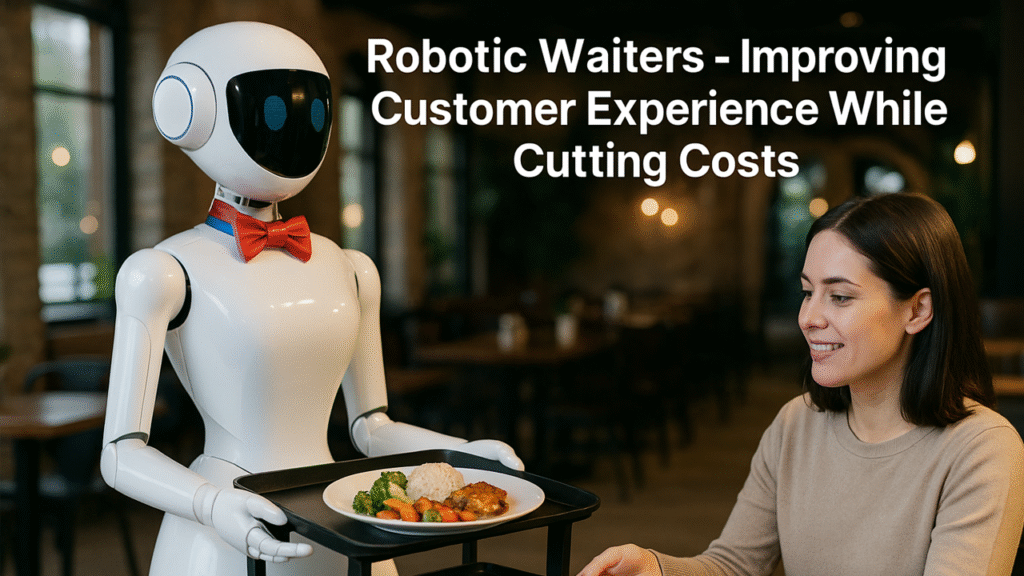
Robotic Waiters: Improving Customer Experience While Cutting Costs
The Future of Hospitality Is Here – And It’s Automated
The restaurant and hospitality industry is experiencing a technological revolution that seemed like science fiction just a few years ago. Robotic waiters are no longer experimental novelties confined to tech showcases in Tokyo or Silicon Valley – they’re becoming a practical, profitable reality for restaurants, hotels, and hospitality venues across the UK and worldwide. These autonomous service robots are transforming how businesses operate, simultaneously enhancing customer experiences while significantly reducing operational costs.
In an era where labour shortages plague the hospitality sector, rising wages squeeze profit margins, and customers demand faster, more consistent service, robotic waiters offer a compelling solution. But are they right for your business? This comprehensive guide explores everything you need to know about implementing robotic waiters in your establishment, from the technology behind them to the tangible benefits they deliver.
What Are Robotic Waiters?
Robotic waiters, also known as service robots or delivery robots, are autonomous mobile robots designed specifically for the hospitality industry. These sophisticated machines navigate restaurant floors, deliver food and drinks to tables, clear dishes, and even interact with customers – all without human intervention beyond initial programming and occasional supervision.
Modern robotic waiters typically feature:
- Advanced navigation systems using LiDAR sensors, cameras, and mapping technology to move safely through crowded spaces
- Multiple trays or compartments for carrying plates, glasses, and other items
- Interactive touchscreens for customer engagement and order confirmation
- Collision avoidance technology to prevent accidents with customers and staff
- Voice capabilities for greetings, announcements, and basic interactions
- Integration with POS and kitchen management systems for seamless workflow
These robots don’t replace human staff entirely – instead, they augment the team, handling repetitive tasks like food delivery and table clearing while human servers focus on customer interaction, upselling, and creating memorable dining experiences.
The Business Case: How Robotic Waiters Cut Costs
Labour Cost Reduction
The most immediate and substantial benefit of robotic waiters is the reduction in labour costs. The UK hospitality sector faces unprecedented staffing challenges, with venues struggling to recruit and retain workers amid rising minimum wages and post-Brexit labour shortages.
A single robotic waiter can perform the delivery tasks of multiple human servers, running continuously during service hours without breaks, holidays, or sick days. While the initial investment might seem significant, the return on investment typically materializes within 12-24 months when you factor in:
- Reduced staffing requirements during peak hours
- Lower recruitment and training costs
- Elimination of overtime payments
- Reduced employee turnover expenses
- Decreased insurance and liability costs
Operational Efficiency Gains
Beyond direct labour savings, robotic waiters dramatically improve operational efficiency. These robots work tirelessly without fatigue, maintaining consistent performance throughout service. A robot can make 300-400 trips per day, far exceeding what human servers can manage while maintaining accuracy and speed.
This efficiency translates into:
- Faster table turnover – quicker service means serving more customers per shift
- Reduced order errors – robots deliver exactly what the kitchen sends, every time
- Lower food waste – precise delivery reduces mistakes and returned dishes
- Decreased breakage costs – stable platforms and smooth navigation mean fewer dropped plates and glasses
Energy and Space Optimization
Modern robotic waiters are surprisingly energy-efficient, typically consuming less electricity than a standard refrigerator. Many models feature intelligent battery management, automatically returning to charging stations during quiet periods to ensure continuous operation during peak times.
Additionally, by streamlining service operations, restaurants can optimize their floor plans, potentially increasing seating capacity or creating more comfortable dining spaces without compromising service quality.
Enhancing Customer Experience: The Unexpected Advantage
While cost reduction often drives initial interest in robotic waiters, many restaurateurs discover that enhanced customer experience becomes the technology’s most valuable benefit.
The Novelty Factor
There’s no denying the “wow factor” of robotic waiters. Customers, particularly families with children, are genuinely excited to interact with service robots. This novelty creates:
- Memorable dining experiences that customers share on social media, generating free marketing
- Increased foot traffic from curious potential customers
- Enhanced brand positioning as innovative and forward-thinking
- Differentiation from competitors still relying solely on traditional service models
This excitement doesn’t fade quickly either. Establishments report sustained customer enthusiasm even months after implementation, with robotic waiters becoming part of the venue’s identity and appeal.
Consistency and Reliability
Robotic waiters deliver unparalleled consistency. Every delivery is performed with the same care, attention, and timing. There are no bad days, personal issues affecting performance, or variations in service quality. This reliability means:
- Customers receive their orders promptly and correctly
- Service standards remain high regardless of staffing challenges
- Peak times are managed more smoothly without service degradation
- Customer complaints related to slow or incorrect service decrease significantly
Hygiene and Safety
In our post-pandemic world, hygiene concerns remain paramount for diners. Robotic waiters offer reassurance through:
- Contactless delivery reducing human touchpoints
- Consistent sanitization robots can be cleaned thoroughly between services
- Reduced contamination risk sealed compartments protect food during delivery
- Transparent cleanliness customers can visually verify the robot’s clean surfaces
This visible commitment to hygiene enhances customer confidence and satisfaction, particularly among health-conscious diners.
Freeing Human Staff for What They Do Best
Perhaps the most significant customer experience benefit comes from liberating human servers from repetitive tasks. When robots handle the heavy lifting – literally and figuratively – human staff can focus on:
- Greeting customers warmly and building rapport
- Providing personalized recommendations and menu guidance
- Upselling premium dishes, drinks, and desserts effectively
- Handling special requests and dietary requirements with attention
- Creating those memorable human moments that generate loyal customers
This hybrid model combines technological efficiency with human warmth, delivering superior experiences that neither humans nor robots could achieve alone.
Real-World Applications: Where Robotic Waiters Excel
Restaurants and Cafés
From quick-service establishments to fine dining, robotic waiters adapt to various restaurant formats. They’re particularly effective in:
- High-volume casual dining where speed and turnover are crucial
- Buffet and hotpot restaurants where continuous food delivery is needed
- Multi-floor establishments where stairs aren’t a barrier for modern robots
- Family restaurants where the entertainment value enhances the experience
Hotels and Resorts
Hospitality venues beyond restaurants are embracing robotic service:
- Room service delivery robots navigating corridors and elevators to deliver meals
- Conference and banqueting serving refreshments during events
- Pool and spa areas delivering towels, drinks, and amenities
- Reception and concierge support transporting luggage and documents
Healthcare Facilities
Hospitals, care homes, and medical facilities are discovering robotic service benefits:
- Patient meal delivery reducing staff workload and infection risks
- Medication distribution with secure compartments and verification systems
- Supply transportation moving linens, equipment, and consumables
- Visitor refreshment services in waiting areas and family rooms
Corporate and Educational Settings
Workplace and campus environments are adopting robotic service:
- Office cafeterias and canteens during peak lunch periods
- University dining halls serving thousands of students efficiently
- Corporate events and functions adding innovation to gatherings
- Training and demonstration showcasing technological advancement
Choosing the Right Robotic Waiter for Your Business
Not all robotic waiters are created equal. Selecting the right solution requires careful consideration of your specific needs, environment, and objectives.
Key Features to Consider
Payload Capacity: How much weight does the robot need to carry? Restaurants serving large platters require different specifications than cafés delivering coffee cups.
Navigation Technology: Does your venue have complex layouts, narrow passages, or multiple levels? Advanced LiDAR and mapping systems are essential for challenging environments.
Battery Life and Charging: How long are your service periods? Ensure robots can operate throughout your busiest shifts or have efficient charging solutions.
Integration Capabilities: Can the robot connect with your existing POS, kitchen management, and reservation systems for seamless operation?
Customization Options: Can you brand the robot with your logo, choose colors, and customize voice messages to match your establishment’s personality?
Safety Features: What collision avoidance, emergency stop, and safety monitoring capabilities does the robot offer?
Maintenance Requirements: How much ongoing maintenance is needed? What support does the manufacturer provide?
Scalability: Can you start with one or two robots and expand as you see results?
Popular Robotic Waiter Models
While we won’t endorse specific brands, several categories of robotic waiters dominate the market:
Premium Multi-Tray Models: High-capacity robots with sophisticated navigation, interactive displays, and extensive customization options, ideal for larger establishments with substantial budgets.
Mid-Range Delivery Robots: Balanced solutions offering solid performance, reliable navigation, and essential features at moderate price points, suitable for most restaurants and hotels.
Entry-Level Service Robots: Simpler designs with basic delivery capabilities, perfect for smaller venues testing the technology or operating under tighter budgets.
Specialized Robots: Purpose-built solutions for specific applications like beverage service, bussing tables, or outdoor delivery.
Implementation: Setting Up for Success
Successful robotic waiter implementation requires more than simply purchasing a robot and turning it on. A structured approach ensures smooth integration and maximizes benefits.
Assessment and Planning
Begin with a thorough assessment of your operation:
- Map your floor layout, identifying potential obstacles and optimal routes
- Analyze your service workflow to determine where robots add most value
- Calculate expected ROI based on your specific labour costs and service volume
- Identify staff concerns and plan communication strategies
- Set clear objectives and success metrics
Infrastructure Preparation
Prepare your venue for robotic operation:
- Ensure adequate aisle widths and clear pathways
- Install charging stations in convenient, unobtrusive locations
- Upgrade WiFi infrastructure if necessary for reliable robot communication
- Modify tables or service areas for optimal robot access
- Address any floor surface issues that might impede navigation
Staff Training and Change Management
Your human team’s acceptance is crucial for success:
- Involve staff early in the decision and planning process
- Provide comprehensive training on robot operation and interaction
- Clearly communicate how robots enhance rather than replace their roles
- Develop new procedures for hybrid human-robot service
- Create feedback mechanisms for continuous improvement
Phased Rollout
Start small and scale:
- Begin with one or two robots during specific service periods
- Monitor performance closely and gather customer and staff feedback
- Refine procedures and address challenges before full implementation
- Gradually expand robot deployment as confidence and competence grow
- Continuously optimize workflows based on real-world experience
Overcoming Common Concerns and Challenges
“Won’t Robots Take Away Jobs?”
This is the most frequent concern, and it’s understandable. However, the reality is more nuanced:
The hospitality industry faces severe labour shortages. Robots fill gaps that would otherwise go unfilled, often preventing business limitations or closures. When implemented thoughtfully, robots allow businesses to maintain or expand operations without necessarily reducing headcount.
Moreover, by handling repetitive, physically demanding tasks, robots enable human staff to focus on higher-value, more satisfying work that actually requires human skills – relationship building, problem-solving, and creating memorable experiences. Many establishments find that staff satisfaction actually increases when robots join the team.
“What About Technical Failures?”
Like any technology, robotic waiters can experience glitches. However:
- Modern robots are remarkably reliable with proper maintenance
- Most issues are quickly resolved through simple resets or software updates
- Robots typically include warning systems alerting staff to potential problems
- Hybrid service models mean human staff can always provide backup
- As the technology matures, reliability continues to improve
Selecting reputable suppliers with strong support infrastructure minimizes technical concerns.
“Are They Really Cost-Effective?”
The numbers speak clearly. While initial investment ranges from £10,000 to £50,000+ depending on model and features, the ongoing costs are minimal – primarily electricity, connectivity, and occasional maintenance.
Compare this to employing additional servers at minimum wage plus national insurance, pension contributions, holiday pay, and training costs. Most establishments achieve payback within 12-24 months, after which the robot provides years of net savings.
“Will Customers Actually Like Them?”
Market research and real-world implementation consistently show positive customer reactions. Initial novelty evolves into appreciation for the efficiency and consistency robots provide.
Some customers initially prefer human-only service, but these concerns typically diminish when they experience the reality: robots handling deliveries while human servers provide personalized attention, resulting in better overall service than traditional models.
Transparent communication about the hybrid approach – emphasizing that robots assist rather than replace humans – helps manage expectations and maximize acceptance.
The Future of Robotic Waiters
The technology is evolving rapidly, with exciting developments on the horizon:
Advanced AI and Personalization
Next-generation robots will incorporate sophisticated artificial intelligence, enabling:
- Recognition of regular customers and their preferences
- Personalized greetings and recommendations
- Natural language conversation capabilities
- Emotional intelligence to detect customer mood and adjust interactions
- Learning from experiences to continuously improve performance
Enhanced Capabilities
Future robots will offer expanded functionality:
- Sophisticated robotic arms for table setting and clearing
- Advanced food preparation assistance
- Integration with smart tables and digital menus
- Outdoor operation capabilities for garden and patio service
- Collaborative operation where multiple robots coordinate complex tasks
Broader Industry Adoption
As costs decrease and capabilities expand, robotic waiters will become standard rather than exceptional:
- Smaller independent restaurants will find entry-level options affordable
- Chains and franchises will standardize robotic service across locations
- Integration with delivery services and takeaway operations
- Expansion beyond hospitality into retail, healthcare, and other service sectors
Expert Consultation and Support: Your Path to Successful Implementation
Implementing robotic waiters successfully requires expertise that extends beyond simply purchasing equipment. This is where professional consultation and specialized recruitment services become invaluable.
Why Expert Consultation Matters
Robotic implementation is a significant operational change that touches every aspect of your business – from workflow design to staff management to customer experience. Professional consultants bring:
Industry Expertise: Deep understanding of both hospitality operations and robotics technology, enabling recommendations tailored to your specific situation rather than generic solutions.
Vendor-Neutral Advice: Unlike manufacturers selling specific products, independent consultants help you select the right solution from across the market based on your actual needs and budget.
Implementation Experience: Learning from others’ successes and mistakes accelerates your deployment, avoiding costly errors and maximizing ROI from day one.
Ongoing Optimization: Post-implementation support ensures you continuously refine operations, adapting as your business evolves and technology advances.
Robot Consultancy Services
Comprehensive robot consultancy addresses every phase of your automation journey:
Needs Assessment and Feasibility Analysis: Detailed evaluation of your operation to determine if, when, and how robotic waiters make sense for your business, including ROI projections based on your specific circumstances.
Technology Selection and Procurement Support: Guidance through the overwhelming landscape of robotic options, helping you select solutions that match your requirements, budget, and growth plans.
Integration Planning: Designing how robots fit into your existing operations, from floor layout optimization to workflow redesign to staff role redefinition.
Change Management: Supporting your team through the transition with communication strategies, training programs, and addressing concerns that inevitably arise.
Performance Monitoring: Establishing metrics and monitoring systems to track robot performance, customer satisfaction, and financial impact, ensuring you achieve expected benefits.
Robot Recruitment Services
Beyond technology, successful robot implementation requires the right human talent. Specialized robot recruitment services connect you with professionals who can drive your automation strategy:
Robotics Operations Managers: Individuals experienced in managing hybrid human-robot service teams, optimizing workflows, and troubleshooting technical issues.
Robotics Integration Specialists: Technical experts who can handle setup, programming, integration with existing systems, and ongoing optimization.
Automation Consultants: Strategic thinkers who can help you envision and plan your long-term automation roadmap extending beyond initial robot deployment.
Training Specialists: Professionals skilled in upskilling existing staff to work effectively alongside robotic colleagues.
The recruitment landscape for robotics talent is highly specialized. Most traditional hospitality recruiters lack the networks and expertise to identify candidates with both technical robotics knowledge and hospitality industry understanding. Specialist robot recruitment services bridge this gap, accessing a global talent pool of qualified professionals.
Case Studies: Success Stories From Early Adopters
Mid-Size Restaurant Chain: 35% Labour Cost Reduction
A casual dining chain with 15 locations across the UK implemented robotic waiters in three pilot restaurants. Results after six months:
- Labour costs reduced by 35% during peak dinner service
- Customer satisfaction scores increased by 12%
- Table turnover improved by 22%
- Social media mentions and engagement tripled
- Staff turnover decreased by 40% as servers focused on more rewarding interactions
Following this success, the chain accelerated rollout across all locations.
Independent Fine Dining: Differentiating in a Competitive Market
A contemporary restaurant in London’s competitive West End introduced robotic waiters as part of a technology-focused brand repositioning. The results:
- Generated substantial press coverage valued at over £100,000 in equivalent advertising
- Bookings increased 45% in the first month
- Average spend per table increased £12 as servers had more time for upselling
- Won a regional innovation award, further enhancing reputation
- Became a destination venue for tech-savvy diners and curious tourists
Hotel Group: Transforming Room Service Economics
A boutique hotel group struggled with the economics of 24/7 room service. Robotic delivery transformed the operation:
- Reduced overnight staffing requirements by two positions per property
- Enabled expansion of room service hours without additional costs
- Improved delivery times by 40% during peak breakfast periods
- Enhanced guest satisfaction scores related to dining services
- Created unique brand positioning as a tech-forward hospitality leader
Getting Started: Your Next Steps
If you’re intrigued by the potential of robotic waiters but unsure where to begin, the path forward is clearer than you might think.
Step 1: Education and Exploration
Immerse yourself in understanding the technology:
- Research different robotic waiter models and their capabilities
- Visit establishments already using robotic service to observe firsthand
- Follow industry publications and robotics experts for the latest developments
- Attend hospitality technology trade shows and demonstrations
Step 2: Professional Consultation
Engage with robotics consultancy experts who can:
- Assess your specific operation and provide customized recommendations
- Conduct ROI analysis based on your actual costs and volumes
- Help you understand the implementation process and timeline
- Connect you with financing options if needed
- Guide you through vendor selection and procurement
Don’t navigate this complex landscape alone. Professional guidance dramatically increases your likelihood of successful implementation and maximizes your return on investment.
Step 3: Pilot Implementation
Start with a manageable pilot program:
- Implement robots in one location or during specific service periods
- Monitor performance meticulously and gather comprehensive feedback
- Refine procedures and address challenges in a controlled environment
- Build confidence and competence before scaling
Step 4: Scale and Optimize
Once your pilot proves successful:
- Roll out to additional locations or expand within existing venues
- Continuously refine operations based on accumulated data and experience
- Stay current with technological advances and upgrade when beneficial
- Share your success story to enhance your brand reputation
The Robot Talent Advantage
As you implement robotic solutions, don’t underestimate the importance of human expertise in robotics. The most successful implementations combine cutting-edge technology with skilled professionals who understand both the technical and operational aspects.
Specialized robot recruitment services can help you find:
- Robotics Coordinators to oversee daily robot operations
- Technical Support Specialists for troubleshooting and maintenance
- Integration Engineers to connect robots with your existing systems
- Automation Strategists to plan your long-term automation roadmap
These roles represent emerging career paths in hospitality, attracting tech-savvy professionals who bring fresh perspectives and innovation to traditional operations.
Investment Considerations and Financing
The financial commitment for robotic waiters varies substantially based on your choices, but several pathways make the technology accessible:
Purchase Options
Outright Purchase: Highest upfront cost but lowest long-term expense and maximum flexibility. Best for established operations with available capital.
Leasing: Spread costs over time with manageable monthly payments. Offers upgrade paths as technology evolves. Popular for businesses wanting to conserve capital.
Robot-as-a-Service (RaaS): Monthly subscription models include hardware, software, maintenance, and support. Lowest initial investment with predictable ongoing costs. Ideal for testing viability with minimal commitment.
Cost-Benefit Analysis
A realistic cost-benefit analysis for a typical restaurant might look like:
Initial Investment: £15,000 – £30,000 per robot (purchase) or £500 – £1,200 per month (lease/RaaS)
Annual Operating Costs: £1,000 – £3,000 (electricity, connectivity, maintenance)
Annual Labour Savings: £20,000 – £40,000+ depending on service volume and staffing structure
Additional Benefits: Increased table turnover, enhanced customer experience, reduced breakage, marketing value
Payback Period: Typically 12-24 months for outright purchase, immediate positive cash flow for many RaaS models
Funding and Grants
Don’t overlook potential funding support:
- Technology and innovation grants from local authorities
- Business development loans with favorable terms
- Hospitality sector modernization schemes
- Tax advantages for capital equipment investments
Professional consultants can help identify and access relevant funding opportunities.
Taking Action: Contact the Experts
The robotic waiter revolution is well underway, and early adopters are reaping significant competitive advantages. The question isn’t whether robotic service will become standard in hospitality – it’s whether you’ll be leading this transformation or scrambling to catch up.
Professional guidance makes all the difference between a smooth, successful implementation and a costly, frustrating experience. Expert consultation and specialized recruitment services provide the knowledge, support, and talent you need to maximize your robotic investment.
Ready to Explore Robotic Waiters for Your Business?
Contact our team for a comprehensive consultation:
📧 Email: sales@robotcenter.co.uk
📞 Phone: 0845 528 0404
Book a call to discuss:
- Your specific operational challenges and goals
- Customized robotic solutions for your venue
- ROI projections based on your business model
- Implementation planning and support
- Specialist robotics talent recruitment
Don’t let your competitors gain the advantage. The future of hospitality is here – seize the opportunity to improve customer experience while cutting costs with robotic waiter technology.
About This Article’s Sponsors
This article is brought to you by three leading organizations at the forefront of robotics in hospitality and beyond:
Robot Center
Website: https://robotcenter.co.uk/
Robot Center is your comprehensive source for robotics solutions, offering robot sales and acquisition services along with expert robotics consultancy. Whether you’re looking to buy robots for your business or seeking strategic guidance on robotic implementation, Robot Center provides the expertise and products to transform your operations. Their consultancy services help businesses navigate the complex robotics landscape, ensuring you select and implement the right solutions for your specific needs.
Robots of London
Website: https://robotsoflondon.co.uk/
Robots of London specializes in robot hire and rental services, perfect for businesses wanting to test robotic solutions before committing to purchase or needing robots for specific events and short-term applications. Their extensive rental fleet and flexible arrangements make robotics accessible for events, trials, and temporary deployments. Whether you’re hosting a corporate event, testing viability for permanent implementation, or need robots for seasonal peak periods, Robots of London provides hassle-free access to cutting-edge robotic technology.
Robot Philosophy (RoboPhil)
Website: https://robophil.com/
Robot Philosophy, led by Philip English (RoboPhil), offers specialized robot consultancy and recruitment services alongside valuable robot advice, insights, and ideas. As a leading Robot YouTuber, Robot Influencer, Robot Trainer, Robot Consultant, Robotics Streamer, and Robotics Content Creator, Philip English brings unparalleled expertise and industry insight. Robot Philosophy’s consultancy services help businesses develop comprehensive robotics strategies, while their specialized recruitment services connect organizations with the robotics talent needed to drive automation initiatives. Whether you need strategic guidance, technical expertise, or skilled robotics professionals, Robot Philosophy provides the human expertise to complement robotic technology.
Conclusion: Your Robotic Future Awaits
Robotic waiters represent far more than a technological novelty – they’re a fundamental shift in how hospitality businesses operate, compete, and serve customers. The combination of significant cost reductions and enhanced customer experiences creates a compelling value proposition that’s difficult to ignore.
As labour challenges intensify, customer expectations evolve, and competition increases, early adoption of robotic service technology provides substantial advantages. But success requires more than simply purchasing robots – it demands strategic planning, expert implementation, ongoing optimization, and the right human talent to manage and maximize your robotic investments.
The expertise, guidance, and support available through professional robot consultancy and specialized recruitment services dramatically increase your likelihood of achieving the full potential of robotic automation.
The future is already here – it’s time to decide if you’ll help shape it or watch from the sidelines.
Contact us today to begin your robotic waiter journey:
📧 sales@robotcenter.co.uk
📞 0845 528 0404
Book your consultation now and discover how robotic waiters can transform your business, improving customer experience while cutting costs and positioning you as a forward-thinking industry leader.
https://www.youtube.com/watch?v=20qHoF62W1I