




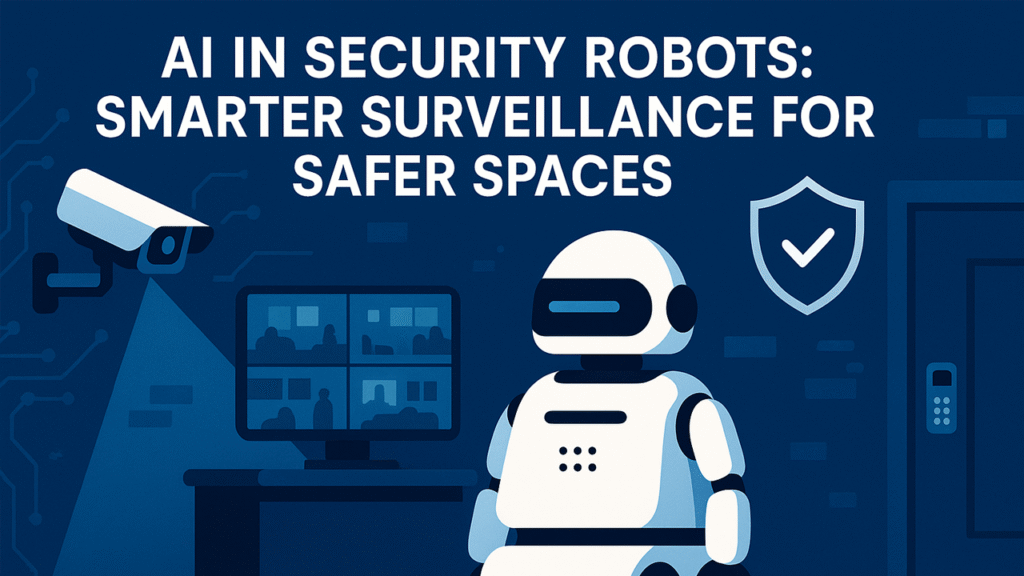
AI in Security Robots: Smarter Surveillance for Safer Spaces
The landscape of security and surveillance has undergone a dramatic transformation in recent years, driven by advances in artificial intelligence and robotics technology. What once required teams of human security personnel working around the clock can now be accomplished by intelligent robotic systems that never tire, never lose focus, and can process vast amounts of data in real-time. AI-powered security robots are revolutionising how we think about protecting our spaces, offering unprecedented levels of surveillance capability while reducing operational costs and human risk.
The Evolution of Security Technology
Traditional security systems have long relied on static cameras, motion sensors, and human guards to monitor facilities. While these approaches have served their purpose, they come with inherent limitations. Human security personnel are subject to fatigue, distraction, and the physical constraints of being in only one location at a time. Static surveillance systems, while reliable, lack the mobility and intelligence to respond dynamically to changing situations.
The integration of artificial intelligence into robotic security platforms represents a quantum leap forward in surveillance technology. These sophisticated systems combine advanced sensors, machine learning algorithms, and autonomous navigation capabilities to create security solutions that are both more effective and more efficient than their traditional counterparts.
Core AI Technologies Powering Security Robots
Computer Vision and Pattern Recognition
Modern security robots leverage cutting-edge computer vision technology to analyse their environment in real-time. These systems can identify and track multiple objects simultaneously, distinguish between different types of movement, and even recognise specific individuals through facial recognition algorithms. The ability to process visual data at superhuman speeds means that potential security threats can be identified and assessed within milliseconds of occurrence.
Advanced pattern recognition allows these robots to learn what constitutes normal behaviour within their operational environment. By establishing baseline patterns of activity, they can quickly identify anomalies that may indicate security breaches, unauthorised access, or suspicious behaviour. This intelligent analysis reduces false alarms while ensuring that genuine threats are never missed.
Natural Language Processing and Communication
AI-powered security robots are equipped with sophisticated natural language processing capabilities that enable them to communicate effectively with humans. They can respond to voice commands, provide verbal warnings to intruders, and even conduct basic interviews with authorised personnel. This communication ability transforms them from mere surveillance devices into interactive security partners.
The integration of multilingual capabilities ensures that these robots can operate effectively in diverse environments, communicating with individuals regardless of their native language. This is particularly valuable in international business environments, airports, and other facilities that serve multicultural populations.
Predictive Analytics and Threat Assessment
Perhaps one of the most powerful features of AI-driven security robots is their ability to predict and prevent security incidents before they occur. By analysing patterns of behaviour, environmental conditions, and historical data, these systems can identify situations that are likely to develop into security threats.
Predictive analytics enable proactive security measures rather than reactive responses. For example, a security robot might identify that certain areas of a facility experience increased suspicious activity during specific times of day, allowing security teams to deploy additional resources preventatively rather than responding to incidents after they occur.
Key Applications and Use Cases
Corporate and Industrial Facilities
Large corporate campuses and industrial facilities present unique security challenges due to their size, complexity, and the variety of activities taking place within them. AI-powered security robots excel in these environments, providing comprehensive surveillance coverage that would be cost-prohibitive with human security personnel alone.
These robots can patrol vast areas autonomously, monitoring for unauthorised access, equipment tampering, and safety violations. Their ability to operate in hazardous environments makes them particularly valuable in industrial settings where human safety might be at risk. Chemical plants, manufacturing facilities, and power generation stations benefit enormously from robotic security systems that can operate safely in areas with extreme temperatures, toxic substances, or radiation.
Retail and Commercial Spaces
The retail sector has embraced AI security robots as a solution to shoplifting, vandalism, and other security concerns. These robots can monitor customer behaviour, identify suspicious activities, and alert human security personnel to potential theft attempts. Their presence alone serves as a deterrent to criminal activity while providing valuable data on customer traffic patterns and behaviour.
Shopping centres and large retail complexes use security robots to provide comprehensive coverage of common areas, parking facilities, and loading docks. The robots’ ability to operate continuously ensures that security coverage remains consistent even during shift changes or staff shortages.
Educational Institutions
Schools and universities face unique security challenges, balancing the need for safety with the requirement to maintain an open, welcoming environment for students and staff. AI-powered security robots provide an ideal solution, offering advanced surveillance capabilities while being less intimidating than traditional security measures.
These robots can monitor for unauthorised access, identify potential threats, and ensure that safety protocols are being followed. Their ability to recognise individuals allows them to distinguish between students, staff, and visitors, ensuring that appropriate access controls are maintained without disrupting the educational environment.
Healthcare Facilities
Hospitals and healthcare facilities require specialised security solutions that can operate effectively in sensitive environments. AI security robots designed for healthcare applications can monitor patient areas, secure pharmaceutical storage, and ensure that access restrictions are properly enforced.
The robots’ ability to operate quietly and unobtrusively makes them ideal for healthcare environments where patient comfort and privacy are paramount. They can patrol corridors during night shifts, monitor emergency exits, and provide additional security without disturbing patients or interfering with medical procedures.
Technical Capabilities and Features
Advanced Sensor Integration
Modern security robots incorporate multiple sensor types to create a comprehensive understanding of their environment. High-definition cameras provide detailed visual information, while thermal imaging sensors can detect heat signatures and identify individuals even in complete darkness. Lidar and radar systems enable precise navigation and obstacle avoidance, while acoustic sensors can detect unusual sounds or conversations.
The fusion of data from multiple sensors creates a rich, multi-dimensional picture of the robot’s surroundings. This sensor fusion approach ensures that the robot can continue to operate effectively even if one sensor type fails or is compromised.
Autonomous Navigation and Mapping
AI-powered security robots utilise sophisticated navigation algorithms that allow them to move through complex environments autonomously. These systems can create detailed maps of their operational areas, plan optimal patrol routes, and adapt to changes in the environment such as moved furniture or temporary barriers.
The ability to navigate autonomously means that these robots can operate with minimal human intervention, reducing operational costs while maintaining consistent security coverage. Advanced path planning algorithms ensure that patrol routes are optimised for maximum coverage while minimising energy consumption.
Real-Time Data Processing and Analysis
The true power of AI in security robots lies in their ability to process and analyse vast amounts of data in real-time. Modern systems can simultaneously monitor dozens of video feeds, analyse audio patterns, track multiple individuals, and correlate this information with historical data and threat intelligence.
This real-time analysis capability enables immediate response to security incidents while also building a comprehensive database of security-related information that can be used for long-term planning and threat assessment.
Benefits and Advantages
Cost-Effectiveness and ROI
While the initial investment in AI-powered security robots may be substantial, the long-term cost benefits are significant. A single robot can provide surveillance coverage equivalent to multiple human security guards, operating 24/7 without breaks, holidays, or sick leave. The reduction in personnel costs, combined with improved security effectiveness, typically results in a positive return on investment within 18-24 months.
Additionally, the comprehensive data collection capabilities of these robots provide valuable insights that can be used to optimise security procedures, reduce insurance premiums, and improve overall facility management.
Enhanced Detection Capabilities
AI-powered security robots can detect threats and anomalies that might be missed by human observers. Their ability to process multiple data streams simultaneously, combined with advanced pattern recognition algorithms, means that subtle indicators of security breaches are identified and acted upon quickly.
The consistency of robotic surveillance eliminates the human factors that can compromise security effectiveness, such as fatigue, distraction, or complacency. This results in more reliable security coverage and reduced risk of security incidents.
Scalability and Flexibility
Robotic security systems can be easily scaled up or down based on changing security requirements. Additional robots can be deployed during high-risk periods, while the system can be scaled back during low-risk times. This flexibility allows organisations to match their security resources precisely to their needs, optimising both effectiveness and cost.
The modular nature of AI security robot systems means that capabilities can be upgraded or modified as requirements change, ensuring that the investment remains valuable over time.
Challenges and Considerations
Privacy and Ethical Concerns
The deployment of AI-powered security robots raises important questions about privacy and surveillance. These systems collect vast amounts of data about individuals’ movements, behaviours, and activities, which must be handled responsibly and in compliance with relevant privacy regulations.
Organisations implementing robotic security systems must establish clear policies regarding data collection, storage, and usage. Transparency about the presence and capabilities of security robots is essential to maintaining public trust and ensuring compliance with privacy laws.
Technical Limitations and Reliability
While AI technology has advanced significantly, security robots still face certain technical limitations. Weather conditions, lighting changes, and environmental factors can affect sensor performance. Additionally, the complexity of AI systems means that they require regular maintenance and updates to maintain optimal performance.
Organisations must plan for system redundancy and backup procedures to ensure that security coverage remains effective even when robotic systems experience technical difficulties.
Integration with Existing Security Infrastructure
Successful deployment of AI security robots requires careful integration with existing security systems and procedures. This includes compatibility with access control systems, alarm networks, and communication protocols. The integration process must be planned carefully to ensure that the addition of robotic systems enhances rather than complicates existing security operations.
Future Developments and Trends
Enhanced AI Capabilities
The future of AI in security robots lies in continued advancement of artificial intelligence capabilities. Machine learning algorithms are becoming more sophisticated, enabling robots to learn and adapt to their environments more effectively. Future systems will be able to predict security threats with greater accuracy and respond more intelligently to complex situations.
Natural language processing capabilities will continue to improve, allowing security robots to conduct more sophisticated interactions with humans and provide more detailed reports of security incidents.
Collaborative Robot Networks
The next generation of security robots will operate as part of collaborative networks, sharing information and coordinating their activities to provide comprehensive security coverage. These networks will be able to respond to threats by automatically repositioning robots, alerting human security personnel, and coordinating with other security systems.
The development of swarm intelligence capabilities will enable multiple robots to work together on complex security tasks, providing redundancy and enhanced effectiveness.
Integration with Smart Building Systems
Future security robots will be fully integrated with smart building systems, accessing information from IoT sensors, environmental controls, and building management systems. This integration will enable more comprehensive threat assessment and response capabilities, as robots will have access to a complete picture of building operations and conditions.
Implementation Strategies
Assessment and Planning
Successful implementation of AI security robots begins with a thorough assessment of existing security requirements and infrastructure. This assessment should identify specific security challenges, evaluate current systems, and determine how robotic solutions can best address identified needs.
A comprehensive implementation plan should include timeline development, budget allocation, staff training requirements, and integration procedures. The plan should also address regulatory compliance, privacy considerations, and ongoing maintenance requirements.
Pilot Programs and Gradual Deployment
Many organisations find that implementing AI security robots through pilot programs allows them to evaluate effectiveness and identify potential issues before full deployment. Pilot programs provide valuable experience and data that can inform larger-scale implementations.
Gradual deployment allows staff to become familiar with robotic systems and ensures that integration issues are identified and resolved before they affect overall security operations.
Staff Training and Change Management
The introduction of AI security robots requires comprehensive staff training and change management procedures. Security personnel must understand how to work effectively with robotic systems, interpret robot-generated data, and respond appropriately to robot alerts.
Change management procedures should address staff concerns about job displacement and ensure that the introduction of robotic systems enhances rather than replaces human security capabilities.
Maximising Your Security Investment
The decision to implement AI-powered security robots represents a significant investment in your organisation’s future security capabilities. However, the complexity of these systems and the rapidly evolving nature of the technology mean that expert guidance is essential for success.
Professional consultation services can help you navigate the complex landscape of robotic security solutions, ensuring that you select systems that meet your specific requirements and integrate effectively with your existing infrastructure. Expert consultants can provide valuable insights into technology trends, regulatory requirements, and best practices for implementation.
For organisations looking to explore AI security robot solutions, professional consultation can provide the expertise needed to make informed decisions and ensure successful implementation. The investment in professional guidance often pays for itself through improved system selection, more effective implementation, and reduced risk of costly mistakes.
Recruitment and Staffing Considerations
As AI security robots become more prevalent, organisations face new challenges in recruiting and managing staff who can work effectively with these advanced systems. The integration of robotic technology into security operations requires personnel with specialised skills in robotics, AI systems, and human-robot interaction.
Specialised recruitment services can help organisations identify and attract candidates with the technical expertise needed to manage and maintain AI security robot systems. These services understand the unique requirements of robotic security operations and can help organisations build teams that maximise the effectiveness of their technology investments.
The future of security lies in the effective combination of human expertise and robotic capabilities. Organisations that invest in both advanced technology and skilled personnel will be best positioned to achieve superior security outcomes while maintaining operational efficiency.
Conclusion
AI-powered security robots represent a transformative technology that is reshaping the security industry. These sophisticated systems offer unprecedented capabilities in surveillance, threat detection, and response, while providing significant cost advantages over traditional security approaches.
The successful implementation of robotic security solutions requires careful planning, expert guidance, and ongoing support. Organisations that approach this technology strategically, with proper consultation and skilled personnel, will achieve superior security outcomes while positioning themselves for future technological advances.
As the technology continues to evolve, the capabilities and applications of AI security robots will expand further, offering even greater opportunities for enhanced security and operational efficiency. The organisations that embrace this technology today will be the leaders in security innovation tomorrow.
About This Article
This article is sponsored by leading robotics companies dedicated to advancing the field of AI-powered security solutions:
Robot Center – https://robotcenter.co.uk/
Your premier destination for robot purchasing, consultation, and robotics expertise. Whether you’re looking to buy robots or need expert robotics consultancy, Robot Center provides comprehensive solutions for all your robotic needs.
Robots of London – https://robotsoflondon.co.uk/
Specialising in robot hire and rental services, Robots of London offers flexible solutions for businesses needing temporary robotic capabilities. From robot events to short-term deployments, they provide comprehensive robot rental services.
Robot Philosophy – https://robophil.com/
Leading provider of robot consultancy and recruitment services, offering expert robot advice, insights, and innovative robot ideas. Their comprehensive approach combines technical expertise with strategic thinking to deliver optimal robotic solutions.
Ready to explore AI security robot solutions for your organisation?
Contact our expert team today to discuss how AI-powered security robots can transform your security operations. Our experienced consultants and recruitment specialists are ready to help you navigate the exciting world of robotic security solutions.
Email: sales@robotcenter.co.uk
Phone: 0845 528 0404
Book a consultation call today to discover how AI security robots can enhance your organisation’s security capabilities while reducing operational costs and improving overall effectiveness.