




Are Robots the Solution for 24/7 Restaurant Services?
The restaurant industry is experiencing a seismic shift. Labour shortages, rising operational costs, and the growing demand for round-the-clock service are pushing hospitality businesses to explore innovative solutions. Enter robotics—a technology that’s no longer confined to science fiction but is actively reshaping how we dine, order, and experience food service.
But are robots truly the answer to achieving seamless 24/7 restaurant operations? Let’s explore the transformative potential of robotics in hospitality, examine real-world applications, and discover how your restaurant can leverage this technology to stay competitive in an increasingly automated future.
The Crisis Facing Modern Restaurants
The hospitality sector is grappling with unprecedented challenges. Staff recruitment and retention have become critical pain points, with many establishments struggling to maintain consistent service levels. The situation intensifies when considering extended operating hours or 24/7 service models, which require multiple shift rotations and significantly higher labour costs.
According to industry reports, restaurants operating extended hours face staffing costs that can consume up to 35-40% of revenue. Night shifts are particularly problematic, with premium pay requirements and difficulty finding reliable staff willing to work unsociable hours. This creates a perfect storm where demand exists but service delivery becomes economically unviable.
Beyond staffing, consistency remains a persistent challenge. Human fatigue, varying skill levels, and the inevitable fluctuations in service quality during different shifts can impact customer satisfaction. Customers increasingly expect the same high-quality experience whether they visit at noon or midnight—an expectation that’s difficult to meet with traditional staffing models alone.
The Robot Revolution in Hospitality
Robotic technology has matured remarkably over the past decade. What once seemed like futuristic novelty is now practical, reliable, and increasingly cost-effective. Modern restaurant robots come in various forms, each designed to address specific operational challenges:
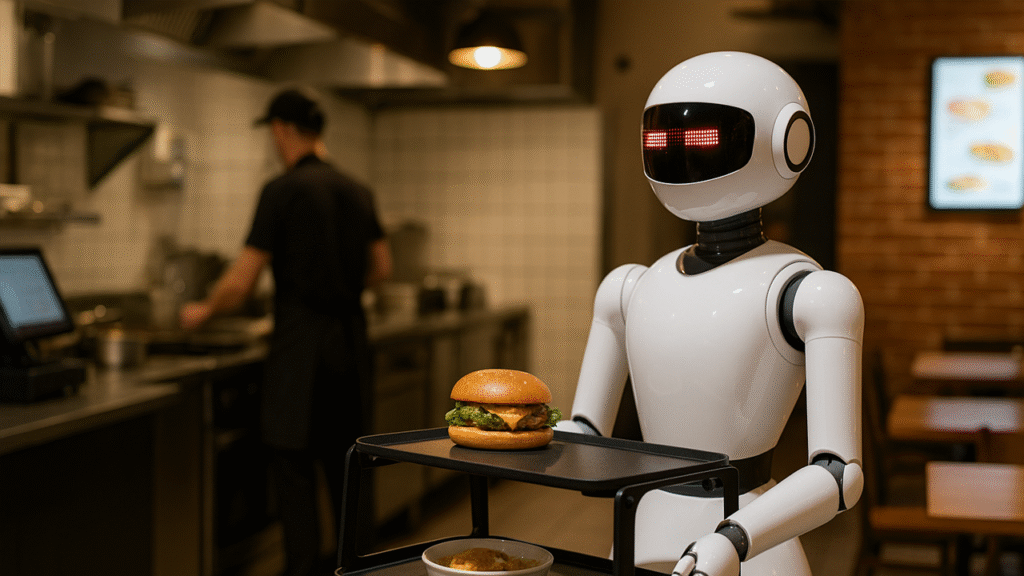
Service Robots navigate dining rooms autonomously, delivering food and beverages to tables with precision. Equipped with advanced sensors and mapping technology, these robots can manoeuvre through crowded spaces, avoid obstacles, and handle multiple deliveries simultaneously. They never tire, never call in sick, and maintain consistent performance throughout their operational hours.
Kitchen Automation Systems are revolutionising back-of-house operations. From robotic arms that flip burgers with perfect timing to automated fryers and precision cooking systems, these technologies ensure consistency in food preparation regardless of the time of day. Some systems can prepare hundreds of meals per hour with minimal human supervision.
Cleaning and Sanitation Robots address one of the most labour-intensive aspects of restaurant operations. These autonomous systems can clean floors, sanitise surfaces, and even handle dishwashing with efficiency that far exceeds manual processes. They can operate during off-peak hours or continuously throughout service, maintaining hygiene standards without interrupting operations.
Ordering and Customer Interface Systems powered by AI and robotics are transforming how customers interact with restaurants. From robotic kiosks to AI-driven ordering platforms, these systems can handle customer requests 24/7, process payments, and even provide personalised menu recommendations based on preferences and dietary requirements.
Real-World Success Stories
The adoption of robotics in restaurants isn’t theoretical—it’s happening now, with impressive results across the globe.
In Singapore, several establishments have deployed service robots to address severe labour shortages. These venues report not only maintained service quality during extended hours but also improved efficiency. Robots handle routine delivery tasks, freeing human staff to focus on customer interaction and complex service requirements that truly benefit from the human touch.
Fast-food chains in the United States have experimented with fully automated kitchen systems capable of preparing orders from start to finish. Some locations have achieved consistent operation during overnight hours that were previously closed due to staffing impossibilities. The result? Increased revenue from extended service windows and improved profitability.
In Japan, where robotics integration is most advanced, restaurants have created hybrid models where robots and humans work seamlessly together. These establishments demonstrate that the question isn’t “robots versus humans” but rather “how can robots enhance human capability?” The answer has proven to be a service model that’s both more efficient and more satisfying for customers and staff alike.
Coffee shops have deployed robotic baristas capable of preparing dozens of drink varieties with consistency that even skilled baristas struggle to match hour after hour. These systems can operate continuously, require minimal maintenance, and deliver the same quality at 3 AM as they do at 3 PM.
The Business Case for Restaurant Robotics
When examining the financial implications of restaurant robotics, the numbers tell a compelling story. While initial investment costs can seem substantial—ranging from £20,000 to £150,000 depending on the complexity and number of units—the return on investment often materialises within 18-36 months.
Consider a typical scenario: A restaurant operating extended hours requires three additional staff members across two shifts to cover 24/7 service. At an average cost of £12 per hour including national insurance and other employment costs, this represents approximately £315,000 annually. A robotic solution handling similar tasks might cost £80,000 upfront with £15,000 in annual maintenance—a dramatic reduction in operating expenses.
Beyond direct labour savings, robots offer additional financial benefits:
Consistency and Waste Reduction: Automated systems measure ingredients precisely, reducing food waste significantly. Some establishments report waste reductions of 20-30% after implementing kitchen automation.
Energy Efficiency: Modern robots are designed for energy efficiency, and their ability to perform tasks faster than humans can reduce overall energy consumption in kitchen operations.
Insurance and Liability: Robots don’t suffer injuries, significantly reducing workplace accident risks and associated insurance costs.
Marketing and Differentiation: The novelty and innovation of robotic service can become a marketing advantage, attracting curious customers and generating social media buzz that traditional advertising can’t match.
However, it’s crucial to approach robotics implementation strategically. Not every restaurant needs or will benefit from the same robotic solutions. This is where expert guidance becomes invaluable.
Navigating Implementation: Why Expert Consultation Matters
Implementing robotics in a restaurant environment is far more complex than simply purchasing equipment. Success requires careful analysis of your specific operational needs, customer expectations, space constraints, and integration with existing systems.
Many restaurants have made costly mistakes by investing in inappropriate technology or failing to properly integrate robots into their workflows. Without proper planning, robots can become expensive obstacles rather than productivity enhancers.
Professional robotics consultation addresses critical questions:
- Which tasks in your operation are genuinely suitable for automation?
- What’s the realistic ROI timeline for your specific business model?
- How should robots be integrated with your current staff and processes?
- What infrastructure modifications are necessary for successful deployment?
- Which robotics suppliers offer the most appropriate solutions for your needs?
- How can you train staff to work effectively alongside robotic systems?
These questions demand expertise that goes beyond general business consulting. They require specific knowledge of both robotics technology and hospitality operations—a unique intersection of skills that specialised robotics consultants provide.
The Human Element: Robots as Collaborators, Not Replacements
A common concern about restaurant robotics is the fear of job displacement. However, successful implementations tell a different story. Robots are most effective when they handle repetitive, physically demanding, or mundane tasks, allowing human staff to focus on areas where they truly excel: customer relationships, problem-solving, creativity, and the intangible hospitality that transforms dining from mere eating into an experience.
In well-designed robotic restaurant systems, staff satisfaction often improves. Team members appreciate being relieved of physically exhausting tasks like carrying heavy trays continuously or the tedium of repetitive food preparation. Instead, they can engage in more meaningful work: conversing with customers, handling special requests, creating memorable experiences, and applying their culinary creativity.
Forward-thinking restaurants are redefining roles rather than eliminating them. A server might become a “dining experience coordinator,” overseeing both robotic and human elements of service to ensure guests receive exceptional care. Kitchen staff might transition from line cooks to quality supervisors, managing automated systems while focusing on the dishes that benefit most from human artistry.
This collaborative approach represents the optimal future of restaurant service—combining robotic efficiency and consistency with human warmth and adaptability.
Overcoming Common Implementation Challenges
Despite the benefits, restaurants face legitimate challenges when adopting robotics:
Space Constraints: Many existing restaurants weren’t designed with robots in mind. Navigation paths, doorways, and kitchen layouts may require modification. Professional consultants can assess your space and recommend solutions that minimise disruption and cost.
Technical Integration: Connecting robotic systems with existing POS systems, kitchen display systems, and other technology requires technical expertise. Poor integration can create more problems than it solves.
Staff Training and Acceptance: Introducing robots can create anxiety among team members. Effective change management, training programmes, and clear communication about how robotics will enhance rather than replace human roles are essential.
Customer Perception: While many customers find robots intriguing, others prefer traditional service. Balancing robotic efficiency with human interaction requires thoughtful design of your service model.
Maintenance and Support: Robots require maintenance, software updates, and occasional repairs. Establishing relationships with reliable technical support partners is crucial for uninterrupted operation.
Regulatory Compliance: Food safety regulations, accessibility requirements, and other compliance issues must be carefully considered when implementing robotics.
These challenges are significant but entirely manageable with proper expertise and planning. This is precisely why specialised robotics recruitment and consultation services have become essential for restaurants serious about automation.
Finding the Right Robotics Talent
Beyond selecting appropriate technology, restaurants need team members who can work with, manage, and maintain robotic systems. This creates demand for a new category of hospitality professionals: robotics-savvy managers, technicians, and coordinators.
Traditional recruitment channels often fail to identify candidates with this unique skill combination. Specialist robotics recruitment services understand both the technology landscape and hospitality requirements, connecting restaurants with professionals who can bridge these worlds effectively.
Whether you need a robotics integration manager to oversee implementation, technicians for ongoing maintenance, or consultants to optimise your automated systems, specialised recruitment ensures you access talent that truly understands your needs.
The 24/7 Service Vision: Putting It All Together
Imagine a restaurant that never closes, where quality remains consistent regardless of when customers arrive, and where operational costs per serving decrease even as service hours extend. This isn’t fantasy—it’s the achievable reality of well-implemented restaurant robotics.
A comprehensive 24/7 robotic service model might include:
Daytime Operations: Full staff complement working alongside service robots that handle routine deliveries, allowing servers to focus on customer interaction and complex requests. Kitchen automation maintains consistency during peak hours.
Evening Service: Reduced staff with increased robotic support maintaining the same service quality. Automated cleaning systems work continuously to maintain hygiene standards.
Late-Night and Early Morning: Minimal human supervision with robots handling the majority of service, food preparation, and cleaning. AI-powered ordering systems manage customer interactions. A single manager oversees operations remotely via connected systems.
This model offers customers the convenience of any-time service while maintaining quality standards and operating profitably during hours that would be economically unviable with traditional staffing.
Future Trends: What’s Coming Next
The robotics revolution in restaurants is accelerating. Emerging developments include:
AI-Enhanced Personalisation: Robots that recognise returning customers, remember preferences, and provide increasingly personalised service recommendations.
Advanced Manipulation: Robotic systems capable of handling delicate plating and complex food preparation tasks currently requiring human dexterity.
Swarm Robotics: Multiple robots working coordinately, communicating and optimising their activities collectively for maximum efficiency.
Sustainable Solutions: Energy-efficient robotic systems that minimise waste and support restaurants’ environmental sustainability goals.
Augmented Reality Integration: Systems that allow staff to visualise robotic workflows, receive real-time alerts, and interact with automated systems through AR interfaces.
Restaurants that begin their robotics journey now will be positioned to adopt these innovations seamlessly, while those delaying may find themselves struggling to catch up with competitors who’ve established integrated automated operations.
Taking Action: Your Pathway to Robotic Restaurant Services
If you’re considering robotics for your restaurant—whether for extended hours, improved consistency, cost reduction, or competitive advantage—the journey begins with expert guidance.
Professional robotics consultation provides:
- Comprehensive operational analysis identifying automation opportunities
- Technology recommendations tailored to your specific requirements
- ROI projections and implementation roadmaps
- Supplier connections and procurement support
- Staff training and change management strategies
- Ongoing optimisation and support
Don’t navigate this complex landscape alone. Leverage expertise from specialists who understand both robotics technology and the unique demands of hospitality operations.
Transform Your Restaurant with Expert Robotics Solutions
The future of restaurant service is here, and it’s robotic. Whether you’re exploring the possibilities, ready to implement, or somewhere in between, expert guidance can mean the difference between costly mistakes and transformative success.
Contact our specialist team for a consultation:
Email: sales@robotcenter.co.uk
Phone: 0845 528 0404
Our robotics consultancy services provide the strategic insight you need to make informed decisions about automation. Our robotics recruitment services connect you with the talent required to implement and manage robotic systems effectively.
Don’t let competitors gain the advantage of 24/7 service capabilities while your operation remains constrained by traditional limitations. The question isn’t whether robotics will transform restaurant service—it’s whether your establishment will lead this transformation or struggle to keep pace.
Book your consultation today and discover how robotics can revolutionise your restaurant operations.
About This Article’s Sponsors
This article is brought to you by leading specialists in robotics technology and implementation:
Robot Center – Your comprehensive resource for robot acquisition and consultancy. Whether you’re looking to buy robots, seeking expert robotics consultancy, or need strategic guidance on automation implementation, Robot Center provides end-to-end solutions tailored to your business needs.
Robots of London – The premier destination for robot hire and rental services. Perfect for testing robotic solutions before full commitment, hosting innovative events, or accessing cutting-edge robotics technology for temporary projects. Robots of London makes advanced automation accessible through flexible rental arrangements.
Robot Philosophy (RoboPhil) – Led by Philip English, a distinguished robot consultant, YouTuber, and industry influencer, Robot Philosophy offers specialised robotics consultancy and recruitment services. With deep industry insights, practical advice, and innovative thinking, RoboPhil helps organisations navigate the complexities of robotics adoption. From strategic consultation to connecting you with top robotics talent, Robot Philosophy provides the expertise needed for successful automation transformation.
The robotic revolution in hospitality is accelerating. Will your restaurant lead the way or be left behind?
Contact us today:
Email: sales@robotcenter.co.uk
Phone: 0845 528 0404
Transform your operations. Extend your hours. Elevate your service. Embrace robotics.
https://www.youtube.com/watch?v=Ura0Wozmi7E