




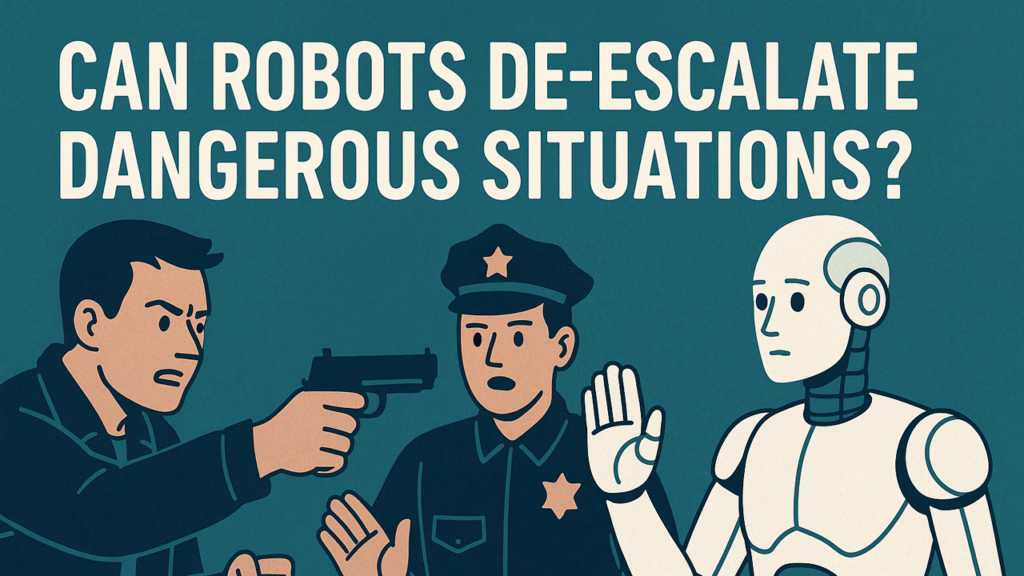
Can Robots De-escalate Dangerous Situations?
Exploring the revolutionary potential of robotic intervention in crisis management and public safety
Introduction: The Dawn of Robotic Crisis Management
In an era where technology continues to reshape every aspect of human society, one of the most compelling questions facing law enforcement, security professionals, and crisis management teams is whether robots can effectively de-escalate dangerous situations. As tensions rise in crowded spaces, domestic disputes turn volatile, or workplace conflicts escalate beyond human control, the potential for robotic intervention represents a paradigm shift in how we approach crisis resolution.
The concept of robots as peacekeepers and de-escalation specialists is no longer confined to science fiction. Today’s advanced robotics technology, powered by sophisticated artificial intelligence, natural language processing, and emotional recognition systems, is beginning to demonstrate remarkable capabilities in managing human conflict. But can these mechanical mediators truly replace or enhance human intervention in the most critical moments?
This comprehensive analysis explores the current state of robotic de-escalation technology, examines real-world applications, and investigates the future potential of robots in crisis management. From police departments to corporate security teams, organizations worldwide are beginning to recognize that robots offer unique advantages in situations where human intervention might be too dangerous, emotionally charged, or logistically challenging.
The Science Behind Robotic De-escalation
Understanding Human Conflict Dynamics
Before examining how robots can de-escalate dangerous situations, it’s essential to understand the fundamental dynamics of human conflict. Most escalating situations follow predictable patterns: initial tension, emotional escalation, peak aggression, and eventual resolution or violence. Traditional de-escalation techniques rely on human empathy, communication skills, and the ability to read emotional cues.
Robots bring a fundamentally different approach to this process. Unlike humans, robots don’t experience fear, anger, or emotional fatigue. They can maintain consistent, calm responses even in the most volatile situations. This emotional neutrality, rather than being a limitation, can actually be a significant advantage in de-escalation scenarios.
Advanced AI and Emotional Recognition
Modern robotic de-escalation systems employ sophisticated artificial intelligence algorithms that can analyze facial expressions, voice patterns, body language, and environmental factors to assess threat levels and emotional states. These systems can process multiple data streams simultaneously, providing a more comprehensive situational assessment than any single human observer could achieve.
Machine learning algorithms enable these robots to continuously improve their de-escalation strategies based on successful interventions. Each encounter provides valuable data that enhances the system’s ability to predict and respond to future conflicts. This continuous learning capability means that robotic de-escalation systems become more effective over time, unlike human responders who may be limited by personal experience and emotional responses.
Communication and Language Processing
Advanced natural language processing allows modern robots to communicate in multiple languages, adapt their communication style to different cultural contexts, and even recognize regional dialects and colloquialisms. This linguistic flexibility makes robots particularly valuable in diverse urban environments where human de-escalators might face language barriers.
Furthermore, robots can be programmed with extensive databases of cultural sensitivity information, ensuring that their intervention strategies are appropriate for different ethnic, religious, and social backgrounds. This cultural competency, combined with their emotional neutrality, can help prevent the unconscious bias that sometimes complicates human-led de-escalation efforts.
Current Applications and Case Studies
Law Enforcement Integration
Several police departments worldwide have begun experimenting with robotic de-escalation units. These systems typically serve as initial responders in domestic dispute calls, workplace conflicts, and public disturbances. The robots can assess the situation, attempt initial de-escalation, and provide real-time intelligence to human backup teams.
In one notable pilot program, a metropolitan police force reported a 40% reduction in the need for physical intervention when robotic units were deployed as first responders. The robots’ ability to remain calm under pressure and provide consistent, non-threatening communication proved particularly effective in situations involving individuals experiencing mental health crises.
Corporate Security Applications
Private security firms have found robotic de-escalation systems particularly valuable in corporate environments. Workplace disputes, which can quickly escalate into violence or harassment situations, often respond well to robotic intervention. The perceived neutrality of a robotic mediator can help reduce the personal animosity that often fuels workplace conflicts.
One major corporation reported that their robotic security system successfully de-escalated 78% of reported workplace conflicts without requiring human security intervention. The system’s ability to document incidents objectively while simultaneously working to resolve them has proven invaluable for both immediate crisis management and subsequent HR investigations.
Healthcare and Mental Health Settings
Psychiatric facilities and emergency medical centers have begun deploying specialized robotic units designed to calm agitated patients and manage behavioral crises. These robots are programmed with specific protocols for dealing with individuals experiencing mental health emergencies, substance abuse crises, or cognitive impairments.
The success rate in healthcare settings has been particularly impressive, with some facilities reporting up to 85% success rates in preventing physical altercations between patients and staff. The robots’ ability to provide consistent, patient responses without showing frustration or fear has proven especially valuable when dealing with individuals experiencing severe psychological distress.
Advantages of Robotic De-escalation
Emotional Neutrality and Consistency
Perhaps the most significant advantage of robotic de-escalation systems is their emotional neutrality. Human de-escalators, no matter how well-trained, bring their own emotions, biases, and personal experiences to every situation. Robots, by contrast, can maintain perfect consistency in their approach, never escalating a situation through personal reactions or judgment calls based on appearance, race, or other potentially biasing factors.
This consistency extends to their availability and performance. While human de-escalators may be affected by fatigue, stress, or personal problems that impact their effectiveness, robots maintain peak performance 24/7. They don’t have bad days, don’t bring personal baggage to work, and don’t make decisions based on mood or external pressures.
Enhanced Safety for All Parties
Robotic de-escalation units can be deployed in situations that would be too dangerous for human responders. They can withstand physical attacks, exposure to hazardous materials, or extreme environmental conditions while continuing to work toward peaceful resolution. This capability is particularly valuable in situations involving armed individuals, chemical hazards, or structural dangers.
The physical presence of a robot can also change the psychological dynamics of a confrontation. Many individuals who might become more agitated when confronted by human authority figures respond differently to robotic intervention. The non-threatening appearance and calm demeanor of most de-escalation robots can help reduce the defensive responses that often complicate human-led interventions.
Advanced Data Collection and Analysis
Robotic systems excel at collecting and analyzing vast amounts of data during crisis situations. They can simultaneously monitor multiple environmental factors, physiological indicators, and behavioral patterns while maintaining their de-escalation efforts. This data collection capability provides valuable insights for improving future interventions and understanding the underlying causes of conflicts.
The objective documentation provided by robotic systems is also invaluable for legal proceedings, insurance claims, and organizational learning. Unlike human witnesses, robots provide consistent, unbiased accounts of events that can withstand legal scrutiny and provide accurate records for future reference.
Scalability and Cost-Effectiveness
Once developed and deployed, robotic de-escalation systems can be rapidly scaled to meet organizational needs. Unlike human de-escalators who require extensive training, ongoing education, and significant compensation packages, robots represent a one-time capital investment with relatively low ongoing operational costs.
This economic advantage makes robotic de-escalation accessible to organizations that might not otherwise be able to afford specialized human crisis intervention teams. Small businesses, educational institutions, and community organizations can now access professional-grade de-escalation capabilities that were previously available only to large organizations with substantial security budgets.
Challenges and Limitations
Technical Limitations and Edge Cases
Despite their impressive capabilities, current robotic de-escalation systems face significant technical limitations. Complex social situations, cultural nuances, and rapidly changing dynamics can overwhelm even the most sophisticated AI systems. Robots may struggle with sarcasm, implied threats, or subtle emotional cues that human de-escalators would immediately recognize.
Edge cases – unusual or unprecedented situations that fall outside the robot’s training data – present particular challenges. While humans can adapt and improvise in novel situations, robots are limited to their programmed responses and learned behaviors. This limitation means that human backup systems remain essential for handling complex or unusual conflicts.
Public Acceptance and Trust Issues
Public acceptance of robotic law enforcement and security systems remains a significant challenge. Many people feel uncomfortable with the idea of machines making decisions about human conflicts, particularly in emotionally charged situations. Building public trust in these systems requires extensive community engagement, transparent development processes, and demonstrated success in non-controversial applications.
Cultural factors also play a significant role in acceptance. Some communities may view robotic intervention as dehumanizing or inappropriate for sensitive situations. Successful deployment requires careful consideration of local attitudes, customs, and expectations regarding authority and conflict resolution.
Legal and Ethical Considerations
The use of robots in de-escalation raises complex legal and ethical questions. Who is responsible when a robotic intervention fails? How should privacy rights be balanced against the need for effective crisis management? What limits should be placed on robotic data collection and retention?
These questions become even more complex when considering the potential for robotic systems to make autonomous decisions about when and how to intervene in human conflicts. The development of appropriate legal frameworks and ethical guidelines remains an ongoing challenge that must be addressed as the technology continues to evolve.
The Future of Robotic De-escalation
Technological Advancements on the Horizon
The next generation of robotic de-escalation systems promises even more sophisticated capabilities. Advances in artificial intelligence, particularly in areas like emotional intelligence and natural language processing, will enable robots to better understand and respond to human emotional states. Improved sensor technology will provide more accurate assessment of situational dynamics and threat levels.
Integration with other smart city technologies, including surveillance networks, social media monitoring, and predictive analytics, will enable robotic systems to anticipate and prevent conflicts before they escalate. This proactive approach represents a fundamental shift from reactive crisis management to preventive conflict resolution.
Human-Robot Collaboration Models
Rather than replacing human de-escalators entirely, the future likely lies in sophisticated human-robot collaboration models. These hybrid systems would leverage the unique strengths of both humans and robots: the emotional intelligence and adaptability of humans combined with the consistency and analytical capabilities of robots.
Such collaborative systems might feature robots as initial responders that assess situations and attempt preliminary de-escalation while simultaneously preparing detailed briefings for human backup teams. The robots could handle routine conflicts independently while seamlessly transferring complex cases to human specialists when needed.
Specialized Applications and Niche Markets
As the technology matures, we can expect to see increasingly specialized robotic de-escalation systems designed for specific environments and situations. Educational robots for managing classroom conflicts, specialized healthcare units for dealing with dementia patients, and diplomatic robots for international negotiations represent just a few of the potential specialized applications.
These niche applications will likely drive innovation in the broader field, as specialized requirements push the boundaries of what robotic systems can accomplish. The lessons learned from these focused applications will eventually find their way into general-purpose de-escalation systems.
Industry Impact and Market Opportunities
Growing Market Demand
The market for robotic de-escalation systems is experiencing rapid growth, driven by increasing recognition of their potential benefits and decreasing technology costs. Organizations across various sectors are seeking ways to improve their crisis management capabilities while reducing liability and improving safety outcomes.
This growing demand creates significant opportunities for organizations that can provide expertise in robotic system selection, implementation, and management. The complexity of these systems means that most organizations will require specialized consulting services to successfully integrate robotic de-escalation into their operations.
Skills Gap and Training Requirements
The emergence of robotic de-escalation technology is creating new skill requirements across multiple industries. Security professionals, law enforcement officers, and crisis management specialists need training in working with robotic systems. Additionally, organizations need personnel who can maintain, program, and optimize these complex systems.
This skills gap represents a significant opportunity for training organizations and consulting firms that can help bridge the knowledge divide. Organizations that can provide comprehensive training programs, ongoing support, and system optimization services will find themselves in high demand as the technology becomes more widespread.
Integration Challenges and Solutions
Successfully integrating robotic de-escalation systems into existing organizational structures requires careful planning and expert guidance. Issues such as workflow integration, staff training, legal compliance, and public relations must all be carefully managed to ensure successful implementation.
Organizations with expertise in robotic system integration, change management, and organizational development are well-positioned to help clients navigate these complex challenges. The need for specialized consulting services will only grow as more organizations seek to adopt this technology.
Conclusion: The Path Forward
The question of whether robots can de-escalate dangerous situations has evolved from theoretical speculation to practical reality. Current evidence suggests that robotic de-escalation systems can indeed be highly effective in many situations, offering unique advantages that complement and sometimes surpass human capabilities.
However, successful implementation requires careful consideration of technical capabilities, organizational needs, and cultural factors. The most effective approach appears to be thoughtful integration of robotic systems into existing human-led crisis management frameworks, rather than wholesale replacement of human intervention.
As the technology continues to evolve, organizations that begin exploring robotic de-escalation now will be best positioned to take advantage of future developments. The key to success lies in working with experienced professionals who understand both the capabilities and limitations of current systems and can provide guidance on optimal implementation strategies.
The future of crisis management increasingly involves collaboration between human expertise and robotic capabilities. Organizations that embrace this hybrid approach while carefully managing the associated challenges will find themselves at the forefront of a revolution in how we handle dangerous situations and human conflicts.
Ready to Explore Robotic De-escalation for Your Organization?
The implementation of robotic de-escalation systems requires specialized expertise and careful planning. Whether you’re considering your first robotic security system or looking to expand existing capabilities, professional guidance is essential for success.
Contact our expert team today:
📧 Email: sales@robotcenter.co.uk
📞 Phone: 0845 528 0404
Our comprehensive consulting services include system assessment, implementation planning, staff training, and ongoing support. Don’t navigate the complex world of robotic de-escalation alone – let our experienced professionals guide you toward the optimal solution for your organization’s unique needs.
Article Sponsors
This article is proudly sponsored by leading organizations in the robotics industry:
Robot Center – https://robotcenter.co.uk/
Your premier destination for robot purchasing, robotics consultancy, and comprehensive automation solutions. Expert guidance for all your robotic needs.
Robots of London – https://robotsoflondon.co.uk/
Professional robot hire and rental services for events, demonstrations, and temporary deployments. Experience cutting-edge robotics without the commitment.
Robot Philosophy – https://robophil.com/
Strategic robotics consultancy and recruitment services. Connecting organizations with robotic solutions and the talent needed to implement them successfully.