




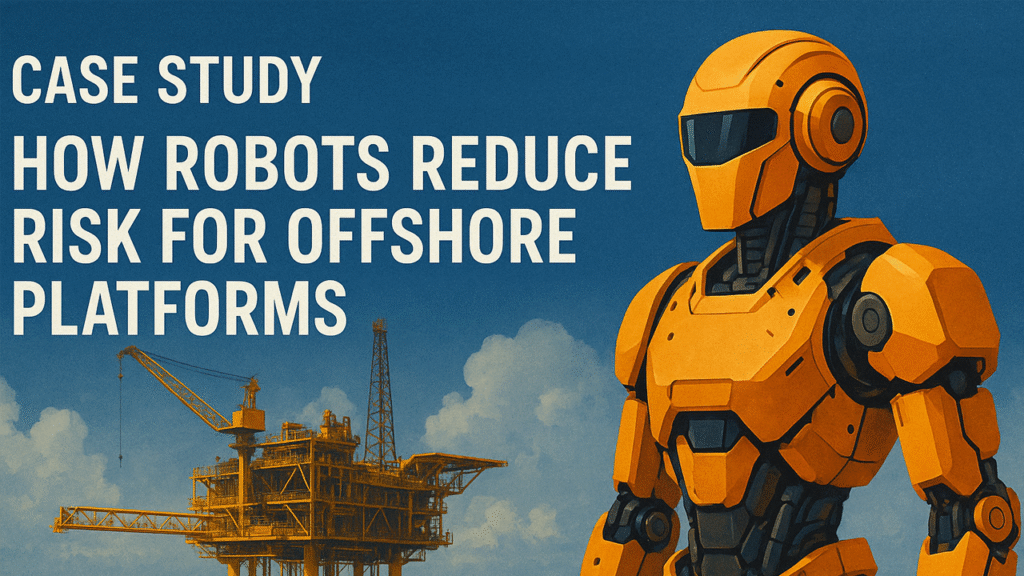
Case Study: How Robots Reduce Risk for Offshore Platforms
The offshore oil and gas industry operates in one of the world’s most challenging environments, where human safety and operational efficiency are paramount concerns. With platforms located hundreds of miles from shore, surrounded by harsh weather conditions and complex industrial processes, the margin for error is virtually zero. This comprehensive case study examines how robotic technologies are revolutionizing offshore operations by dramatically reducing risks while enhancing productivity and safety standards.
The Challenge: Understanding Offshore Risk Factors
Offshore platforms face a unique combination of hazards that make them among the most dangerous industrial environments on Earth. These include:
Environmental Hazards: Extreme weather conditions, including hurricanes, high waves, and freezing temperatures, create unpredictable working conditions. Workers must navigate slippery surfaces, high winds, and limited visibility while performing critical maintenance tasks.
Structural Risks: The constant exposure to saltwater corrosion, metal fatigue, and structural stress requires continuous monitoring and maintenance. Traditional inspection methods often require personnel to access dangerous areas using rope access techniques or scaffolding systems.
Process Safety Hazards: The handling of hydrocarbon products under high pressure and temperature creates inherent risks of fire, explosion, and toxic gas exposure. Confined space entry for inspection and maintenance represents one of the highest-risk activities on offshore platforms.
Human Factors: Fatigue from extended offshore rotations, limited emergency response capabilities, and the psychological stress of working in isolation all contribute to increased accident potential. The cost of medical evacuation can reach hundreds of thousands of pounds, assuming weather conditions permit helicopter access.
Operational Complexity: Modern offshore platforms are intricate industrial facilities with thousands of components requiring regular inspection, maintenance, and monitoring. The sheer scale and complexity make comprehensive risk management extremely challenging using traditional methods.
The Solution: Robotic Risk Mitigation Strategies
Leading offshore operators have discovered that strategic deployment of robotic systems can address virtually every major risk category while delivering substantial operational benefits.
Aerial Inspection and Monitoring
Unmanned Aerial Vehicles (UAVs) have emerged as game-changers for offshore inspection protocols. These systems eliminate the need for personnel to access high-risk areas while providing superior data quality and inspection frequency.
Flare Stack Inspection: Traditional flare stack inspection required specialized rope access technicians to work at heights exceeding 100 meters in challenging wind conditions. Advanced UAVs equipped with thermal imaging cameras and high-resolution optical sensors can now perform comprehensive inspections in a fraction of the time with zero personnel exposure risk.
Structural Monitoring: Drones equipped with LiDAR scanning capabilities create detailed 3D models of platform structures, enabling precise measurement of corrosion, fatigue cracks, and structural deformation. This data supports predictive maintenance strategies that prevent catastrophic failures.
Gas Detection Surveys: Specialized UAVs carrying gas detection sensors can systematically survey entire platforms for hydrocarbon leaks, providing early warning of potential hazards while eliminating human exposure to toxic atmospheres.
Underwater Robotic Operations
Remotely Operated Vehicles (ROVs) have transformed subsea operations by enabling complex tasks to be performed without putting divers at risk in dangerous underwater environments.
Hull Inspection and Maintenance: ROVs equipped with high-definition cameras and ultrasonic thickness gauges can perform detailed hull inspections while the platform remains operational. Advanced systems can even perform minor repairs and cleaning operations autonomously.
Anchor Chain and Mooring Monitoring: Regular inspection of mooring systems is critical for platform stability. ROVs can access these systems in any weather condition, providing consistent monitoring that would be impossible with human divers.
Seabed Survey and Pipeline Inspection: Subsea pipelines require regular inspection for damage, corrosion, and third-party interference. ROVs can cover vast distances while collecting high-quality inspection data, identifying potential issues before they become critical failures.
Surface Robotic Systems
Ground-based robots are increasingly deployed for routine inspection and maintenance tasks across offshore platform decks and process areas.
Confined Space Inspection: Robots equipped with gas detectors, cameras, and environmental sensors can enter confined spaces such as storage tanks, vessel internals, and pipe galleries without exposing personnel to potentially fatal atmospheric hazards.
Routine Inspection Rounds: Autonomous mobile robots can perform systematic inspection rounds, collecting thermal imagery, vibration data, and visual observations while building comprehensive databases of equipment condition trends.
Hazardous Material Handling: Robotic systems can handle potentially dangerous chemicals, perform sampling operations, and conduct maintenance tasks in areas with high radiation or toxic gas concentrations.
Quantified Risk Reduction Results
The implementation of robotic systems has delivered measurable improvements across multiple safety and operational metrics:
Safety Performance Improvements
Personnel Exposure Reduction: Leading operators report up to 75% reduction in high-risk work activities through robotic substitution. This translates directly to reduced injury rates and lower insurance premiums.
Emergency Response Enhancement: Robotic systems can be deployed immediately during emergency situations to assess damage, monitor atmospheric conditions, and guide response efforts without putting additional personnel at risk.
Medical Evacuation Avoidance: By reducing the need for high-risk manual activities, operators have significantly decreased medical evacuation events, saving both lives and substantial costs.
Operational Efficiency Gains
Inspection Frequency Optimization: Robotic systems enable more frequent inspections at lower cost, shifting maintenance strategies from reactive to predictive approaches. Some operators report 300% increases in inspection frequency using UAV systems.
Data Quality Enhancement: Robotic sensors often provide superior data quality compared to human inspections, with consistent measurement protocols and the ability to access previously inaccessible areas.
Weather Independence: Unlike human-dependent activities, many robotic operations can continue in adverse weather conditions, reducing operational downtime and improving asset utilization.
Cost-Benefit Analysis
Direct Cost Savings: Elimination of rope access specialists, diving operations, and scaffolding systems provides immediate cost reductions. A single UAV inspection can replace activities that would cost tens of thousands of pounds using traditional methods.
Insurance Premium Reductions: Demonstrated safety improvements through robotic implementation often qualify for significant insurance premium discounts, with some operators reporting 15-25% reductions in coverage costs.
Asset Life Extension: Enhanced inspection capabilities enable more precise maintenance scheduling and better asset management, extending platform operational life and deferring major capital expenditures.
Implementation Case Studies
Case Study 1: North Sea Platform Transformation
A major North Sea operator implemented a comprehensive robotic inspection program across their platform fleet, deploying UAVs for structural monitoring, ROVs for subsea operations, and mobile robots for deck inspections.
Results Achieved:
- 80% reduction in work-at-height activities
- 60% improvement in inspection data quality
- £2.3 million annual cost savings through reduced specialist contractor requirements
- Zero high-potential safety incidents related to inspection activities over 18 months
- 40% reduction in maintenance-related production deferment
Case Study 2: West Africa Deepwater Platform
An operator in West Africa deployed autonomous inspection robots to address challenges with confined space entry and hazardous area monitoring on their floating production storage and offloading (FPSO) vessel.
Implementation Highlights:
- Custom-designed robots for cargo tank inspection eliminating human entry requirements
- Integration with existing safety systems for real-time hazard monitoring
- Remote operation capabilities enabling shore-based specialist support
Outcomes:
- Complete elimination of confined space entry risks for routine inspections
- 50% reduction in inspection time requirements
- Enhanced regulatory compliance through comprehensive documentation
- Significant improvement in crew confidence and morale
Case Study 3: Gulf of Mexico Hurricane Preparedness
A Gulf of Mexico operator developed a rapid-deployment robotic system for post-hurricane platform assessment, enabling faster return to production while maintaining safety standards.
System Capabilities:
- UAV fleet capable of comprehensive platform damage assessment
- ROV systems for subsea infrastructure evaluation
- Satellite communication systems for remote operation during communication outages
Benefits Realized:
- 70% reduction in time required for post-storm platform assessment
- Elimination of personnel exposure during initial damage evaluation
- Faster production restart through rapid identification of critical repairs
- Enhanced insurance claim documentation through comprehensive robotic surveys
Technology Integration and Scalability
Modern robotic systems excel when integrated with existing platform safety and operational systems. Digital twin technologies enable robotic inspection data to be automatically incorporated into asset management systems, creating comprehensive digital records of platform condition.
Artificial Intelligence Integration: Machine learning algorithms analyze robotic inspection data to identify patterns and predict equipment failures before they occur. This capability transforms maintenance from reactive to predictive, dramatically improving both safety and efficiency.
Fleet Management Systems: Advanced operators deploy robotic systems across multiple platforms, with centralized control rooms providing specialist expertise to entire fleets. This approach maximizes the value of specialist robotic operators while ensuring consistent inspection standards.
Regulatory Compliance Enhancement: Robotic systems generate comprehensive, auditable inspection records that exceed regulatory requirements while providing objective evidence of due diligence in safety management.
Future Developments and Emerging Technologies
The offshore robotics landscape continues evolving rapidly, with emerging technologies promising even greater risk reduction capabilities:
Fully Autonomous Systems: Next-generation robots will operate with minimal human oversight, conducting routine inspections and basic maintenance tasks according to pre-programmed schedules while alerting operators only when exceptions are detected.
Swarm Robotics: Coordinated teams of drones and robots will work together to conduct comprehensive platform surveys in minimal time, with each unit specializing in specific inspection types while sharing data in real-time.
Predictive Analytics Integration: Advanced sensors combined with machine learning will enable robots to predict equipment failures weeks or months in advance, allowing maintenance to be scheduled during planned shutdowns rather than emergency situations.
Investment Considerations and ROI Analysis
While robotic systems require significant upfront investment, the return on investment calculation is compelling when all factors are considered:
Capital Investment Components:
- Hardware acquisition costs (typically £50,000 to £500,000 per system depending on capabilities)
- Integration and commissioning expenses
- Training and certification requirements
- Ongoing maintenance and support contracts
Operational Savings:
- Reduced contractor costs (often £100,000+ annually per platform)
- Lower insurance premiums
- Decreased emergency response costs
- Improved asset utilization through reduced downtime
- Enhanced regulatory compliance reducing potential fines
Risk Mitigation Value:
- Avoided injury costs and associated liabilities
- Reduced business interruption insurance claims
- Enhanced reputation and stakeholder confidence
- Improved regulatory relationships
Most operators achieve payback periods of 12-24 months for comprehensive robotic systems, with ongoing annual savings often exceeding initial investment costs.
Overcoming Implementation Challenges
Successful robotic implementation requires addressing several key challenges:
Technical Integration: Ensuring robotic systems can operate safely in offshore environments requires careful consideration of explosion-proof requirements, electromagnetic interference, and communication systems. Working with experienced robotic specialists is essential to navigate these complexities.
Personnel Acceptance: Introducing robotic systems requires comprehensive change management to ensure crew acceptance and effective utilization. Training programs must emphasize how robots enhance rather than replace human capabilities.
Regulatory Approval: Offshore operations are heavily regulated, and robotic systems must meet strict safety and environmental standards. Early engagement with regulatory bodies and comprehensive documentation are essential for smooth approval processes.
Maintenance and Support: Offshore environments are demanding on robotic systems, requiring robust maintenance protocols and readily available spare parts. Establishing comprehensive support agreements is crucial for operational success.
Strategic Recommendations for Implementation
Based on extensive industry experience, successful robotic implementation follows these key principles:
Start with High-Impact Applications: Begin with robotic systems that address the highest-risk activities or provide the clearest cost benefits. Flare stack inspection and confined space monitoring typically offer excellent starting points.
Invest in Training and Change Management: The success of robotic systems depends heavily on operator acceptance and competence. Comprehensive training programs and clear procedures are essential investments.
Plan for Scalability: Design robotic programs with expansion in mind, ensuring systems can be scaled across multiple platforms and applications as experience and confidence grow.
Partner with Specialists: The complexity of offshore robotic implementation benefits enormously from partnership with experienced robotic consultants who understand both the technology and the offshore environment.
Conclusion: The Future of Offshore Safety
Robotic technologies represent a fundamental shift in how offshore operators approach risk management. By removing humans from hazardous activities while enhancing inspection capabilities and operational efficiency, robots are making offshore platforms safer, more productive, and more sustainable.
The case studies and data presented demonstrate that robotic implementation delivers quantifiable improvements in safety performance, operational efficiency, and cost management. As technology continues advancing and costs decrease, robotic systems will become standard equipment on offshore platforms worldwide.
For operators considering robotic implementation, the question is not whether to adopt these technologies, but how quickly they can be implemented to capture the substantial benefits while their competitors lag behind.
The transformation of offshore operations through robotics is not a future possibility—it is happening now, and the operators embracing these technologies today will define the industry standards of tomorrow.
About Our Robotic Solutions
The offshore industry’s adoption of robotic technologies requires specialized expertise to ensure successful implementation and optimal results. Our comprehensive suite of robotic services addresses every aspect of offshore robotic deployment.
Expert Robotic Consulting Services
Our robotic consulting team brings decades of combined experience in offshore operations and robotic technology implementation. We provide end-to-end consulting services including:
- Risk Assessment and Technology Selection: We analyze your specific operational challenges and recommend optimal robotic solutions tailored to your platform configuration and operational requirements.
- Implementation Planning and Project Management: Our consultants manage robotic deployment projects from conception through commissioning, ensuring on-time, on-budget delivery while minimizing operational disruption.
- Regulatory Compliance Support: We navigate complex offshore regulatory requirements, ensuring your robotic systems meet all safety and environmental standards while expediting approval processes.
- Training and Change Management: Our comprehensive training programs ensure your personnel can effectively operate and maintain robotic systems while embracing the cultural changes these technologies enable.
To discuss your robotic consulting requirements, contact us at sales@robotcenter.co.uk or call 0845 528 0404 to book a consultation.
Specialized Robot Recruitment Services
The successful operation of offshore robotic systems requires skilled personnel with unique combinations of robotic expertise and offshore experience. Our robot recruitment service addresses this critical need by:
- Sourcing Qualified Robotic Specialists: We maintain extensive networks of robotic engineers, operators, and technicians with proven offshore experience and relevant certifications.
- Competency Assessment and Verification: Our recruitment process includes comprehensive technical assessments ensuring candidates possess both theoretical knowledge and practical experience with offshore robotic systems.
- Ongoing Career Development Support: We provide continuing education and career advancement opportunities for robotic specialists, ensuring your personnel stay current with evolving technologies.
- Flexible Staffing Solutions: Whether you need permanent employees, contract specialists, or project-based support, our recruitment service provides flexible solutions aligned with your operational requirements.
For robot recruitment services, contact sales@robotcenter.co.uk or call 0845 528 0404 to discuss your staffing needs.
Article Sponsors
This comprehensive analysis of offshore robotic applications has been made possible through the support of leading robotics organizations committed to advancing robotic technology adoption across industrial applications.
Robot Center
Website: https://robotcenter.co.uk/
Robot Center is the UK’s premier destination for industrial robot acquisition and robotics consultancy services. Specializing in both robot sales and comprehensive consulting solutions, Robot Center helps organizations across all industries implement robotic technologies that enhance safety, productivity, and operational efficiency. Their expert team provides end-to-end support from initial assessment through installation and ongoing optimization, ensuring clients achieve maximum return on their robotic investments.
Robots of London
Website: https://robotsoflondon.co.uk/
Robots of London leads the UK robotics rental and hire market, providing flexible access to cutting-edge robotic systems for projects of any duration. Their extensive fleet includes specialized robots for inspection, maintenance, and industrial applications, making advanced robotic capabilities accessible without major capital investments. Whether for short-term projects, technology trials, or special events, Robots of London delivers complete robotic solutions with full technical support and training.
Robot Philosophy
Website: https://robophil.com/
Robot Philosophy combines strategic robotics consultancy with specialized recruitment services, bridging the gap between robotic technology potential and practical implementation success. Their unique approach integrates deep technical expertise with philosophical understanding of how robotic systems transform organizational operations and culture. From strategic planning through personnel placement and ongoing advisory services, Robot Philosophy provides the insights, advice, and human resources needed to achieve sustainable robotic transformation.
For immediate consultation on implementing robotic solutions for your offshore operations, contact our expert team at sales@robotcenter.co.uk or call 0845 528 0404 to schedule your strategic planning session.
https://www.youtube.com/watch?v=w0J3edvH_W0