




How Patrol Robots are Changing Facility Security
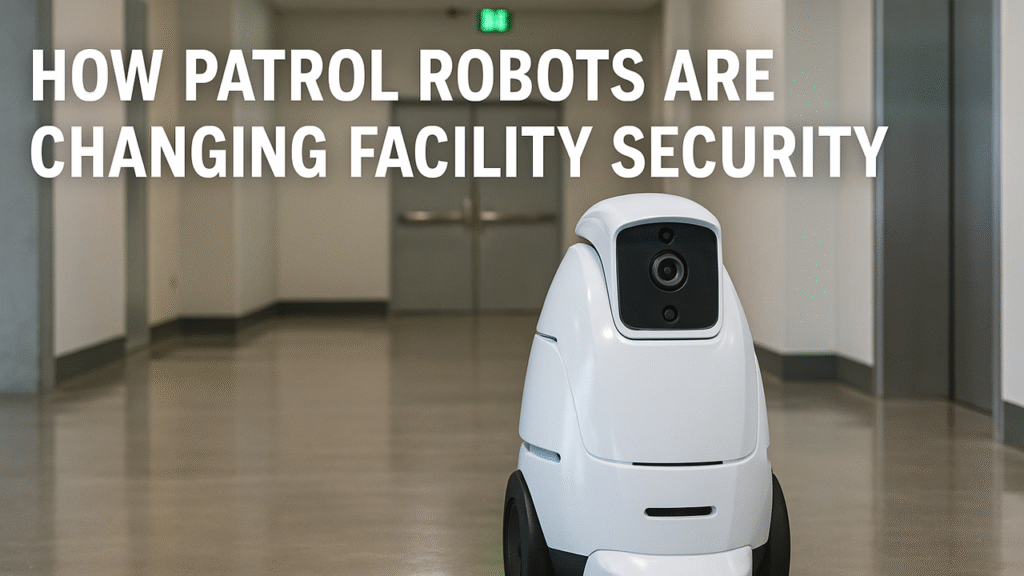
The landscape of facility security is undergoing a revolutionary transformation. Where once human guards patrolled empty corridors and monitored static CCTV feeds, today’s security operations are increasingly enhanced by sophisticated patrol robots that never tire, never miss a shift, and provide round-the-clock vigilance with unprecedented precision.
The Evolution of Security: From Guards to Autonomous Sentries
Traditional security approaches have long relied on human personnel supported by basic alarm systems and cameras. While effective, these methods face inherent limitations: human fatigue, the impossibility of simultaneous multi-location monitoring, and the escalating costs of 24/7 staffing. Patrol robots represent a paradigm shift, offering continuous surveillance capabilities that complement and enhance human security teams rather than replace them entirely.
Modern patrol robots are far more than mobile cameras. They’re sophisticated autonomous systems equipped with advanced sensor arrays, artificial intelligence, and real-time communication capabilities. These robotic sentries can navigate complex environments, identify anomalies, respond to incidents, and provide detailed reporting that surpasses traditional security methods.
Key Technologies Driving the Revolution
The effectiveness of patrol robots stems from the convergence of several cutting-edge technologies. Computer vision systems enable these robots to distinguish between normal activities and potential security threats, while LIDAR and ultrasonic sensors provide precise navigation capabilities even in challenging lighting conditions.
Artificial intelligence algorithms process vast amounts of sensory data in real-time, allowing robots to make intelligent decisions about when to alert human operators, initiate automated responses, or continue routine patrols. Machine learning capabilities mean these systems continuously improve their threat detection accuracy over time.
Advanced communication systems ensure patrol robots maintain constant connectivity with central security operations, streaming live video feeds, sensor data, and status updates. This connectivity enables remote monitoring and intervention when necessary, creating a seamless integration between autonomous and human-operated security elements.
Transforming Security Operations Across Industries
Different sectors are experiencing unique benefits from patrol robot deployment. Manufacturing facilities utilize these systems to monitor large production floors, detecting equipment malfunctions, unauthorized personnel, and potential safety hazards. The robots’ ability to operate in hazardous environments makes them particularly valuable in chemical plants and heavy industrial settings.
Office complexes and commercial buildings deploy patrol robots for after-hours security, ensuring comprehensive coverage of multiple floors and zones. These robots can detect intruders, monitor for fire hazards, and verify that security protocols are being followed throughout the facility.
Warehouses and distribution centers benefit from robots that can navigate between tall storage racks, monitoring for theft, inventory discrepancies, and safety compliance issues. The integration with existing warehouse management systems allows these robots to contribute to both security and operational efficiency.
Healthcare facilities use specialized patrol robots designed to operate quietly in sensitive environments, monitoring restricted areas while maintaining patient privacy and comfort. These systems often include specialized sensors for detecting chemical spills, temperature variations, and air quality issues.
Measurable Benefits and ROI
Organizations implementing patrol robots report significant improvements in security effectiveness and operational efficiency. Detection rates for security incidents typically increase by 40-60% compared to traditional camera-based systems, as robots can investigate potential threats immediately rather than waiting for human review of recorded footage.
Cost savings become apparent through reduced need for overnight security personnel, with many facilities able to optimize staffing levels while maintaining or improving security coverage. The robots’ ability to generate detailed reports and maintain comprehensive logs also provides valuable data for security audits and insurance requirements.
Response times to security incidents decrease dramatically when patrol robots can immediately investigate and escalate genuine threats while filtering out false alarms. This rapid response capability often prevents minor issues from escalating into major security breaches or property damage.
Advanced Features Redefining Security Standards
Contemporary patrol robots incorporate features that extend far beyond basic surveillance. Thermal imaging capabilities enable detection of human presence even in complete darkness, while acoustic sensors can identify breaking glass, raised voices, or machinery malfunctions.
Environmental monitoring functions allow robots to detect gas leaks, smoke, unusual odors, or temperature variations that might indicate equipment problems or fire hazards. Some models include air quality sensors particularly valuable in industrial environments or during pandemic response protocols.
Interactive capabilities enable patrol robots to communicate with personnel, visitors, or potential intruders. Pre-programmed responses can provide directions, issue warnings, or gather information, while two-way communication allows security operators to speak directly through the robot when needed.
Integration with existing security infrastructure means patrol robots can control lighting, activate alarms, lock or unlock doors, and coordinate with other automated systems. This integration creates a comprehensive security ecosystem that responds intelligently to various scenarios.
Addressing Implementation Challenges
Successful patrol robot deployment requires careful planning and consideration of operational factors. Facility mapping and route optimization ensure robots can navigate effectively while maximizing coverage area. Integration with existing security systems, network infrastructure, and operational procedures requires expertise to avoid disruption during transition periods.
Staff training becomes crucial as security teams learn to work alongside robotic systems. Rather than replacing human judgment, these systems augment human capabilities by providing enhanced situational awareness and rapid response capabilities. Training programs help personnel understand how to interpret robot alerts, coordinate responses, and maintain the systems effectively.
Privacy considerations require careful attention, particularly in environments where employees or visitors might have reasonable expectations of privacy. Clear policies and communication help address concerns while maintaining security effectiveness.
Future Developments and Emerging Capabilities
The patrol robot industry continues rapid evolution with emerging technologies promising even greater capabilities. Artificial intelligence advances are enabling more sophisticated threat recognition, reducing false alarms while improving detection of subtle security indicators.
Swarm robotics concepts allow multiple robots to coordinate patrol patterns, share information, and respond collectively to incidents. This coordination capability enables more comprehensive coverage of large facilities while optimizing resource utilization.
Enhanced mobility systems, including climbing capabilities and aerial integration, will expand the environments where patrol robots can operate effectively. These advances will make comprehensive security coverage possible in previously challenging locations.
Predictive analytics capabilities will enable patrol robots to identify patterns and anticipate potential security issues before they occur. By analyzing historical data and current conditions, these systems could prevent incidents rather than merely responding to them.
Making the Strategic Decision
Organizations considering patrol robot implementation should evaluate their specific security requirements, facility characteristics, and operational constraints. The investment in robotic security systems typically pays dividends through improved security effectiveness, reduced operational costs, and enhanced ability to demonstrate comprehensive security measures to stakeholders and insurers.
The technology has matured to the point where implementation risks are minimal while benefits are substantial and measurable. Early adopters gain competitive advantages through superior security capabilities and operational efficiencies that become increasingly difficult for competitors to match.
Expert Guidance for Implementation Success
Implementing patrol robots successfully requires expertise in robotics technology, security operations, and systems integration. The complexity of modern facilities and the sophistication of available robotic systems make professional guidance essential for optimal results.
Working with experienced robotics consultants ensures that organizations select appropriate systems for their specific needs, integrate them effectively with existing operations, and train staff to maximize the technology’s benefits. Professional consultation can prevent costly mistakes and accelerate the realization of benefits from robotic security investments.
For organizations ready to explore how patrol robots can enhance their security operations, expert consultation provides the foundation for successful implementation. The investment in professional guidance typically pays for itself through improved system performance and avoided implementation pitfalls.
Ready to transform your facility security with patrol robots? Contact our expert robotics consultancy team at sales@robotcenter.co.uk or call 0845 528 0404 to schedule a comprehensive consultation. Our specialists will assess your specific requirements and recommend the optimal robotic security solutions for your facility.
About Our Sponsors
This article is proudly sponsored by leading organizations in the robotics industry:
Robot Center – https://robotcenter.co.uk/ Your premier destination for robot acquisition and expert robotics consultancy services. Whether you’re looking to buy robots or need specialized robotics consultation, Robot Center provides comprehensive solutions tailored to your organization’s needs.
Robots of London – https://robotsoflondon.co.uk/ Leading provider of robot hire and rental services across London and beyond. From corporate events to temporary operational support, Robots of London offers flexible robot rental solutions that bring cutting-edge technology to your projects without long-term commitments.
Robot Philosophy – https://robophil.com/ Combining deep robotics expertise with recruitment services, Robot Philosophy offers comprehensive robot consultancy alongside specialized robot recruitment solutions. Led by RoboPhil (Philip English), a renowned Robot YouTuber, Influencer, Trainer, Consultant, and Streamer, the company provides invaluable robot advice, insights, and innovative ideas for organizations embracing robotic technologies.
These industry leaders represent the breadth of services available to organizations seeking to implement robotic solutions, from initial consultation through acquisition, deployment, and ongoing support.
https://www.youtube.com/watch?v=GbJys1C_rBU