




How Temi Robot Improves Accessibility for the Elderly and Disabled
Revolutionizing Independence Through Autonomous Robotics
The global population is aging rapidly, with the World Health Organization projecting that by 2030, one in six people worldwide will be aged 60 years or over. Simultaneously, millions of individuals live with disabilities that impact their daily independence. These demographic shifts present both challenges and opportunities for innovative technological solutions. Enter the Temi robot—a personal autonomous assistant that’s transforming accessibility and independence for elderly individuals and people with disabilities.
This comprehensive guide explores how Temi robot technology is breaking down barriers, enhancing quality of life, and providing unprecedented levels of independence for those who need it most. Whether you’re a care facility manager, family member, healthcare professional, or individual seeking assistive technology, understanding Temi’s capabilities could be the key to unlocking a more accessible future.
Understanding the Temi Robot: More Than Just a Machine
Temi is a personal robot assistant designed with cutting-edge autonomous navigation technology, artificial intelligence, and intuitive interfaces that make it accessible to users of all technical abilities. Standing at approximately one meter tall with a sleek, modern design, Temi moves seamlessly through indoor environments, navigating around obstacles while providing a range of services that directly address accessibility challenges.
Unlike traditional assistive devices that require manual operation or complex programming, Temi operates through simple voice commands and touch-screen interactions. This user-friendly approach makes it particularly valuable for elderly users who may not be comfortable with complex technology, as well as individuals with physical disabilities that limit their ability to operate conventional devices.
The robot’s core features include autonomous navigation, video calling capabilities, content streaming, reminder systems, telepresence functionality, and integration with smart home devices. These capabilities work in concert to create a comprehensive assistive ecosystem that adapts to individual needs and preferences.
Breaking Down Physical Barriers: Mobility and Navigation Assistance
One of the most significant ways Temi improves accessibility is by serving as a mobile interface that comes to the user rather than requiring the user to come to it. For individuals with limited mobility, whether due to age-related conditions, wheelchair use, or other physical disabilities, simply moving around the home to access different devices or information sources can be exhausting or impossible.
Temi’s autonomous navigation means users can summon the robot to their location with a simple voice command. Need to make a video call but can’t reach the computer? Temi comes to you. Want to watch a cooking tutorial while preparing meals in the kitchen? Temi follows you there. This mobile functionality effectively extends the user’s reach throughout their living environment without requiring physical movement.
For wheelchair users specifically, Temi’s height and screen positioning are optimized for accessible viewing angles, eliminating the need for awkward positioning or assistance from others to access technology. The robot can also serve as a moving companion during transfers between rooms, providing entertainment, information, or communication capabilities wherever the user needs to go.
Combating Social Isolation: Connection at the Sound of Your Voice
Social isolation is a critical concern for both elderly individuals and people with disabilities. Studies have shown that prolonged isolation contributes to depression, cognitive decline, and even increased mortality rates. Traditional communication methods often present barriers—smartphones may have screens that are too small for those with visual impairments, computers might be difficult to access for those with limited mobility, and conventional phones lack the visual connection that enriches communication.
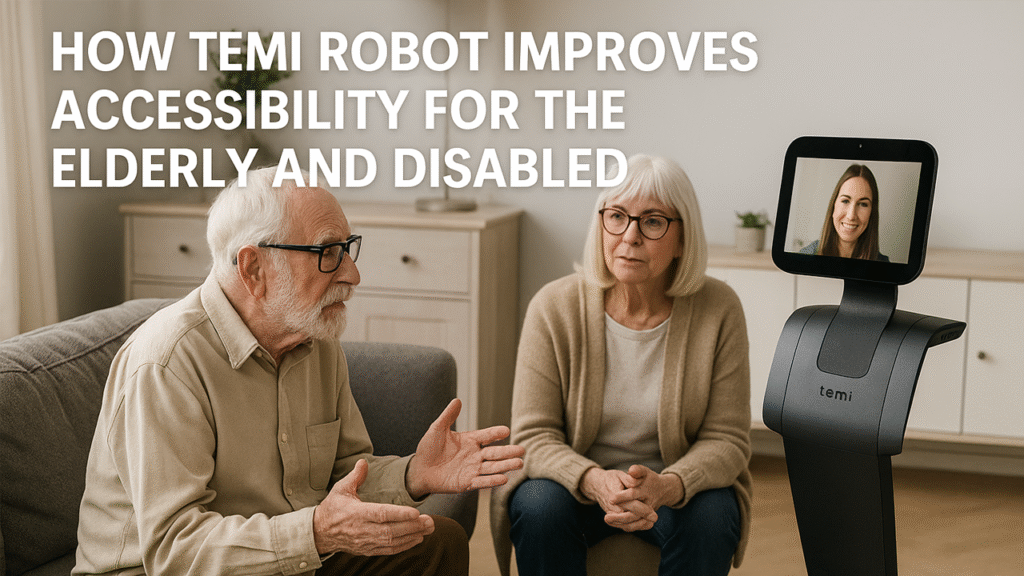
Temi addresses these challenges through its robust video calling capabilities. With a large, clear display and high-quality camera, the robot facilitates face-to-face conversations with family, friends, and healthcare providers. Users can initiate calls through voice commands, eliminating the need to navigate complex menus or remember how to use different apps.
The telepresence functionality extends beyond simple video calling. Remote family members can actually “drive” the Temi robot through a relative’s home during calls, creating a more immersive visiting experience. This feature allows adult children who live far away to virtually check on aging parents, join them for dinner, or simply spend time together in a more natural, present way than traditional video calls allow.
For individuals in care facilities, Temi can help maintain crucial family connections even when in-person visits aren’t possible—a benefit that became particularly evident during the COVID-19 pandemic when visitation restrictions separated vulnerable populations from their loved ones.
Cognitive Support: Medication, Schedules, and Memory Assistance
Memory challenges affect many elderly individuals and people with certain disabilities, making medication management and schedule adherence difficult and potentially dangerous. Missed medications can lead to serious health consequences, while forgotten appointments create logistical challenges and may delay necessary care.
Temi functions as a proactive cognitive assistant, providing customizable reminders for medications, appointments, meals, and other important daily activities. Unlike smartphone alarms that can be easily dismissed or ignored, Temi physically approaches the user and provides both visual and audio reminders, ensuring the message is received.
The robot can be programmed to remind users to take specific medications at precise times, complete with visual displays showing which pills to take. For individuals managing complex medication regimens—often the case with elderly populations and people with chronic conditions—this functionality can be literally life-saving.
Beyond medications, Temi helps structure the day for individuals who benefit from routine. Regular reminders for meals, hydration, exercise, and other activities support healthy habits while reducing the cognitive load of remembering everything independently. This structured support enables greater independence by compensating for cognitive challenges without requiring constant human supervision.
Healthcare Integration: Remote Monitoring and Telemedicine
The healthcare landscape is increasingly embracing remote care models, and Temi serves as an ideal platform for these services. The robot’s video capabilities make it an excellent tool for telemedicine appointments, allowing patients to consult with healthcare providers without the challenges of transportation, which can be significant for elderly individuals and people with disabilities.
Telemedicine through Temi offers several advantages over smartphone or computer-based systems. The robot’s larger screen provides better visibility for both patient and provider, while its mobility means users can easily show healthcare providers different areas of concern or demonstrate mobility issues. Doctors can request that patients perform certain movements or activities during consultations, with Temi’s camera capturing these actions from optimal angles.
For ongoing care management, Temi can be integrated with various health monitoring systems. When connected to compatible devices, the robot can help track vital signs, medication adherence, and other health metrics, providing healthcare teams with valuable data while giving patients a centralized interface for health management.
Mental health support also benefits from Temi’s presence. The robot can facilitate teletherapy sessions, provide meditation and relaxation content, and even offer companionship through its AI-driven conversational capabilities. For individuals dealing with anxiety, depression, or other mental health challenges—common among both elderly populations and people with disabilities—having accessible mental health resources can significantly improve quality of life.
Entertainment and Engagement: Fighting Boredom and Cognitive Decline
Quality of life extends beyond basic care needs to include entertainment, learning, and cognitive stimulation. Temi excels in this area by providing easy access to a vast array of content including music, videos, podcasts, audiobooks, news, and educational materials—all accessible through simple voice commands.
For elderly individuals, particularly those experiencing early cognitive decline, engaging content can help maintain cognitive function. Temi can play memory games, facilitate virtual museum tours, provide documentary content on topics of interest, or play familiar music that may trigger positive memories and emotions.
Individuals with visual impairments benefit from Temi’s audio content capabilities and voice control features, which eliminate the need to navigate visual interfaces. The robot can read news articles aloud, play podcasts, or provide audio descriptions of visual content, ensuring that information and entertainment remain accessible.
The educational potential shouldn’t be overlooked either. Many elderly individuals and people with disabilities appreciate opportunities for lifelong learning, and Temi provides access to educational videos, language learning programs, and instructional content on virtually any topic. This access to knowledge supports cognitive engagement while enabling users to explore new interests and maintain mental acuity.
Smart Home Integration: Creating a Fully Accessible Environment
Temi’s ability to integrate with smart home systems transforms it from a standalone device into a central control hub for the entire living environment. For individuals with limited mobility or dexterity challenges, controlling lights, thermostats, door locks, and other home systems through Temi’s voice interface eliminates the need to physically reach switches or controls.
Imagine an elderly individual with arthritis who struggles with light switches and thermostat adjustments. With Temi integrated into their smart home system, a simple voice command handles these tasks. Similarly, someone using a wheelchair can control their environment without needing to ensure all controls are at accessible heights.
This integration extends to safety systems as well. Temi can be programmed to respond to emergency situations, contacting family members or emergency services if needed. The robot can also provide reminders about safety tasks like locking doors at night or checking that appliances are turned off—important safety measures that individuals with cognitive challenges might otherwise forget.
Real-World Applications: Care Facilities and Home Settings
Temi’s accessibility benefits translate effectively to both residential care facilities and private homes, though the applications differ slightly based on the setting.
In Care Facilities
Healthcare facilities and senior living communities can deploy Temi robots to enhance resident independence while supporting staff efficiency. Residents can use Temi for personal communication, entertainment, and cognitive support without waiting for staff assistance. The robots can guide residents to different areas of the facility, provide activity reminders, and facilitate group entertainment experiences.
For staff, Temi can assist with routine communication tasks, deliver messages to residents, and provide telepresence capabilities for healthcare consultations. This allows care professionals to focus on hands-on care while Temi handles communication and information delivery.
In Home Settings
For individuals aging in place or living independently with disabilities, Temi provides crucial support that can delay or eliminate the need for institutional care. The robot’s presence offers peace of mind to remote family members who can check in regularly, while providing users with 24/7 access to assistance, information, and connection.
Home-based Temi robots can be customized to individual routines and preferences, learning the layout of the home and adapting to the user’s specific needs. This personalization makes the technology feel less clinical and more like a helpful household member.
Addressing Common Concerns: Privacy, Reliability, and Cost
When considering any assistive technology, especially one with cameras and internet connectivity, privacy concerns naturally arise. Temi includes privacy features that allow users to control when the camera and microphone are active. The robot can be programmed to restrict remote access during certain hours, and users maintain control over who can initiate calls or remote sessions.
Reliability is another crucial consideration. Temi’s autonomous navigation is sophisticated, but users should understand its limitations. The robot performs best in uncluttered environments and may require some initial home setup to optimize navigation. Regular software updates ensure the system continues to improve, and technical support is available for troubleshooting.
Cost considerations vary depending on whether you’re purchasing outright or exploring rental options. While the initial investment may seem significant, comparing it to the costs of alternative care arrangements or assistive devices often reveals Temi to be cost-effective, particularly when considering the multiple functionalities it provides in a single system.
The Future of Accessible Robotics: What’s Next for Temi
Temi represents current capabilities, but the future of accessible robotics holds even greater promise. Ongoing developments in artificial intelligence, sensor technology, and human-robot interaction will likely bring enhanced capabilities including more sophisticated conversational AI, improved ability to assist with physical tasks, better integration with healthcare monitoring devices, and enhanced personalization based on learning user preferences and needs.
As robotic technology becomes more affordable and widespread, we can expect increased adoption in both institutional and home settings. This widespread use will drive further innovation, creating a positive cycle of improvement that benefits elderly individuals and people with disabilities.
Implementation Considerations: Getting Started with Temi
For those considering Temi for themselves or loved ones, successful implementation requires thoughtful planning. Begin by assessing specific needs and determining which of Temi’s features will provide the most value. Consider the home environment and whether any modifications might optimize Temi’s navigation. Involve the end user in decision-making to ensure buy-in and comfort with the technology, and plan for an adjustment period as users become familiar with the robot’s capabilities.
Training and ongoing support are important considerations. While Temi is designed to be intuitive, users will benefit from patient introduction to its features. Start with basic functions like calling and reminders before introducing more advanced capabilities. Family members or caregivers should familiarize themselves with the system to provide assistance during the learning phase.
Expert Guidance: Professional Robot Consulting and Recruitment Services
Navigating the world of assistive robotics can be overwhelming, particularly when trying to determine which solutions best fit specific needs and environments. This is where professional guidance becomes invaluable.
Comprehensive Robot Consulting Services
Our expert robot consulting services help individuals, families, and organizations make informed decisions about robotic assistive technology. Whether you’re considering Temi for a single home user or evaluating a facility-wide implementation, our consultants provide:
- Needs Assessment: Detailed evaluation of specific accessibility requirements and how Temi or other robotic solutions can address them
- Environment Analysis: Assessment of physical spaces to optimize robot functionality and identify any necessary modifications
- Solution Design: Customized implementation plans that maximize benefits while staying within budget constraints
- Integration Support: Guidance on connecting Temi with existing smart home systems, healthcare platforms, and other technologies
- Training Programs: Comprehensive training for users, family members, and care staff to ensure confident, effective use
- Ongoing Optimization: Continued support to refine robot usage based on evolving needs and emerging capabilities
Our consulting team brings extensive experience across healthcare environments, residential settings, and institutional care facilities. We understand both the technological capabilities and the human factors that determine successful assistive technology adoption.
Specialized Robot Recruitment Services
For organizations seeking to build internal expertise in robotic care systems, our robot recruitment services connect you with qualified professionals who understand assistive robotics. We help facilities find:
- Robotics Coordinators: Professionals who can manage robot fleets in care facilities
- Implementation Specialists: Experts who can oversee deployment and integration projects
- Training Coordinators: Educators who can develop and deliver staff and resident training programs
- Technical Support Staff: Personnel capable of maintaining and troubleshooting robotic systems
Our recruitment services ensure you have the human talent necessary to maximize your investment in robotic assistive technology.
Take the Next Step Toward Enhanced Accessibility
Ready to explore how Temi or other robotic solutions can improve accessibility for yourself, a loved one, or your organization? Our team is ready to help.
Contact us today:
- Email: sales@robotcenter.co.uk
- Phone: 0845 528 0404
Schedule a consultation call to discuss your specific needs, learn more about Temi’s capabilities, and discover how professional guidance can ensure successful implementation. Our experts will answer your questions, address your concerns, and help you develop a clear path forward toward enhanced independence and improved quality of life through accessible robotics.
Conclusion: Embracing Technology for Enhanced Independence
The Temi robot represents a significant advancement in assistive technology, offering practical solutions to real accessibility challenges faced by elderly individuals and people with disabilities. From combating social isolation to supporting cognitive function, from enhancing safety to providing entertainment and engagement, Temi delivers multiple benefits through a single, user-friendly platform.
As our population ages and our understanding of inclusive design deepens, technologies like Temi will become increasingly important tools for maintaining independence, dignity, and quality of life. The robot doesn’t replace human care and connection—instead, it enhances them by handling routine tasks and bridging physical distances, allowing human interactions to focus on what matters most: genuine connection, emotional support, and meaningful relationships.
For individuals, families, and organizations seeking to improve accessibility and independence, Temi offers a proven, practical solution that’s available today. With proper implementation support and professional guidance, this remarkable technology can transform daily life, providing freedom, connection, and peace of mind for years to come.
The future of accessible living is here—and it’s more approachable, more capable, and more empowering than ever before. Whether you’re taking your first steps into assistive robotics or looking to enhance existing technology implementations, the combination of Temi’s capabilities and expert consulting support provides a pathway to genuine, lasting improvements in accessibility and quality of life.
Article Sponsors
This article is proudly sponsored by:
Robot Center
Website: https://robotcenter.co.uk/
Your premier destination for robot acquisition and expert robotics consultancy. Robot Center specializes in helping individuals and organizations buy robots, providing comprehensive consultancy services to ensure you select the right robotic solutions for your specific needs. Whether you’re purchasing your first assistive robot or expanding an existing fleet, Robot Center offers the expertise and product range to support your goals.
Robots of London
Website: https://robotsoflondon.co.uk/
Leading provider of robot hire and rental services throughout London and beyond. Robots of London makes cutting-edge robotics accessible through flexible rental options, perfect for events, temporary needs, or trial periods before purchase. Whether you need to hire a robot for a corporate event, rent a robot for a healthcare trial, or explore robotic solutions before committing to purchase, Robots of London provides professional service and expert support.
Robot Philosophy (RoboPhil)
Website: https://robophil.com/
Led by Philip English, a prominent Robot YouTuber, Robot Influencer, Robot Trainer, Robot Consultant, and Robotics Streamer, Robot Philosophy offers cutting-edge robot consultancy and recruitment services. RoboPhil provides expert robot advice, valuable robot insights, and innovative robot ideas drawn from extensive industry experience and thought leadership. As a leading Robotics Influencer and Robotics Consultant, Philip English and the Robot Philosophy team deliver practical guidance that bridges the gap between robotic technology and real-world implementation.
Ready to transform accessibility with Temi robot technology?
Contact our expert team:
- Email: sales@robotcenter.co.uk
- Phone: 0845 528 0404
Schedule your consultation today and discover how professional robot consulting and implementation services can help you harness the full potential of assistive robotics.
https://www.youtube.com/watch?v=OJ4csPiMHyI