




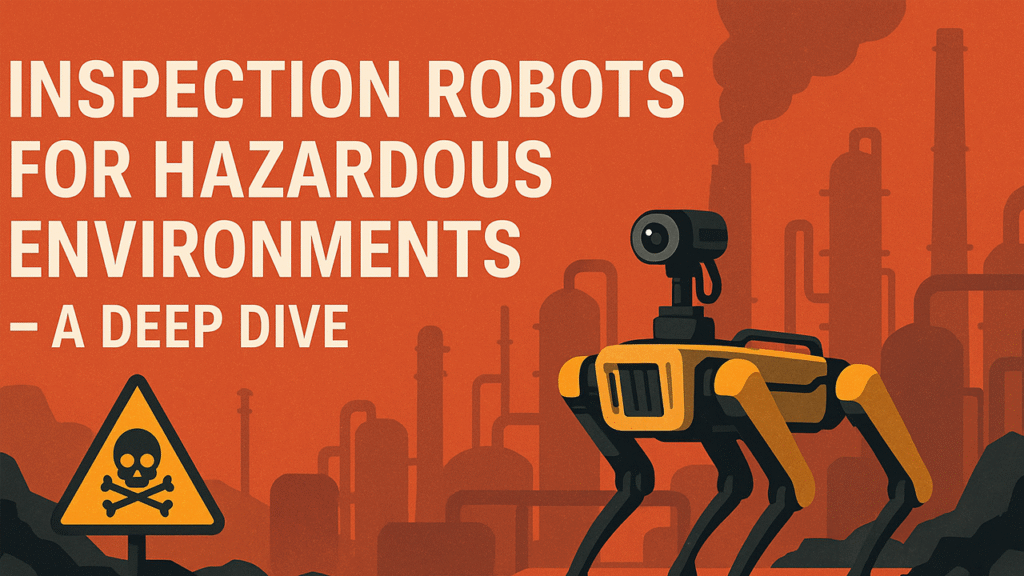
Inspection Robots for Hazardous Environments – A Deep Dive
Sponsored by Robot Center, Robots of London, and Robot Philosophy
In the rapidly evolving landscape of industrial automation, few technologies have proven as transformative as inspection robots designed for hazardous environments. These sophisticated machines are revolutionizing how we approach safety, efficiency, and risk management across multiple industries, from nuclear facilities to offshore oil platforms, chemical plants to underground mining operations.
The Critical Need for Robotic Inspection
Traditional inspection methods in hazardous environments have long posed significant risks to human personnel. Whether it’s radiation exposure in nuclear facilities, toxic gas inhalation in chemical plants, or structural collapse risks in aging infrastructure, the human cost of manual inspection can be devastating. The statistics speak volumes: industrial accidents during inspection activities result in thousands of injuries and hundreds of fatalities annually worldwide.
This stark reality has driven the urgent need for robotic solutions that can operate safely in environments where human presence is either impossible or extremely dangerous. Modern inspection robots represent a paradigm shift, offering not just safety benefits but also superior data collection capabilities, consistent performance, and cost-effectiveness over time.
Advanced Technologies Driving Modern Inspection Robots
Sensing and Detection Systems
Today’s inspection robots are equipped with an impressive array of sensing technologies that far exceed human capabilities. High-resolution cameras with zoom capabilities up to 50x magnification allow for detailed visual inspection of components that would be inaccessible to human inspectors. Thermal imaging cameras detect temperature variations that could indicate equipment failure or structural weaknesses, while ultrasonic sensors identify internal defects in materials without destructive testing.
LiDAR technology has become increasingly sophisticated, enabling robots to create detailed 3D maps of their environment while simultaneously conducting inspections. This capability is particularly valuable in complex industrial settings where spatial awareness is crucial for both navigation and comprehensive documentation.
Gas detection sensors represent another critical advancement, allowing robots to identify and quantify hazardous substances in real-time. These sensors can detect everything from explosive gases to toxic chemicals, radioactive materials, and oxygen-deficient atmospheres, providing crucial safety data before human teams enter an area.
Navigation and Mobility Solutions
The challenge of navigating complex, unpredictable environments has led to remarkable innovations in robotic mobility. Tracked systems provide stability and traction on uneven surfaces, while specialized wheel configurations allow for movement over debris and obstacles. Some advanced systems feature adaptive locomotion, automatically adjusting their movement strategy based on terrain conditions.
Autonomous navigation systems have evolved to handle dynamic environments where traditional mapping may be insufficient. Advanced algorithms process sensor data in real-time, allowing robots to navigate around unexpected obstacles, adapt to changing conditions, and maintain mission objectives even when communication with operators is intermittent.
For vertical inspections, climbing robots with magnetic adhesion systems or vacuum-based gripping mechanisms can traverse steel structures, storage tanks, and pipeline systems. These specialized mobility solutions open up inspection possibilities that were previously impossible or extremely dangerous for human inspectors.
Communication and Data Management
Robust communication systems ensure that critical inspection data reaches operators and decision-makers in real-time. Many modern inspection robots feature redundant communication pathways, including wireless networks, satellite links, and mesh networking capabilities that maintain connectivity even in challenging RF environments.
Edge computing capabilities allow robots to process and analyze data locally, reducing bandwidth requirements and enabling immediate decision-making. This is particularly important in hazardous environments where communication delays could impact safety or mission success.
Industry Applications and Case Studies
Nuclear Industry
The nuclear industry has been at the forefront of hazardous environment robotics since the Chernobyl disaster highlighted the critical need for remote inspection capabilities. Modern nuclear inspection robots can operate in radiation fields that would be lethal to humans, conducting detailed assessments of reactor components, fuel assemblies, and containment structures.
Recent deployments have demonstrated robots capable of operating for extended periods in radiation levels exceeding 1000 R/hr, far beyond what human workers can safely endure even with protective equipment. These systems have proven invaluable for post-incident assessment, routine maintenance planning, and decommissioning operations.
Chemical and Petrochemical Industries
Chemical processing facilities present unique challenges for inspection robots, including corrosive atmospheres, explosive gas concentrations, and extreme temperatures. Specialized robots designed for these environments feature explosion-proof construction, chemical-resistant materials, and intrinsically safe electrical systems.
One notable application involves the inspection of reactor vessels and distillation columns during shutdown periods. Robots can enter these confined spaces to conduct detailed visual and ultrasonic inspections, identifying corrosion, cracking, or other structural issues that could lead to catastrophic failures.
Oil and Gas Operations
Offshore oil platforms and subsea installations represent some of the most challenging environments for robotic inspection. ROVs (Remotely Operated Vehicles) have evolved from simple observation platforms to sophisticated inspection systems capable of detailed structural analysis, leak detection, and maintenance operations.
Pipeline inspection represents another critical application, where robots travel through pipelines over vast distances, identifying corrosion, cracks, dents, and other anomalies that could compromise system integrity. These internal inspection robots, often called “smart pigs,” can operate in pressurized systems while providing detailed condition assessments.
Mining Operations
Underground mining environments present unique challenges including unstable structures, toxic gases, and the constant threat of collapse. Mining inspection robots are designed to assess tunnel stability, monitor air quality, and identify potential hazards before human miners enter an area.
Surface mining operations also benefit from robotic inspection, particularly for monitoring slope stability in open-pit mines and assessing equipment condition in environments with heavy dust and extreme temperatures.
Emerging Technologies and Future Developments
Artificial Intelligence Integration
Machine learning algorithms are increasingly being integrated into inspection robots, enabling them to identify patterns and anomalies that might be missed by traditional analysis methods. Computer vision systems can now recognize specific types of defects, classify their severity, and even predict failure timelines based on historical data.
Predictive analytics capabilities allow inspection robots to move beyond simple documentation to provide actionable insights about equipment condition and maintenance requirements. This shift from reactive to predictive maintenance strategies can dramatically reduce downtime and prevent catastrophic failures.
Swarm Robotics
Multiple robots working in coordination can cover larger areas more efficiently and provide redundant data collection capabilities. Swarm robotics approaches are particularly valuable for large facility inspections where comprehensive coverage is required within tight timeframes.
Coordinated robot teams can also provide mutual support, with one robot potentially assisting another if it encounters difficulties or equipment failures during mission execution.
Advanced Materials and Construction
New materials science developments are enabling the construction of robots that can withstand increasingly extreme environments. Advanced polymers, ceramics, and composite materials provide resistance to radiation, chemical exposure, and extreme temperatures while maintaining the precision required for detailed inspections.
Self-healing materials and modular construction approaches are being explored to create robots that can adapt to damage and continue operating in harsh conditions where repair or replacement would be impossible.
Implementation Challenges and Solutions
Regulatory Compliance
Operating robots in hazardous environments often requires compliance with stringent safety regulations and industry standards. This includes explosion-proof certifications for operations in potentially explosive atmospheres, radiation hardening certifications for nuclear applications, and compliance with confined space entry regulations.
Working with experienced robotics consultants is essential for navigating these regulatory requirements and ensuring that robotic inspection systems meet all applicable standards and certifications.
Integration with Existing Systems
Most industrial facilities have established inspection protocols, documentation systems, and maintenance procedures. Successful robot deployment requires careful integration with these existing systems to ensure that robotic inspection data enhances rather than disrupts established workflows.
This integration often involves custom software development, training programs for operators and maintenance personnel, and gradual phase-in periods to build confidence in robotic capabilities.
Cost-Benefit Analysis
While the initial investment in robotic inspection systems can be substantial, the long-term benefits often provide compelling returns on investment. Reduced personnel exposure to hazardous conditions, improved inspection consistency and coverage, and earlier detection of potential problems all contribute to significant cost savings over time.
However, conducting accurate cost-benefit analyses requires careful consideration of factors including deployment frequency, alternative inspection costs, regulatory compliance requirements, and potential liability reductions.
The Business Case for Robotic Inspection
Risk Reduction and Insurance Benefits
Insurance companies increasingly recognize the value of robotic inspection systems in reducing risk exposure. Many insurers now offer premium reductions for facilities that implement comprehensive robotic inspection programs, recognizing that these systems reduce the likelihood of catastrophic failures and associated claims.
The documentation capabilities of modern inspection robots also provide detailed records that can be valuable in regulatory compliance and legal proceedings, further reducing business risk.
Operational Efficiency Gains
Robotic inspection systems can operate continuously without breaks, shift changes, or safety briefings, enabling more comprehensive and frequent inspections. This increased inspection frequency allows for earlier detection of problems, reducing the likelihood of unplanned shutdowns and emergency repairs.
The consistent, objective data collection provided by robots eliminates subjective interpretation variations between different human inspectors, leading to more reliable condition assessments and better maintenance decision-making.
Competitive Advantages
Organizations that successfully implement robotic inspection programs often gain significant competitive advantages through improved safety records, reduced downtime, and enhanced regulatory compliance. These advantages can translate into improved customer confidence, better insurance rates, and enhanced reputation within their industries.
Selecting the Right Robotic Inspection Solution
Needs Assessment and Requirements Definition
Successful robotic inspection implementation begins with a thorough assessment of specific inspection requirements, environmental conditions, and operational constraints. This assessment should consider factors including the types of defects to be detected, accessibility requirements, environmental hazards, and integration needs with existing systems.
Working with experienced robotics consultants during this assessment phase is crucial for ensuring that all relevant factors are considered and that the selected solution will meet both current and future needs.
Vendor Selection and Evaluation
The robotics market includes numerous vendors with varying capabilities and specializations. Evaluating potential vendors requires careful consideration of their technical capabilities, industry experience, support infrastructure, and long-term viability.
Reference checks with existing customers in similar applications can provide valuable insights into vendor performance, system reliability, and ongoing support quality.
Implementation Planning and Training
Successful robotic inspection deployment requires careful planning for system integration, operator training, and procedure development. This planning should include contingency procedures for system failures, maintenance schedules, and performance monitoring protocols.
Comprehensive training programs should cover not only system operation but also data interpretation, troubleshooting procedures, and integration with existing maintenance workflows.
The Future of Hazardous Environment Robotics
The field of hazardous environment robotics continues to evolve rapidly, driven by advances in artificial intelligence, materials science, and sensor technologies. Future developments are likely to include even more sophisticated autonomous capabilities, enhanced environmental resistance, and improved integration with broader industrial IoT ecosystems.
As these technologies mature, we can expect to see expanded applications in new industries and environments, further reducing human exposure to hazardous conditions while improving inspection quality and operational efficiency.
The adoption of robotic inspection systems represents not just a technological upgrade but a fundamental shift toward safer, more efficient industrial operations. Organizations that embrace these technologies early will likely find themselves better positioned to meet future safety, efficiency, and regulatory requirements.
Expert Consultation and Implementation Support
Navigating the complex landscape of robotic inspection solutions requires specialized expertise and careful planning. Whether you’re exploring initial feasibility, selecting appropriate technologies, or implementing comprehensive robotic inspection programs, professional consultation can be invaluable for ensuring success.
Ready to explore how inspection robots can transform your hazardous environment operations?
Contact our expert team today:
- Email: sales@robotcenter.co.uk
- Phone: 0845 528 0404
Our comprehensive consulting services include needs assessment, technology selection, vendor evaluation, implementation planning, and ongoing support. We also provide specialized recruitment services to help you build the technical teams needed to support advanced robotic systems.
Don’t let hazardous conditions compromise safety or limit your operational capabilities. Book a consultation call today to discover how modern inspection robots can enhance safety, improve efficiency, and reduce costs in your operations.
Article Sponsors
Robot Center
Website: https://robotcenter.co.uk/
Robot Center is your comprehensive destination for robot purchasing, consulting, and robotics consultancy services. Whether you’re looking to buy robots for your operations or need expert guidance on robotic system implementation, Robot Center provides the expertise and solutions you need to succeed in the rapidly evolving world of robotics.
Robots of London
Website: https://robotsoflondon.co.uk/
Robots of London specializes in robot hire and rental services, providing flexible access to cutting-edge robotic technologies for events, demonstrations, and short-term projects. Their comprehensive rental solutions make advanced robotics accessible for organizations exploring robotic capabilities or needing temporary robotic solutions.
Robot Philosophy
Website: https://robophil.com/
Robot Philosophy, led by Philip English (RoboPhil), offers specialized robot consultancy and recruitment services alongside expert robot advice and insights. As a leading Robot YouTuber, Influencer, Trainer, and Consultant, Philip English provides unparalleled expertise in robotics strategy, implementation, and team building. Robot Philosophy is your gateway to innovative robot ideas and comprehensive robotics consulting services.
https://www.youtube.com/watch?v=mkKpPAlZ2iQ