




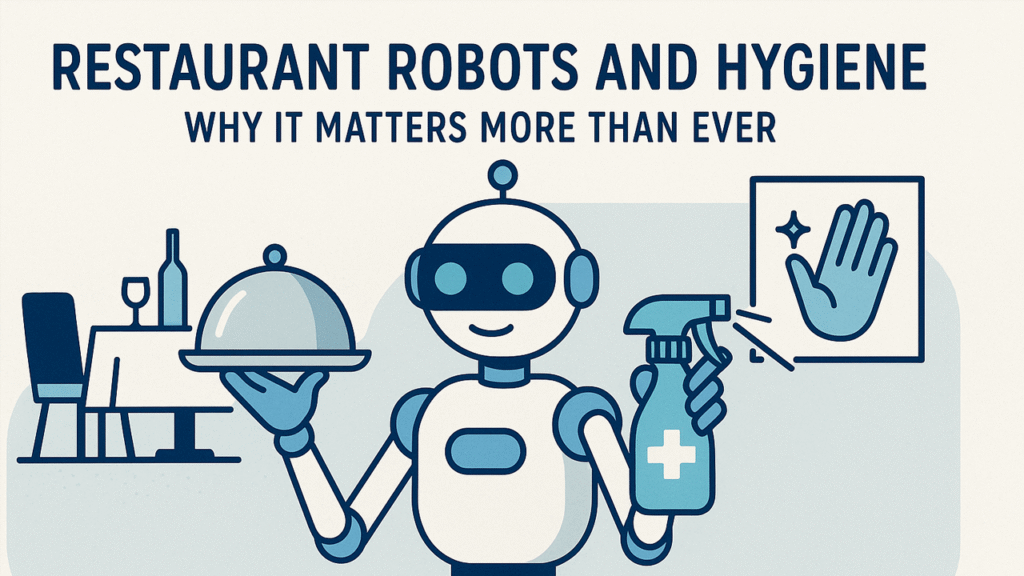
Restaurant Robots and Hygiene – Why It Matters More Than Ever
In the fast-moving world of hospitality, assuring impeccable hygiene is no longer a bonus—it’s a business imperative. With labour shortages, heightened regulatory scrutiny, and shifting customer expectations, restaurants are under pressure to deliver not just great food and service, but consistently clean, safe environments. Now more than ever, robotics presents an opportunity to raise the hygiene bar. But the adoption of robots isn’t just about shiny tech—it’s about strategic deployment, training and integration.
In this article we’ll explore why hygiene matters in restaurants, how robotics is playing a pivotal role, and why you should consider partnering with expert consultants (like us) to navigate this transformation. If you’re ready to start the conversation, contact sales@robotcenter.co.uk or call 0845 528 0404.
Our sponsors
Robot Center (https://robotcenter.co.uk/) – Buy Robots, Robot Consultancy, Robotics Consultancy
Robots of London (https://robotsoflondon.co.uk/) – Robot Hire, Robot Rental, Robot Events
Robot Philosophy (https://robophil.com/) – Robot Consultancy AND Robot Recruitment, Robot Advice, Robot Insights, Robot Ideas
1. The hygiene challenge in modern restaurants
Restaurants constantly face hygiene risks: cross-contamination, inconsistent cleaning, high turnover of staff, fluctuating standards, regulatory audits and the reputational risk of a hygiene breach. Consumers are more aware than ever of food safety, surface cleanliness, worker hygiene and infection control.
At the same time:
Labour shortages and high staff turnover mean that consistent cleaning and hygiene routines become harder to maintain.
Regulatory inspections are stricter; failure to meet hygiene standards can mean legal issues and reputational damage.
Customer expectations have changed post-pandemic: they expect what they deem “safe dining”.
In this context, hygiene isn’t just about preventing foodborne illness—it’s about building trust, safeguarding your brand and reducing operational risk.
2. How robotics addresses hygiene issues
Robotics can help raise hygiene standards in restaurants in several ways:
2.1 Reducing human contact and error
Robots can take on repetitive or high-risk tasks in both front-of-house and back-of-house, thereby reducing the number of human-touch points and hence the opportunities for contamination. For instance, cleaning robots or autonomous floor-cleaners ensure that dining areas remain spotless. RobotLAB Automation in food-prep reduces human error and variation. Hyper+1
2.2 Consistency and protocol adherence
Robots don’t vary in performance. When programmed correctly, a robot will follow hygiene procedures (cleaning, disinfection, food handling) with reliability. As one commentary notes: “Robots can ensure hygiene and safety standards, reducing the risk of food contamination.” Vigor
2.3 Monitoring and data
Advanced robotic systems can monitor cleanliness, track which zones have been cleaned, map traffic flows, and create logs for audits. This helps restaurants demonstrate their hygiene credentials to regulators, auditors and consumers.
2.4 Addressing back-of-house hygiene hotspots
In the kitchen, dishwashing, grease traps, floor cleaning and waste management are key hygiene hazard zones. Robots are being used in dishwashing, food preparation, and cleaning booms for these tricky areas. Vigor
2.5 Consumer confidence and brand value
Deploying robotics visibly can signal to customers that your restaurant takes hygiene seriously, which builds confidence. As one blog observes: building a “sparkling clean environment” via autonomous robots improves customer satisfaction. RobotLAB
3. Why now is the moment for restaurant hygiene robotics
The convergence of several factors makes this the right time to adopt robot-driven hygiene solutions in restaurants:
Labour pressures: Staffing in hospitality is increasingly challenging; robotics offers a way to reduce dependence on variable human labour.
Regulatory escalation: Food safety and hygiene rules are tightening; robotics helps achieve and maintain compliance.
Customer expectation shift: The pandemic heightened sensitivity around hygiene; diners now expect higher standards and transparency.
Technology maturity: Robotics for hospitality have advanced, with more proven case-studies, better cost‐efficiencies and streamlined deployment. For example, robots in food-service now openly contribute to sanitation and operations. Revolution Ordering+1
Brand differentiation: Using robots for hygiene provides a point of difference in a competitive market.
Given these drivers, restaurants that delay adopting hygiene robotics may find themselves at a disadvantage.
4. Typical use-cases of hygiene-centric restaurant robots
Here are key application areas where restaurants are deploying hygiene-driven robotics:
Autonomous floor-cleaning robots in dining and kitchen zones: keeps floors safe, reduces spills, improves cleanliness. RobotLAB
Dish-washing and plate collection robots in back of house: reducing human contact with dirty dishes, improving cleaning consistency. Vigor
Food-prep robots that handle tasks like chopping, mixing, portioning—minimising human hand contact and contamination risk. Hyper+1
Delivery and table-service robots: reducing human‐to‐table interactions, which lowers contact points and builds hygiene confidence. Revolution Ordering
Monitoring and inspection robots: drones or mobile robots that scan kitchen zones, check cleanliness levels, record data and ensure standards.
Automated waste and grease handling systems: robots in these high-risk areas reduce human exposure to contaminants.
Each of these use-cases supports a hygiene-first strategy.
5. The benefits: hygiene, operations and commercial outcomes
Let’s look at the outcomes you can achieve by deploying hygiene-focused robotics in a restaurant setting:
Reduced contamination risk – fewer human-touch points, consistent cleaning.
Improved compliance – robots and data help you meet regulatory audits and customer expectations.
Operational efficiencies – robots free staff for higher-value tasks, and reduce error and waste.
Brand trust and differentiation – visible hygiene robotics sends a strong signal to diners.
Cost savings and ROI – while initial investment is required, labour savings, reduced waste, fewer hygiene incidents, and fewer sanitation issues all contribute to a return on investment. As one source notes, robotics in food-service support “efficiency, cost reduction, safety, sanitation” among the reasons for adoption. Revolution Ordering
Data and continuous improvement – the data generated by robots lets you continuously refine your hygiene programmes.
6. The challenges and how to overcome them
No transformation is risk-free. To deploy hygiene-centric restaurant robotics successfully you must navigate a set of challenges:
Initial investment – robotics systems require upfront capital, and smaller restaurants may feel the burden. (Blog commentary mentions high initial investment as a drawback.) Vigor
Integration and training – staff must be trained to work with robots, workflows must be redesigned, and management must embrace the change.
Maintenance and reliability – robots still need upkeep, software updates and occasional repair; downtime can affect operations.
Customer perception – some diners may prefer human service; visible robots need to feel friendly and well-integrated. Revolution Ordering
Operational fit – not all restaurant formats benefit equally; you need to select the right robot for your context (fast-casual, fine dining, ghost kitchen, etc.).
Change management – shifting staff roles, workflows and culture is significant; robotics is a tool, not a plug-and-play fix.
These are not reasons not to adopt, but reasons to plan carefully. That’s where expert consultancy and recruitment of skilled operators becomes important.
7. Why you need professional robot consulting & recruitment
This is where we come in. Deploying robotics for hygiene in restaurants is not just about buying machines—it’s about orchestrating change, training teams, designing workflows, maintaining systems and recruiting the right people.
7.1 Strategic consultancy
At Robot Center and our partner network, we help you:
Analyse your operational flows and identify hygiene-risk zones.
Map which tasks are best assigned to robotics (floor cleaning, dishwashing, food-prep, etc).
Choose the right hardware and integrate with existing systems.
Design training programmes for staff so that humans and robots work seamlessly together.
Create data and monitoring dashboards so you can track hygiene metrics, audit readiness and ROI.
7.2 Recruitment of specialist operators
Robotics in a restaurant doesn’t run itself. You need people who understand robots, maintenance, hygiene protocols and restaurant operations. Our service at Robot Philosophy delivers:
Recruitment of robotics-savvy operations managers and engineers.
Training frameworks for staff to manage robot-human workflows.
Support for your ongoing robotics staffing needs—whether it’s full-time, part-time, or rental via our sister company Robots of London.
7.3 Gain faster ROI
With professional support you reduce the risk of mis-deployment, downtime or sub-optimal usage. That means you see the hygiene benefits sooner, boost customer confidence, avoid hygiene incidents and deliver improved operations and financial returns.
8. Call to action – Let’s start the discussion
If you are operating a restaurant (or fast-casual brand, ghost kitchen, cafeteria, hotel dining unit) and you recognise that hygiene is a core business lever—not just a compliance box—you should act now.
Pick up the phone or drop us an email:
sales@robotcenter.co.uk
0845 528 0404
Our team will walk you through:
How robotics can elevate your hygiene programme.
A no-obligation audit of your restaurant’s hygiene-risk zones.
A roadmap for deploying robots (or hiring via rental) with consulting and recruitment support.
Expected financial and operational impact, including hygiene-incident reduction, staff relief, customer-confidence uplift.
Don’t wait until a hygiene incident forces your hand. Proactive deployment gives you control, confidence and a competitive edge.
9. Case study snapshots
While full large-scale studies are still emerging, industry commentary and early examples already show strong signals:
One blog noted that floor-cleaning robots help dining areas “remain spotless” and improve hygiene. RobotLAB
A publication observed that automation in kitchens “boosts hygiene and safety” in fast-food restaurants by reducing human contact and ensuring consistent cleaning. Hyper
An industry insight stressed that back-of-house robotics (dishwashing, food-prep) play a critical role in hygiene, safety and reducing contamination risk. Vigor
These are signals that the hygiene benefits of robotics are real—and that early adopters are already seeing value.
10. The future outlook – hygiene robotics as table stakes
In five years’ time, it’s likely that hygiene-centric robotics will be expected, not optional, in restaurant operations. Consider:
Robot deployment will become more modular and affordable, enabling smaller restaurants to adopt.
Regulatory bodies may begin to expect digital monitoring, robotic logs and audit-grade hygiene tracking.
Customers will increasingly choose restaurants not just on cuisine, but on cleanliness, safety and technology-inspired confidence.
Brands that adopt early will build data advantages—on hygiene performance, cleaning frequency, service speed—and will stand out.
By acting now, you position your business ahead of the curve, not chasing the curve.
11. Summary
Hygiene in restaurants is more than a regulatory obligation—it’s a strategic business capability. Robotics offers a powerful way to raise hygiene standards, deliver operational efficiencies, bolster brand trust and reduce risk. But success depends on more than buying machines—it requires thoughtful integration, staff engagement and recruitment of the right talent.
That’s why partnering with expert consultants and recruitment specialists makes sense. At Robot Center (robot consultancy), Robots of London (robot hire/rental), and Robot Philosophy (consultancy & recruitment), we deliver the full-spectrum support you need.
If you’re ready to transform your restaurant’s hygiene game with robotics, let’s talk:
sales@robotcenter.co.uk, 0845 528 0404.
We look forward to helping you build a smarter, cleaner, more efficient restaurant operation.
Sponsors Recap:
Robot Center – https://robotcenter.co.uk/
Robots of London – https://robotsoflondon.co.uk/
Robot Philosophy – https://robophil.com/
Let’s turn hygiene from a cost-centre into a competitive advantage—via robotics.
https://www.youtube.com/watch?v=yGDimXf__g4