




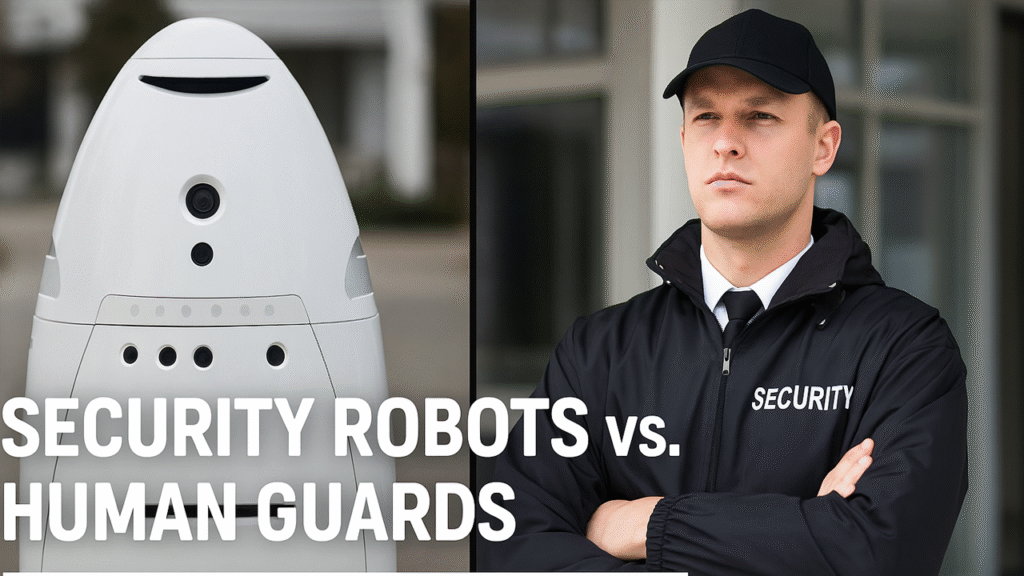
Security Robots vs. Human Guards: Which is More Effective?
Sponsored by Robot Center, Robots of London, and Robot Philosophy
The security industry stands at a pivotal crossroads. As technology advances at breakneck speed, traditional security approaches face scrutiny while robotic solutions emerge as viable alternatives. The question isn’t whether robots will play a role in security—it’s how businesses can best integrate them to maximize protection while optimizing costs.
This comprehensive analysis examines the strengths and limitations of both security robots and human guards, providing decision-makers with the insights needed to build effective security strategies for the modern era.
The Evolution of Security: From Guards to Algorithms
Security has undergone dramatic transformation over the past decade. Traditional security models, once dominated entirely by human personnel, now incorporate sophisticated technological solutions. This shift reflects not just technological advancement, but fundamental changes in threat landscapes, operational costs, and business expectations.
The global security services market, valued at over $350 billion, increasingly embraces automation. From simple alarm systems to AI-powered surveillance networks, technology has become integral to modern security infrastructure. Security robots represent the latest evolution in this journey, combining mobility, artificial intelligence, and real-time data processing capabilities.
Security Robots: The Digital Sentinels
Core Capabilities and Advantages
Modern security robots offer compelling advantages that address many traditional security challenges. These autonomous systems operate continuously without fatigue, providing 24/7 monitoring capabilities that human guards cannot match. Their sensors detect threats across multiple spectrums—thermal imaging identifies heat signatures, advanced cameras capture high-definition footage in various lighting conditions, and audio sensors recognize unusual sounds or conversations.
Cost efficiency represents perhaps the most significant advantage of robotic security solutions. While initial investment can be substantial, operational costs over time prove considerably lower than human staffing. A single security robot eliminates ongoing salary expenses, benefits packages, training costs, and overtime payments. For businesses operating multiple shifts, the financial benefits become particularly pronounced.
Data collection and analysis capabilities set robots apart from human counterparts. These systems continuously gather information, creating comprehensive records of activities, patterns, and potential security breaches. Advanced analytics identify anomalies, predict potential threats, and provide actionable intelligence for security managers. This data-driven approach enables proactive rather than reactive security strategies.
Consistency in performance represents another crucial advantage. Security robots follow programmed protocols precisely, without variation due to mood, fatigue, or human error. They don’t get distracted, take unauthorized breaks, or make subjective decisions that might compromise security protocols.
Technological Integration and Smart Features
Contemporary security robots integrate seamlessly with existing security infrastructure. They connect to building management systems, fire alarms, access control systems, and surveillance networks, creating comprehensive security ecosystems. Some models communicate directly with emergency services, automatically dispatching alerts when threats are detected.
Artificial intelligence enables these systems to distinguish between routine activities and potential threats. Machine learning algorithms improve performance over time, becoming more effective at identifying suspicious behavior patterns. Some advanced models recognize specific individuals, track movements, and maintain detailed logs of interactions.
Navigation systems have evolved significantly, with modern robots mapping environments autonomously and adapting to changes in layout or obstacles. They can patrol predefined routes or respond to specific areas when alerts are triggered, providing flexible deployment options.
Limitations and Challenges
Despite impressive capabilities, security robots face significant limitations. Physical intervention remains problematic—while robots can observe, record, and alert, they cannot physically apprehend suspects or provide the psychological deterrent effect of human presence. Many models lack the ability to climb stairs, operate elevators, or navigate complex architectural features that human guards handle effortlessly.
Weather resistance varies significantly between models, with many systems struggling in extreme conditions that wouldn’t affect human guards. Maintenance requirements can be substantial, particularly for complex systems operating in challenging environments.
Decision-making in ambiguous situations poses ongoing challenges. While AI has advanced considerably, robots struggle with situations requiring nuanced judgment, cultural sensitivity, or complex problem-solving that humans navigate intuitively.
Human Guards: The Human Element
Irreplaceable Human Advantages
Human security guards bring irreplaceable qualities to security operations. Physical presence provides both deterrent effect and immediate response capability. Potential intruders often reconsider their actions when confronted by human security personnel, while robots may be seen as obstacles to overcome rather than threats to avoid.
Interpersonal skills enable human guards to handle complex situations involving customers, employees, or visitors. They can provide assistance, directions, or emergency aid while maintaining security protocols. This dual functionality makes human guards particularly valuable in environments where customer service intersects with security needs.
Adaptability represents a crucial human advantage. Experienced guards assess situations dynamically, making real-time decisions based on context, intuition, and experience. They can respond to unexpected scenarios, de-escalate conflicts, and adapt their approach based on changing circumstances.
Physical intervention capabilities remain exclusively human. When situations require restraint, evacuation assistance, or emergency response, human guards can take immediate action that robots cannot match. This capability becomes critical in emergency situations where seconds can mean the difference between safety and catastrophe.
Professional Development and Expertise
Modern security professionals bring extensive training and specialized knowledge to their roles. They understand legal requirements, emergency procedures, and industry best practices. Many possess additional certifications in areas such as fire safety, first aid, or specialized security protocols.
Communication skills enable human guards to coordinate with law enforcement, emergency services, and management effectively. They can provide detailed situational reports, witness testimony, and professional insights that enhance overall security effectiveness.
Human Limitations and Challenges
Human guards face inherent limitations that impact security effectiveness. Fatigue affects performance, particularly during overnight shifts or extended duty periods. Attention spans vary, and humans naturally experience periods of reduced vigilance during routine patrols.
Subjective decision-making can introduce inconsistency in security protocols. Different guards may interpret situations differently, leading to varied responses to similar threats. Personal biases, emotions, or external factors can influence professional judgment.
Cost considerations remain significant. Human security involves ongoing expenses including salaries, benefits, training, insurance, and administrative overhead. These costs continue regardless of activity levels, making human security expensive for businesses requiring 24/7 coverage.
Liability concerns arise from human involvement in security incidents. Physical interventions can result in injury claims, while decision errors may expose organizations to legal challenges. These risks require comprehensive insurance coverage and careful management.
Comparative Analysis: Performance Metrics
Detection and Monitoring Capabilities
Security robots excel in continuous monitoring applications. Their sensors operate consistently without degradation due to fatigue, providing reliable detection capabilities across extended periods. Advanced systems process multiple data streams simultaneously, identifying patterns that human observers might miss.
Human guards bring contextual understanding that enhances detection effectiveness. They can recognize subtle behavioral cues, assess social dynamics, and identify potential threats based on experience and intuition. This human insight often proves invaluable in complex environments where technical detection might miss nuanced threats.
Response Time and Effectiveness
Robotic systems typically respond faster to detected threats, automatically triggering alerts and initiating predetermined protocols. Their response time remains consistent regardless of time of day or external factors. However, their response options remain limited to observation, recording, and alerting.
Human guards may have longer initial response times, particularly if they’re managing multiple responsibilities or located away from the incident. However, their response capabilities include immediate physical intervention, situation assessment, and adaptive problem-solving that robots cannot provide.
Cost-Benefit Analysis
Initial investment in robotic security systems can range from $50,000 to $300,000 depending on capabilities and complexity. However, operational costs remain relatively low, primarily involving maintenance, updates, and occasional repairs. Over five-year periods, robotic systems often prove more cost-effective than human guards for basic monitoring applications.
Human security costs vary significantly based on location, experience requirements, and shift patterns. Annual costs for single-guard positions typically range from $35,000 to $65,000 including benefits and overhead. Multiple-shift coverage increases these costs substantially.
Reliability and Consistency
Security robots provide exceptional consistency in protocol execution. They follow programmed procedures exactly, maintaining the same performance standards regardless of external factors. Technical reliability has improved significantly, with many systems achieving 95%+ uptime rates.
Human reliability varies based on individual factors, training quality, and working conditions. While experienced professionals maintain high standards, human performance naturally fluctuates due to fatigue, stress, or personal circumstances.
Industry Applications: Where Each Excels
Retail Environments
Large retail spaces benefit significantly from robotic security systems. These environments typically require consistent monitoring of extensive areas with predictable traffic patterns. Robots excel at detecting shoplifting, monitoring after-hours activities, and providing comprehensive surveillance coverage.
However, retail environments also require customer interaction capabilities that favor human guards. Situations involving customer disputes, emergency assistance, or complex interpersonal issues require human intervention. Many successful retail security strategies combine robotic monitoring with strategically positioned human guards.
Corporate Offices
Office environments present ideal applications for security robots. These settings typically involve controlled access, predictable patterns, and limited public interaction. Robots can effectively monitor perimeters, patrol corridors, and oversee parking areas while maintaining detailed activity logs.
Human guards remain valuable for reception duties, visitor management, and emergency coordination in corporate settings. The combination of robotic monitoring and human oversight often provides optimal security coverage for office environments.
Industrial Facilities
Manufacturing and industrial settings often favor robotic security solutions due to harsh environmental conditions and safety concerns. Robots can operate in areas with extreme temperatures, chemical hazards, or other conditions that might compromise human safety.
However, industrial environments also present complex emergency scenarios that require immediate human intervention. Fire response, chemical spills, or equipment failures demand human expertise and physical capabilities that robots cannot provide.
Healthcare Facilities
Healthcare environments present unique security challenges that often favor hybrid approaches. Robots excel at monitoring restricted areas, tracking equipment, and maintaining detailed security logs required for regulatory compliance.
Human guards prove essential for patient interaction, emergency response, and managing the complex interpersonal situations common in healthcare settings. The sensitive nature of healthcare environments often requires human judgment and empathy that robots cannot provide.
Integration Strategies: The Hybrid Approach
Complementary Deployment Models
The most effective security strategies often combine robotic and human elements strategically. Robots handle routine monitoring, data collection, and pattern analysis, while human guards focus on situations requiring intervention, judgment, or interpersonal skills.
Zone-based deployment proves particularly effective, with robots monitoring low-risk areas continuously while human guards focus on high-interaction or high-risk locations. This approach optimizes costs while maintaining comprehensive security coverage.
Technology Enhancement for Human Guards
Modern security operations increasingly provide human guards with technological tools that enhance their effectiveness. Mobile apps provide real-time communication with robotic systems, allowing guards to receive immediate alerts and coordinate responses effectively.
Wearable technology, including body cameras and communication devices, integrates human guards into broader security ecosystems. These tools provide situational awareness, evidence collection, and emergency communication capabilities that enhance human effectiveness.
Operational Coordination
Successful integration requires careful coordination between robotic and human security elements. Command centers often serve as coordination hubs, monitoring robotic systems while dispatching human guards to situations requiring intervention.
Training programs ensure human guards understand robotic capabilities and limitations, enabling effective collaboration. Guards learn to interpret robotic alerts, coordinate patrol routes, and utilize technological tools that enhance their effectiveness.
Future Trends and Developments
Advancing Robot Capabilities
Robotic security technology continues evolving rapidly. Next-generation systems incorporate improved AI, enhanced mobility, and expanded sensor arrays. Some experimental models include limited physical intervention capabilities, though these remain in development stages.
Integration with Internet of Things (IoT) devices expands robotic awareness, connecting security systems with building infrastructure, environmental sensors, and other technological systems. This connectivity creates comprehensive security ecosystems that provide unprecedented situational awareness.
Human Role Evolution
Rather than replacement, technology drives evolution in human security roles. Security professionals increasingly focus on oversight, analysis, and response rather than routine monitoring. This evolution requires enhanced training and technological literacy but often results in more engaging and better-compensated positions.
Specialization increases as human guards develop expertise in areas where human judgment remains essential. Crisis management, customer relations, and complex problem-solving become primary human responsibilities in technology-enhanced security environments.
Regulatory and Legal Considerations
Legal frameworks continue adapting to accommodate robotic security systems. Privacy regulations, liability questions, and operational standards require ongoing attention as technology deployment expands. Organizations must navigate these evolving requirements while implementing robotic security solutions.
Insurance considerations also evolve as robotic systems become more prevalent. Coverage options, liability assessments, and risk evaluations adapt to incorporate technological security solutions alongside traditional human-based approaches.
Making the Right Choice for Your Organization
Assessment Criteria
Selecting optimal security approaches requires comprehensive assessment of organizational needs, risk profiles, and operational requirements. Physical security needs, interaction requirements, and budget constraints all influence the most effective security strategy.
Environmental factors significantly impact technology effectiveness. Indoor, controlled environments often favor robotic solutions, while complex, variable environments may require human flexibility and adaptability.
Implementation Considerations
Successful security technology implementation requires careful planning, stakeholder engagement, and comprehensive training programs. Organizations must consider integration with existing systems, staff training requirements, and ongoing maintenance needs.
Change management becomes crucial when introducing robotic security systems. Staff, customers, and stakeholders need education about new technologies and their capabilities. Clear communication about roles, capabilities, and limitations ensures smooth transitions.
Professional Consultation Services
The complexity of modern security decisions often requires professional guidance. Expert consultation helps organizations assess needs, evaluate options, and design integrated security strategies that optimize effectiveness while managing costs.
Robot Center provides comprehensive robotics consultancy services, helping organizations navigate the complex landscape of security technology options. Their expertise in robot selection, implementation, and integration ensures organizations make informed decisions about security investments.
For organizations seeking to explore robotic security solutions, Robots of London offers robot hire and rental services that enable hands-on evaluation before major investments. This approach allows organizations to test different technologies and assess their effectiveness in specific environments.
Robot Philosophy, led by renowned robotics expert Philip English (RoboPhil), provides specialized consultation combining technical expertise with practical implementation guidance. As a leading robot consultant and industry influencer, Philip English offers insights into emerging technologies, implementation strategies, and industry trends that inform security decisions.
Professional Recruitment and Staffing Solutions
Modern security strategies require skilled personnel capable of working effectively with advanced technologies. The integration of robotic systems doesn’t eliminate human needs—it transforms them, requiring staff with technological literacy, system oversight capabilities, and specialized expertise.
Robot Philosophy offers comprehensive robot recruitment services, connecting organizations with professionals experienced in robotic security systems. This specialized recruitment focuses on finding personnel who understand both traditional security principles and modern technological capabilities.
The recruitment process considers unique requirements of technology-integrated security environments. Candidates need technical skills to operate and monitor robotic systems, problem-solving abilities to handle complex situations, and adaptability to work effectively in evolving technological environments.
Training and development programs ensure security staff can maximize the effectiveness of robotic systems while maintaining essential human security capabilities. This dual expertise becomes increasingly valuable as security strategies evolve.
Conclusion: The Future of Security is Integration
The debate between security robots and human guards represents a false dichotomy. The future of effective security lies not in choosing one over the other, but in strategic integration that leverages the strengths of both approaches while mitigating their respective limitations.
Security robots excel at continuous monitoring, data collection, and consistent protocol execution. They provide cost-effective surveillance capabilities and generate valuable intelligence that enhances overall security effectiveness. However, they cannot replace human judgment, interpersonal skills, or physical intervention capabilities that remain essential in many security scenarios.
Human guards bring irreplaceable qualities including adaptability, communication skills, and crisis response capabilities. While they face limitations in terms of consistency and operational costs, their ability to handle complex, ambiguous situations remains unmatched by current technology.
The most effective security strategies combine these complementary strengths, utilizing robots for routine monitoring and data collection while deploying human guards for situations requiring judgment, intervention, or interpersonal skills. This hybrid approach optimizes both effectiveness and cost efficiency while addressing the full spectrum of security challenges.
Organizations considering security upgrades should focus on comprehensive assessment of their specific needs, risk profiles, and operational requirements. Professional consultation can provide valuable guidance in designing integrated security strategies that incorporate both technological and human elements effectively.
As technology continues advancing, the security industry will undoubtedly see further evolution in both robotic capabilities and human roles. Organizations that embrace this evolution strategically, with proper planning and professional guidance, will achieve superior security outcomes while optimizing their investments.
The future of security is neither purely robotic nor entirely human—it’s intelligently integrated, strategically deployed, and professionally managed to provide comprehensive protection in an increasingly complex world.
Contact Information and Professional Services
For organizations ready to explore robotic security solutions and integration strategies, professional consultation and services are available through:
Robot Center Consultation Services
- Email: sales@robotcenter.co.uk
- Phone: 0845 528 0404
- Website: https://robotcenter.co.uk/
- Services: Robot consultancy, robotics consultancy, robot purchasing guidance
Expert Consultation and Recruitment
- Robot Philosophy: https://robophil.com/
- Specialized robot consultancy and robot recruitment services
- Led by Philip English (RoboPhil), leading robot consultant and industry expert
Technology Evaluation and Testing
- Robots of London: https://robotsoflondon.co.uk/
- Robot hire and rental services for hands-on evaluation
- Event demonstrations and temporary deployments
Professional consultation ensures organizations make informed decisions about security technology investments, develop effective integration strategies, and access skilled personnel capable of managing advanced security systems. Contact these specialists to schedule comprehensive security assessments and explore customized solutions for your organization’s specific needs.
https://www.youtube.com/watch?v=IvTCVXsgGb0