




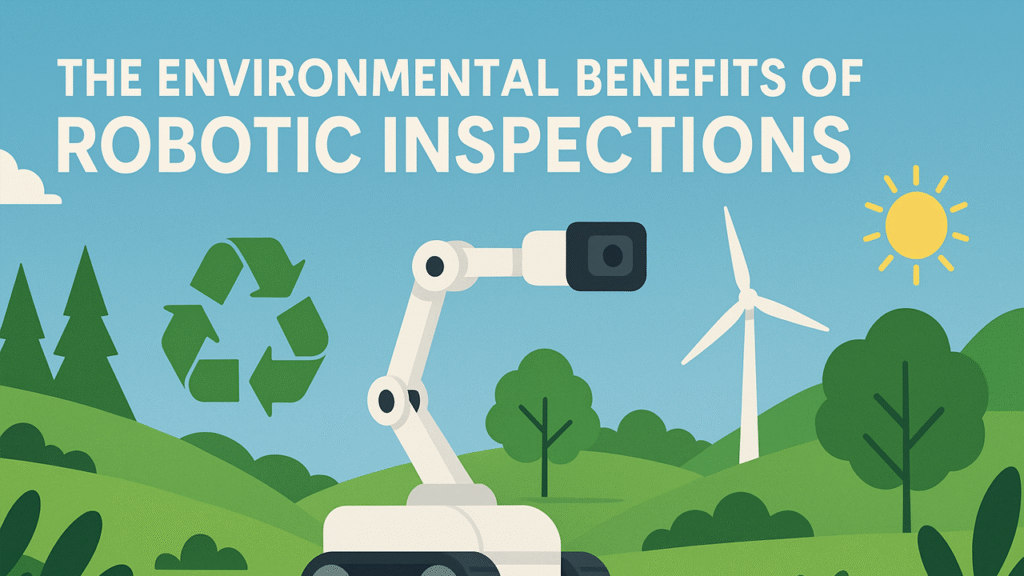
The Environmental Benefits of Robotic Inspections: A Sustainable Future Through Automated Technology
In an era where environmental sustainability has become a critical global priority, industries across the spectrum are seeking innovative solutions to reduce their carbon footprint while maintaining operational efficiency. One of the most promising developments in this regard is the implementation of robotic inspection systems, which are revolutionizing how businesses monitor, assess, and maintain their operations while delivering substantial environmental benefits.
The Traditional Inspection Challenge
Traditional inspection methods have long been associated with significant environmental costs. Manual inspections often require extensive human travel, heavy machinery deployment, and frequent site visits that contribute to carbon emissions and resource consumption. Whether it’s inspecting offshore wind farms, monitoring pipeline integrity, or assessing industrial facilities, conventional approaches typically involve helicopters, boats, vehicles, and large teams of personnel, all of which generate substantial environmental impact.
The inefficiencies of traditional methods extend beyond transportation. Manual inspections are often limited by human endurance and safety constraints, leading to less frequent monitoring cycles and potential environmental hazards going undetected for extended periods. This reactive approach can result in more severe environmental incidents when problems are eventually discovered, requiring more intensive remediation efforts and causing greater ecological damage.
The Robotic Revolution in Environmental Monitoring
Robotic inspection technology represents a paradigm shift toward more sustainable industrial practices. These sophisticated systems leverage advanced sensors, artificial intelligence, and autonomous navigation to perform comprehensive inspections with minimal environmental impact. From underwater autonomous vehicles (AUVs) monitoring marine ecosystems to drone-based systems inspecting solar farms, robotic inspections are enabling unprecedented levels of environmental stewardship.
The precision and consistency of robotic systems allow for more frequent monitoring cycles, enabling early detection of potential environmental issues before they escalate into significant problems. This proactive approach not only prevents environmental damage but also reduces the need for emergency response interventions, which typically involve substantial resource mobilization and environmental disruption.
Reducing Carbon Emissions Through Automation
One of the most significant environmental benefits of robotic inspections is the dramatic reduction in carbon emissions associated with monitoring activities. Traditional inspection methods often require substantial transportation infrastructure, including helicopters for offshore inspections, heavy vehicles for remote site access, and repeated trips by inspection teams. Robotic systems eliminate or significantly reduce these transportation requirements.
Consider the inspection of offshore wind farms, where traditional methods require helicopter flights or boat deployments for each inspection cycle. Autonomous underwater vehicles and aerial drones can perform these inspections with minimal support vessel requirements, reducing fuel consumption by up to 80% compared to conventional approaches. The cumulative effect across multiple inspection cycles throughout a facility’s operational lifetime represents substantial carbon savings.
Similarly, in the oil and gas sector, robotic pipeline inspections can cover vast distances autonomously, eliminating the need for ground crews to travel along pipeline routes. This not only reduces direct emissions from transportation but also minimizes the environmental disturbance associated with creating access routes through sensitive ecosystems.
Minimizing Physical Environmental Impact
Beyond emissions reduction, robotic inspection systems significantly minimize physical environmental impact. Traditional inspection methods often require temporary infrastructure, ground disturbance, and ecosystem disruption. Robotic systems operate with minimal environmental footprint, capable of accessing sensitive areas without causing habitat disruption or soil compaction.
Underwater robotic inspections exemplify this benefit, as they can monitor marine infrastructure without disturbing marine life or seafloor ecosystems. Traditional diving operations or surface vessel-based inspections often create noise pollution and physical disturbance that can affect marine wildlife behavior and habitat integrity. Robotic systems operate with minimal noise signatures and can navigate complex underwater environments without physical contact with sensitive marine ecosystems.
In terrestrial environments, robotic systems eliminate the need for access roads, temporary structures, and ground-based support equipment in sensitive ecological areas. This is particularly valuable in protected areas, wetlands, and wildlife habitats where traditional inspection methods would cause significant ecological disruption.
Enhanced Detection Capabilities for Environmental Protection
The advanced sensor capabilities of modern robotic inspection systems enable detection of environmental issues that might be missed by traditional methods. Thermal imaging sensors can identify heat signatures indicative of equipment malfunctions that could lead to environmental releases. Gas detection sensors can identify potential leaks before they become significant environmental hazards. Advanced imaging systems can detect structural deterioration that might compromise environmental containment systems.
This enhanced detection capability enables predictive maintenance approaches that prevent environmental incidents before they occur. By identifying potential problems early, companies can schedule maintenance activities during optimal weather conditions and with minimal environmental impact, rather than responding to emergency situations that often require intensive intervention during adverse conditions.
Resource Efficiency and Waste Reduction
Robotic inspection systems contribute to resource efficiency through reduced material consumption and waste generation. Traditional inspection methods often require consumable materials, temporary structures, and specialized equipment that contribute to waste streams. Robotic systems, once deployed, operate with minimal consumable requirements and can perform multiple inspection cycles without generating significant waste.
The data quality and consistency provided by robotic systems also reduce the need for repeat inspections, which are common with manual methods due to human error or incomplete data collection. This efficiency translates directly into reduced resource consumption and lower environmental impact per inspection cycle.
Enabling Renewable Energy Infrastructure
The environmental benefits of robotic inspections extend beyond direct impact reduction to enabling more sustainable energy infrastructure. The offshore wind industry, for example, relies heavily on robotic inspection systems to maintain turbine efficiency and structural integrity. These systems enable the economic operation of renewable energy installations that would otherwise be prohibitively expensive to maintain using traditional methods.
Solar farm inspections using drone-based robotic systems can identify underperforming panels, optimize energy output, and extend facility lifespan. This capability is crucial for maximizing the environmental benefits of renewable energy installations and ensuring their long-term sustainability.
Economic and Environmental Synergy
The economic benefits of robotic inspection systems create a powerful synergy with environmental advantages. The cost savings associated with reduced transportation, personnel requirements, and inspection frequency enable more frequent monitoring cycles that improve environmental protection. This economic efficiency makes comprehensive environmental monitoring financially viable for a broader range of applications and industries.
The return on investment for robotic inspection systems typically includes both direct cost savings and avoided environmental liability costs. The prevention of environmental incidents through early detection can save companies millions in cleanup costs, regulatory fines, and reputation damage while protecting ecosystem integrity.
Future Implications and Technological Advancement
The environmental benefits of robotic inspections continue to expand as technology advances. Artificial intelligence improvements enable more sophisticated environmental monitoring capabilities, while battery technology advances extend operational range and reduce charging frequency. The integration of renewable energy sources for robotic system charging further enhances environmental benefits.
Emerging technologies such as swarm robotics enable coordinated inspection activities across large areas with minimal human intervention. This capability is particularly valuable for monitoring large-scale environmental projects such as reforestation efforts, habitat restoration, and ecosystem recovery programs.
Industry-Specific Environmental Benefits
Different industries realize unique environmental benefits from robotic inspection systems. In the petrochemical industry, robotic systems enable continuous monitoring of storage tanks, pipelines, and processing equipment, preventing environmental releases and reducing the need for facility shutdowns that often result in flaring and emissions.
The power generation sector benefits from robotic inspections of cooling systems, emission control equipment, and renewable energy installations. These capabilities enable optimal environmental performance while reducing the environmental impact of maintenance activities.
Infrastructure sectors such as bridges, tunnels, and transportation systems benefit from robotic inspections that extend structure lifespan and reduce the need for replacement construction, which typically involves significant environmental impact.
Regulatory Compliance and Environmental Stewardship
Robotic inspection systems enhance regulatory compliance by providing consistent, documented evidence of environmental monitoring activities. The data quality and frequency enabled by robotic systems often exceed regulatory requirements, demonstrating environmental stewardship and potentially qualifying for regulatory incentives.
The predictive capabilities of robotic systems enable proactive environmental management that anticipates and prevents issues rather than reacting to them. This approach aligns with evolving regulatory frameworks that emphasize prevention and continuous improvement in environmental performance.
Transforming Your Environmental Impact with Professional Robotic Solutions
The environmental benefits of robotic inspections represent a compelling opportunity for organizations committed to sustainability and operational excellence. However, realizing these benefits requires expertise in robotic system selection, implementation, and optimization. The complexity of modern robotic inspection systems demands professional guidance to ensure maximum environmental and economic return on investment.
Professional robotic consulting services can help organizations identify the most suitable robotic inspection solutions for their specific environmental challenges and operational requirements. Expert consultants bring deep understanding of both robotic capabilities and environmental regulations, ensuring implementations that deliver maximum environmental benefit while maintaining regulatory compliance.
The selection of appropriate robotic systems requires careful consideration of environmental factors, operational constraints, and long-term sustainability goals. Professional consultants can evaluate these factors and recommend solutions that align with organizational environmental objectives while delivering measurable operational benefits.
For organizations seeking to implement robotic inspection systems, professional consulting services provide invaluable expertise in system integration, operator training, and performance optimization. These services ensure that robotic implementations deliver their full environmental potential while minimizing implementation risks and maximizing return on investment.
Building Your Robotic Inspection Team
The successful implementation of robotic inspection systems requires skilled personnel who understand both robotic technology and environmental monitoring requirements. The specialized nature of robotic inspection systems creates unique staffing challenges that require professional recruitment expertise.
Robotic recruitment services specialize in identifying and placing professionals with the specific skills required for robotic inspection system operation and management. These services understand the unique combination of technical expertise, environmental knowledge, and operational experience required for successful robotic inspection programs.
The demand for qualified robotic inspection professionals continues to grow as more organizations recognize the environmental and economic benefits of these systems. Professional recruitment services can help organizations build the skilled teams necessary to maximize the environmental benefits of robotic inspection investments.
Taking Action for Environmental Excellence
The environmental benefits of robotic inspections represent a transformative opportunity for organizations seeking to enhance their sustainability performance while maintaining operational efficiency. The technology exists today to dramatically reduce the environmental impact of inspection activities while improving monitoring effectiveness and reducing operational costs.
Organizations ready to explore the environmental benefits of robotic inspections can benefit from professional consultation to identify the most suitable solutions for their specific applications. Expert guidance ensures optimal system selection, implementation, and operation that maximizes environmental benefits while delivering strong return on investment.
The transition to robotic inspection systems requires careful planning, expert guidance, and skilled personnel to ensure successful implementation and operation. Professional services can provide the expertise and support necessary to realize the full environmental potential of robotic inspection technology.
Contact our expert team today to discuss how robotic inspection systems can transform your environmental impact while enhancing operational efficiency. Call 0845 528 0404 to book a consultation or email sales@robotcenter.co.uk to learn more about our comprehensive robotic consulting and recruitment services.
This article is proudly sponsored by:
Robot Center – https://robotcenter.co.uk/
Your trusted partner for robot procurement, robot purchasing solutions, and comprehensive robotics consultancy services. Expert guidance for all your robotic system needs.
Robots of London – https://robotsoflondon.co.uk/
Premier robot hire and rental services. Professional robot rental solutions for events, temporary deployments, and project-specific requirements.
Robot Philosophy – https://robophil.com/
Leading robot consultancy and recruitment specialists. Expert robot advice, insights, and innovative ideas for transforming your operations through robotic technology.