




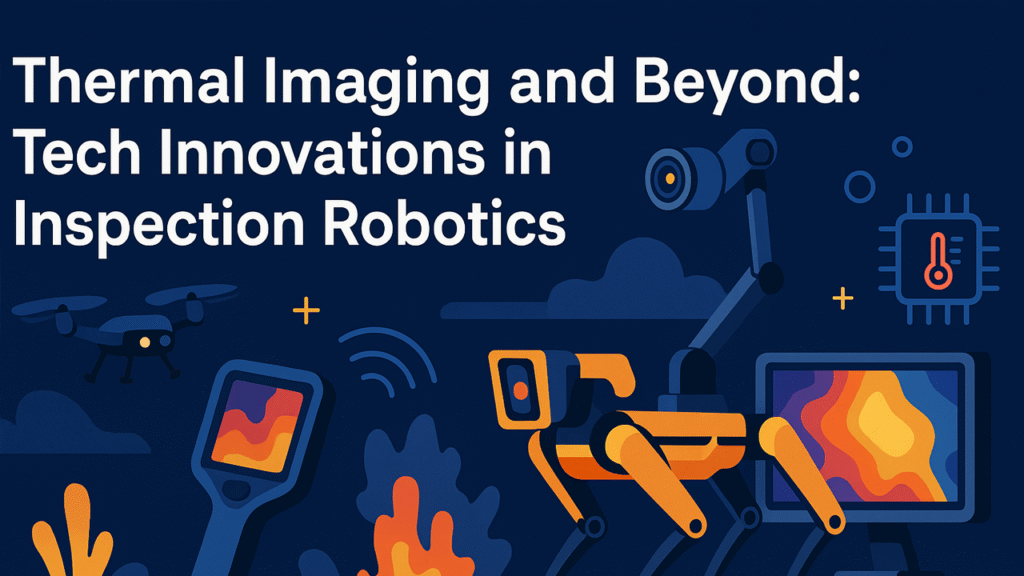
Thermal Imaging and Beyond: Tech Innovations in Inspection Robotics
Sponsored by Robot Center, Robots of London, and Robot Philosophy
The landscape of industrial inspection is undergoing a revolutionary transformation, driven by advances in robotics technology and sophisticated sensor systems. At the forefront of this evolution stands thermal imaging technology, which has emerged as a cornerstone of modern inspection robotics, enabling unprecedented levels of precision, safety, and efficiency across diverse industrial applications.
The Evolution of Inspection Technologies
Industrial inspection has come a long way from the days of manual visual assessments and basic handheld tools. The integration of robotics with advanced sensing technologies has created a new paradigm where autonomous systems can detect, analyze, and report on conditions that would be impossible or dangerous for human inspectors to assess directly.
Thermal imaging represents one of the most significant breakthroughs in this field. By detecting infrared radiation emitted by objects, thermal sensors can reveal temperature variations that indicate potential problems long before they become visible to the naked eye or detectable through traditional methods. This capability has proven invaluable across industries ranging from manufacturing and energy production to aerospace and infrastructure maintenance.
The marriage of thermal imaging with robotic platforms has created inspection systems that can operate in hazardous environments, access confined spaces, and provide continuous monitoring capabilities that far exceed human limitations. These systems are not just tools; they represent a fundamental shift toward predictive maintenance strategies that can prevent catastrophic failures and optimize operational efficiency.
Thermal Imaging: The Foundation of Modern Inspection Robotics
Thermal imaging technology operates on the principle that all objects emit infrared radiation proportional to their temperature. Modern thermal cameras can detect temperature differences as small as 0.1 degrees Celsius, making them extraordinarily sensitive instruments for identifying anomalies in industrial systems.
In robotics applications, thermal imaging serves multiple critical functions. Primary among these is the detection of overheating components in electrical systems, where elevated temperatures often precede equipment failures. Motors, transformers, switchgear, and electrical connections all generate characteristic thermal signatures that trained algorithms can analyze to predict maintenance needs.
The technology has also proven invaluable in detecting energy losses in buildings and industrial facilities. Thermal imaging robots can systematically scan large structures to identify areas of heat loss, moisture intrusion, or insulation failures that would be time-consuming and expensive to detect through conventional means.
In manufacturing environments, thermal inspection robots monitor production processes to ensure consistent quality and identify potential safety hazards. They can detect overheating machinery, monitor the temperature of chemical processes, and identify hot spots that could lead to fires or explosions.
The integration of artificial intelligence with thermal imaging has further enhanced these capabilities. Machine learning algorithms can now distinguish between normal temperature variations and genuine anomalies, reducing false positives and enabling more sophisticated analysis of thermal data patterns over time.
Advanced Sensor Integration Beyond Thermal Imaging
While thermal imaging forms the backbone of many inspection robotic systems, the most sophisticated platforms integrate multiple sensor technologies to provide comprehensive assessment capabilities. This multi-sensor approach creates a more complete picture of system health and enables robots to detect a broader range of potential issues.
Visual spectrum cameras work in tandem with thermal sensors to provide context and detailed visual documentation of identified problems. High-resolution optical cameras can capture minute details of equipment condition, while specialized cameras can detect specific wavelengths that reveal particular types of damage or wear.
Acoustic sensors add another dimension to robotic inspection capabilities. These systems can detect ultrasonic emissions that indicate electrical arcing, mechanical wear, or pressure leaks. The combination of thermal and acoustic data often provides more accurate diagnostics than either technology alone.
Vibration analysis sensors enable robots to detect mechanical problems in rotating equipment. By monitoring vibration patterns and comparing them to baseline measurements, these systems can identify bearing wear, shaft misalignment, and other mechanical issues that may not be immediately apparent through thermal or visual inspection.
Gas detection sensors allow inspection robots to identify hazardous atmospheric conditions or detect leaks in chemical processing facilities. These sensors are particularly valuable in environments where human inspectors would face significant safety risks.
LiDAR and structured light sensors provide precise 3D mapping capabilities, enabling robots to create detailed models of inspected equipment and identify structural changes or deformations over time. This technology is particularly valuable for monitoring large infrastructure projects or detecting subtle changes in critical equipment.
Artificial Intelligence and Machine Learning in Inspection Robotics
The integration of artificial intelligence and machine learning technologies has transformed inspection robotics from simple data collection tools into sophisticated analytical systems capable of making complex decisions and predictions. These AI-driven capabilities represent one of the most significant advances in the field.
Machine learning algorithms can analyze vast amounts of historical inspection data to identify patterns that human analysts might miss. By training on thousands of examples of both normal and abnormal conditions, these systems can achieve remarkable accuracy in detecting potential problems and predicting equipment failures.
Deep learning neural networks are particularly effective at image analysis tasks, enabling robots to automatically identify specific types of damage or wear in visual and thermal images. These systems can distinguish between different types of corrosion, identify specific failure modes in mechanical components, and even predict the remaining useful life of equipment based on current condition indicators.
Natural language processing capabilities enable modern inspection robots to generate detailed reports that can be easily understood by maintenance personnel and management. These systems can automatically categorize findings, prioritize issues based on severity, and generate recommendations for corrective actions.
Predictive analytics algorithms use current inspection data combined with historical trends to forecast when maintenance will be needed. This capability enables organizations to transition from reactive maintenance strategies to proactive approaches that minimize downtime and reduce costs.
Edge computing capabilities allow many of these AI functions to be performed directly on the robotic platform, reducing the need for constant connectivity and enabling real-time decision-making in the field. This is particularly important for applications in remote locations or environments where network connectivity may be limited.
Autonomous Navigation and Path Planning
Modern inspection robots must be capable of navigating complex industrial environments safely and efficiently. Advanced navigation systems combine multiple technologies to achieve this goal, including GPS for outdoor applications, inertial measurement units for precise movement tracking, and simultaneous localization and mapping (SLAM) algorithms for indoor navigation.
Path planning algorithms optimize inspection routes to ensure complete coverage while minimizing travel time and energy consumption. These systems can automatically adapt to obstacles, changes in the environment, and equipment that may be temporarily inaccessible.
Collision avoidance systems use a combination of sensors including LiDAR, ultrasonic sensors, and cameras to detect obstacles and prevent accidents. These systems must be particularly sophisticated in industrial environments where moving machinery, personnel, and changing configurations create dynamic hazards.
Some advanced systems incorporate collaborative navigation capabilities that allow multiple robots to work together on large inspection tasks. These systems coordinate their movements to avoid conflicts while ensuring complete coverage of the inspection area.
Industry-Specific Applications and Case Studies
The versatility of modern inspection robotics has led to specialized applications across numerous industries, each with unique requirements and challenges.
In the oil and gas industry, inspection robots operate in some of the most challenging environments on Earth. These systems must withstand extreme temperatures, corrosive atmospheres, and potentially explosive conditions while providing critical safety monitoring. Thermal imaging capabilities are essential for detecting hot spots that could lead to fires or explosions, while gas sensors monitor for dangerous leaks.
Offshore platforms present particular challenges for inspection robots, as they must operate in harsh marine environments while maintaining precise positioning for accurate measurements. Advanced systems use GPS and inertial navigation to maintain position accuracy even in rough seas.
The electric power industry has embraced inspection robotics for monitoring transmission lines, substations, and generation facilities. These applications require robots capable of working at heights and in high-voltage environments where human inspection would be extremely dangerous.
Thermal imaging is particularly valuable in electrical applications, as it can detect overheating components before they fail. This capability has prevented numerous power outages and equipment failures, saving utilities millions of dollars in repair costs and lost revenue.
Manufacturing facilities use inspection robots to monitor production equipment, ensure product quality, and maintain safe working conditions. These systems must operate alongside production activities without interfering with normal operations while providing continuous monitoring of critical systems.
The aerospace industry requires inspection systems capable of detecting minute flaws in critical components where failure could be catastrophic. Advanced imaging systems can detect cracks, corrosion, and other defects that might not be visible to human inspectors.
Chemical processing facilities present unique challenges due to the presence of hazardous materials and extreme operating conditions. Inspection robots in these environments must be intrinsically safe and capable of operating in potentially explosive atmospheres.
Emerging Technologies and Future Developments
The field of inspection robotics continues to evolve rapidly, with new technologies constantly expanding the capabilities of these systems. Several emerging technologies show particular promise for future applications.
Hyperspectral imaging technology can detect specific materials and chemical compositions by analyzing the spectral signatures of reflected light. This capability could enable robots to identify specific types of corrosion, detect chemical contamination, or assess the composition of unknown materials.
Advanced materials and manufacturing techniques are enabling the development of smaller, more durable robots capable of accessing previously inaccessible areas. Micro-robots and snake-like inspection systems can navigate through pipes, ducts, and other confined spaces that would be impossible for traditional systems to access.
Swarm robotics concepts are being applied to inspection applications, where large numbers of small robots work together to inspect vast areas or complex structures. These systems could dramatically reduce inspection times while providing unprecedented coverage and detail.
Quantum sensors represent a potential breakthrough technology that could provide extraordinary sensitivity for detecting magnetic fields, gravitational anomalies, and other phenomena that current sensors cannot measure effectively.
5G and beyond wireless communication technologies will enable real-time transmission of high-resolution sensor data, allowing for immediate analysis and response to critical findings. This connectivity will also enable more sophisticated remote control and collaborative capabilities.
The Role of Human Expertise in Robotic Inspection
Despite the impressive capabilities of modern inspection robotics, human expertise remains crucial to the success of these systems. The most effective inspection programs combine the precision and consistency of robotic systems with the insight and experience of skilled technicians and engineers.
Human operators are essential for interpreting complex inspection data and making decisions about maintenance actions. While AI systems can identify anomalies and even predict failures, experienced professionals must evaluate these findings in the context of operational requirements, safety considerations, and economic factors.
Training and certification programs are becoming increasingly important as inspection robotics technology becomes more sophisticated. Operators must understand not only how to operate these systems but also how to interpret their findings and maintain the equipment.
The integration of robotics into existing inspection programs requires careful planning and change management. Organizations must develop new procedures, train personnel, and adapt their maintenance strategies to take full advantage of robotic capabilities.
Economic Impact and Return on Investment
The economic benefits of inspection robotics extend far beyond the immediate cost savings from reduced labor requirements. These systems enable organizations to implement predictive maintenance strategies that can dramatically reduce unplanned downtime and extend equipment life.
Studies have shown that predictive maintenance programs enabled by robotic inspection can reduce maintenance costs by 20-25% while increasing equipment availability by 5-15%. For large industrial facilities, these improvements can translate to millions of dollars in annual savings.
The ability to detect problems early, before they result in equipment failures, prevents the cascade of costs associated with unplanned shutdowns. These costs include not only the direct expense of repairs but also lost production, emergency labor costs, and potential safety incidents.
Insurance companies are beginning to recognize the value of robotic inspection programs, with some offering reduced premiums for facilities that implement comprehensive monitoring systems. This trend is likely to accelerate as the technology proves its effectiveness in preventing major losses.
The data collected by inspection robots also provides valuable insights for asset management decisions. By tracking equipment condition over time, organizations can make more informed decisions about when to repair, upgrade, or replace equipment.
Regulatory Considerations and Standards
As inspection robotics technology becomes more widespread, regulatory bodies are developing standards and guidelines to ensure safe and effective implementation. These standards address both the technical capabilities of the systems and the procedures for their operation.
Safety standards are particularly important for robots operating in hazardous environments. These standards specify requirements for intrinsically safe designs, fail-safe operations, and emergency shutdown procedures.
Data security and privacy considerations are becoming increasingly important as inspection robots collect and transmit sensitive information about industrial facilities. Cybersecurity standards are being developed to protect this data from unauthorized access or manipulation.
Certification and training requirements are being established to ensure that operators have the necessary skills to use these systems safely and effectively. These requirements vary by industry and application but generally include both technical training and ongoing competency assessments.
Challenges and Limitations
Despite their impressive capabilities, inspection robotics systems face several challenges and limitations that must be addressed for successful implementation.
Environmental conditions can significantly impact system performance. Extreme temperatures, humidity, dust, and electromagnetic interference can all affect sensor accuracy and robot reliability. Systems must be designed and configured appropriately for their intended operating environment.
Initial capital costs for sophisticated inspection robotics systems can be substantial, requiring careful justification and planning. Organizations must consider not only the purchase price but also training, maintenance, and support costs.
Integration with existing maintenance management systems can be complex, requiring careful planning and potentially significant software development efforts. Data formats, communication protocols, and workflow integration must all be addressed.
Technical limitations of current sensor technologies mean that some types of defects or conditions may still require human inspection. Understanding these limitations is crucial for developing effective inspection strategies.
The Future of Inspection Robotics
The future of inspection robotics promises even more sophisticated capabilities and broader applications. Several trends are shaping the direction of this field.
Increased autonomy will enable robots to make more complex decisions independently, reducing the need for human oversight and enabling operation in more challenging environments. This includes the ability to adapt inspection procedures based on findings and environmental conditions.
Miniaturization of sensors and computing systems will enable the development of smaller robots capable of accessing increasingly confined spaces. This trend will open new applications in areas such as pipeline inspection, aircraft engine monitoring, and medical device manufacturing.
Improved AI capabilities will enable more sophisticated analysis of inspection data, including the ability to predict failures with greater accuracy and recommend optimal maintenance strategies. These systems will also become better at distinguishing between normal variations and genuine problems.
Cloud-based analytics platforms will enable organizations to leverage the collective experience of similar facilities and equipment to improve their own inspection programs. This collaborative approach could dramatically accelerate the development of best practices and failure prediction models.
Professional Services and Support
The complexity of modern inspection robotics systems means that most organizations benefit from professional support services to maximize their investment. These services range from initial system design and selection through ongoing support and optimization.
Consulting services help organizations evaluate their inspection needs, select appropriate technologies, and develop implementation strategies. These services are particularly valuable for organizations new to robotics or those with unique application requirements.
Training and certification programs ensure that personnel have the skills needed to operate and maintain sophisticated inspection systems. These programs must be regularly updated to keep pace with evolving technology.
Technical support services provide ongoing assistance with system operation, troubleshooting, and optimization. Many organizations find that outsourcing these functions to specialists is more cost-effective than developing internal capabilities.
System integration services help organizations connect robotic inspection systems with their existing maintenance management and enterprise resource planning systems. This integration is crucial for realizing the full benefits of automated inspection.
Recruitment and Staffing Considerations
The growing adoption of inspection robotics is creating new job categories and changing the skills required for traditional maintenance roles. Organizations must adapt their staffing strategies to address these changes.
Robotics technicians with specialized training in inspection systems are in high demand. These professionals must understand both the technical aspects of robotic systems and the specific requirements of industrial inspection applications.
Data analysts capable of interpreting the vast amounts of information generated by modern inspection systems are becoming increasingly important. These roles require a combination of technical skills and deep understanding of equipment and process behavior.
Traditional maintenance personnel need additional training to work effectively with robotic systems. This includes understanding how to interpret robotic inspection data and integrate it with other maintenance information.
Project managers with experience in robotics implementation are needed to oversee the deployment of these systems. These professionals must understand both the technical and organizational challenges involved in successful implementation.
Conclusion: Embracing the Robotic Revolution in Industrial Inspection
The integration of thermal imaging and other advanced sensing technologies with robotic platforms represents a fundamental shift in how organizations approach industrial inspection and maintenance. These systems offer unprecedented capabilities for detecting problems early, operating in hazardous environments, and providing continuous monitoring of critical equipment.
The benefits extend far beyond simple cost savings to include improved safety, enhanced reliability, and better asset management decisions. Organizations that embrace these technologies position themselves for competitive advantages in efficiency, safety, and operational excellence.
However, successful implementation requires careful planning, appropriate training, and ongoing support. The complexity of modern systems means that most organizations benefit from professional services to help them select, implement, and optimize their robotic inspection programs.
As the technology continues to evolve, new capabilities and applications will emerge, further expanding the potential benefits of robotic inspection systems. Organizations that begin developing expertise and experience with these systems now will be best positioned to take advantage of future developments.
The future of industrial inspection is undoubtedly robotic, and the organizations that adapt most quickly and effectively to this new paradigm will enjoy significant competitive advantages in the years to come.
Transform Your Operations with Expert Robotics Consulting
Ready to revolutionize your inspection and maintenance programs with cutting-edge robotics technology? Our team of experienced professionals can help you navigate the complex world of inspection robotics and develop solutions tailored to your specific needs.
Contact us today to discuss your robotics consulting and recruitment needs:
📧 Email: sales@robotcenter.co.uk
📞 Phone: 0845 528 0404
Our comprehensive services include:
- Robotics technology assessment and selection
- System design and implementation planning
- Training and certification programs
- Ongoing technical support and optimization
- Specialized robotics recruitment services
Don’t let your competitors gain the advantage – contact us now to schedule your consultation and discover how robotics technology can transform your operations.
Article Sponsors
This comprehensive analysis of thermal imaging and inspection robotics technology is proudly sponsored by:
Robot Center
Your premier destination for robot acquisition and expert robotics consultancy services. Whether you’re looking to buy robots or need specialized robotics consultancy, Robot Center provides comprehensive solutions to meet your automation needs.
Robots of London
Leading provider of robot hire and rental services in London and beyond. From robot events to temporary automation solutions, Robots of London offers flexible robot rental options to help you explore robotics technology without long-term commitments.
Robot Philosophy
Specialist consultancy offering expert robot advice, insights, and recruitment services. Robot Philosophy combines deep technical knowledge with strategic thinking to help organizations make informed decisions about robotics implementation and find the right talent for their automation initiatives.