




Why More Restaurants Are Hiring Robots for Front-of-House Roles
Sponsored by: Robot Center | Robots of London | Robot Philosophy
The restaurant industry is experiencing a technological revolution that’s transforming the dining experience as we know it. From bustling city bistros to family-friendly chain restaurants, robotic servers are increasingly becoming a familiar sight, gliding between tables with precision and charm. This isn’t science fiction—it’s the new reality of hospitality, and it’s reshaping how restaurants operate, serve customers, and manage their workforce.
The Rise of the Robot Server
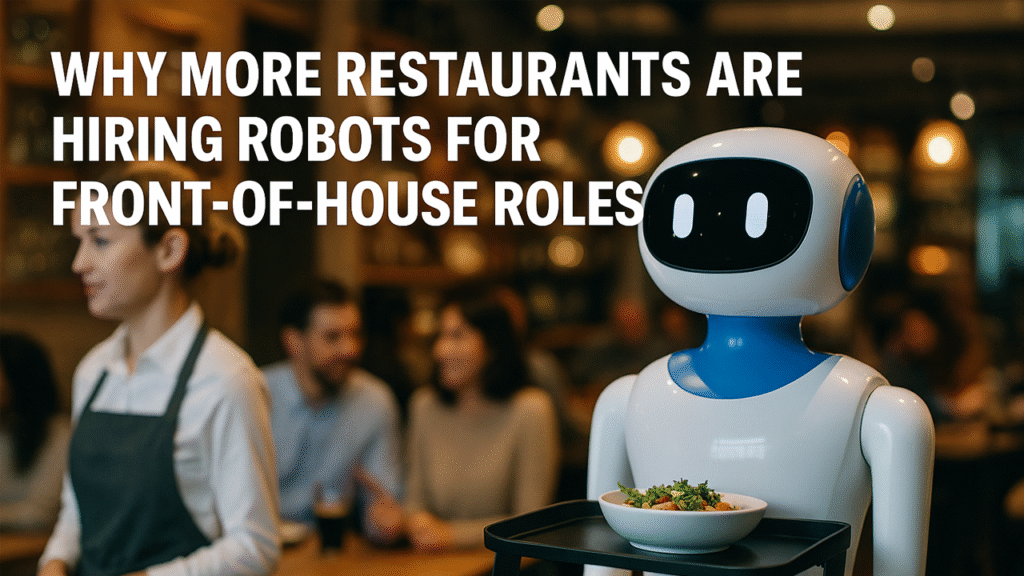
Walk into certain restaurants today, and you might be greeted not by a human host, but by a sleek, mobile robot with a friendly digital face. These sophisticated machines are taking on front-of-house responsibilities that were once exclusively human territory: greeting guests, delivering food, clearing tables, and even providing entertainment.
The acceleration of robot adoption in restaurants has been remarkable. What started as experimental deployments in tech-forward Asian markets has rapidly expanded across Europe and North America. Industry analysts estimate that thousands of restaurants worldwide now employ service robots, with projections suggesting exponential growth over the next five years.
But why are restaurant owners increasingly turning to robotic staff? The answer lies in a convergence of technological advancement, economic pressures, and shifting consumer expectations.
The Perfect Storm: Why Restaurants Are Turning to Robots
The Labour Crisis
The hospitality industry faces an unprecedented staffing challenge. Post-pandemic workforce dynamics have fundamentally altered the labour landscape, with restaurants struggling to recruit and retain quality staff. High turnover rates, demanding work conditions, and relatively modest wages have made front-of-house positions increasingly difficult to fill.
This isn’t merely about filling vacancies—it’s about maintaining consistent service standards when human staff shortages threaten operational continuity. Robots offer a solution that doesn’t call in sick, doesn’t require holiday cover, and works tirelessly throughout service hours.
Economic Efficiency
While the initial investment in service robots might seem substantial—typically ranging from £10,000 to £50,000 per unit—the long-term economics are compelling. When calculated over a typical five-year lifespan, the cost per hour of robot operation can be significantly lower than human labour, particularly when considering wages, National Insurance contributions, pension contributions, training costs, and benefits.
Moreover, robots can work continuously without breaks, maximising operational efficiency during peak service periods. One robot can often handle the delivery capacity of multiple human servers, particularly for the repetitive task of transporting food from kitchen to table.
Consistency and Reliability
Robots deliver unwavering consistency. They follow programmed routes with precision, don’t forget orders, and maintain the same level of performance regardless of how busy the service becomes. This reliability is particularly valuable in high-volume establishments where maintaining service standards during rushes is challenging.
The technology has matured considerably. Modern restaurant robots feature advanced navigation systems, obstacle avoidance capabilities, and increasingly sophisticated interaction capabilities. They can navigate crowded dining rooms, avoid collisions with staff and customers, and even communicate with diners through touchscreens and voice systems.
The Entertainment Factor
There’s an undeniable novelty appeal. Diners, particularly families with children, often find robot servers entertaining and Instagram-worthy. This “wow factor” serves as a marketing tool, generating social media buzz and attracting curious customers who want to experience robot service firsthand.
Forward-thinking restaurants have discovered that robotic staff can enhance brand identity, positioning establishments as innovative and tech-savvy—attributes that resonate with younger, digitally-native demographics.
What Robots Actually Do in Restaurants
Today’s restaurant robots are primarily focused on specific, repetitive tasks rather than replacing the entire human service experience:
Food and Beverage Delivery: This is the primary function. Robots collect prepared dishes from the kitchen pass and transport them to designated tables. Diners typically retrieve their plates from the robot’s trays, and the robot returns to the kitchen for the next delivery.
Bussing Tables: Some robots are programmed to clear dirty dishes, collecting used plates and glassware and transporting them back to the dishwashing area.
Greeting and Wayfinding: In larger establishments, robots can greet customers at the entrance and guide them to their tables, or direct them to facilities like restrooms.
Promotional Activities: Robots can display marketing messages, announce special offers, or even sing birthday greetings to celebrating guests.
Contactless Delivery: In the post-pandemic environment, robots provide a hygienic, contactless delivery method that some customers prefer.
It’s important to note what robots typically don’t do: take orders, handle payments, make recommendations, address complaints, or provide the nuanced emotional intelligence that defines excellent human hospitality. The most successful implementations use robots to augment human staff rather than replace them entirely.
The Human-Robot Collaboration Model
The most effective restaurant operations aren’t choosing between humans or robots—they’re discovering how both can work together synergistically.
In this collaborative model, human staff focus on high-value interactions: greeting guests warmly, explaining menu items, making personalised recommendations, handling special requests, resolving concerns, and creating the emotional connection that transforms a meal into a memorable experience. Meanwhile, robots handle the physical labour of transporting items, freeing human servers from countless trips between kitchen and dining room.
This division of labour allows human servers to cover more tables effectively, as they’re not spending time on transportation. Servers can remain in the dining area, attentive to customer needs, while robots shuttle back and forth. The result is often improved customer service alongside operational efficiency.
Staff feedback has been generally positive. After initial apprehension, many servers appreciate the reduction in physical strain. Carrying heavy trays repeatedly throughout a shift takes its toll on feet, backs, and shoulders. Robots bear this burden, potentially extending human servers’ career longevity and reducing workplace injuries.
Real-World Success Stories
Several restaurant chains and independent establishments have reported impressive results from robot integration:
A prominent Asian fusion restaurant chain in London reported a 30% increase in table turnover after deploying delivery robots, as food reached tables faster and servers could seat new guests more quickly.
A family-style pizza restaurant found that children’s fascination with their robot server “Bella” increased family visits by 15%, with parents appreciating the entertainment value that kept young diners engaged.
An upscale gastropub utilised robots for the less glamorous task of bussing tables, allowing their human staff to maintain a refined service presence without the interruption of clearing plates during the meal.
Challenges and Limitations
Despite the advantages, restaurant robotics isn’t without challenges:
Initial Investment: The upfront cost remains significant, particularly for independent restaurants operating on tight margins. Financing options and robot hire services are emerging to address this barrier.
Technical Limitations: Robots struggle with stairs, uneven surfaces, and highly congested spaces. Restaurant layouts may require modification, including clear pathways and level floors. They also can’t handle complex tasks like pouring wine, explaining ingredients to customers with allergies, or managing the nuanced social dynamics of service.
Maintenance and Downtime: Like any technology, robots require maintenance, software updates, and occasional repairs. A malfunctioning robot during peak service can disrupt operations.
Customer Reception: While many diners find robots novel and entertaining, others prefer traditional human service. Some perceive robot service as impersonal or gimmicky, particularly in fine dining contexts where personal attention is paramount.
Staff Training: Human employees need training on how to work effectively alongside robots, including how to load them correctly, initiate delivery sequences, and troubleshoot basic issues.
The Future of Restaurant Robotics
The technology continues to evolve rapidly. Next-generation restaurant robots will feature:
- Enhanced AI capabilities for more natural customer interactions and better navigation
- Improved manipulation abilities to handle a wider range of tasks
- Better integration with restaurant management systems, POS, and kitchen display systems
- Multi-functional designs that can switch between delivery, bussing, and other tasks
- More sophisticated sensors for navigating increasingly complex environments
Industry experts predict that robot adoption will accelerate, particularly as labour costs rise and technology costs decrease. We may see robots becoming as commonplace in restaurants as digital payment systems or online ordering platforms.
However, the human element of hospitality will remain irreplaceable. The most successful restaurants will be those that thoughtfully integrate technology to enhance, rather than eliminate, the human touch that defines exceptional dining experiences.
Is Robot Service Right for Your Restaurant?
Not every establishment will benefit from robotic staff. Restaurants should consider several factors:
Service Volume: High-volume operations with substantial food delivery needs see the greatest ROI. If your establishment serves hundreds of covers per service, robots can significantly improve efficiency.
Layout: Restaurants with accessible, level floor plans and clear pathways between kitchen and dining areas are ideal. Multi-level establishments or those with tight, winding layouts face greater challenges.
Service Style: Casual dining, fast-casual, and family restaurants often integrate robots more successfully than fine dining establishments where personal service is central to the experience.
Customer Demographics: Tech-savvy, family-oriented, or novelty-seeking customer bases tend to respond more enthusiastically to robot service.
Staffing Challenges: If your establishment struggles with recruitment, retention, or maintaining service levels during busy periods, robots offer practical solutions.
Making the Transition: Professional Guidance Matters
Implementing restaurant robotics isn’t simply a matter of purchasing equipment and switching it on. Successful integration requires careful planning, staff training, operational adjustments, and ongoing support.
This is where professional robotics consulting becomes invaluable. Expert consultants can assess your specific operational needs, recommend appropriate robotic solutions, guide implementation, train your team, and provide ongoing support to ensure your investment delivers expected returns.
Robot consultancy services help you navigate critical decisions:
- Which robot models best suit your service style and floor plan?
- How should workflows be restructured to optimise human-robot collaboration?
- What ROI can you realistically expect, and over what timeframe?
- How do you maintain customer service quality during the transition?
- What maintenance and support will be required?
For restaurants wanting to experiment before committing to purchase, robot hire and rental services offer an excellent testing ground. You can trial robots during your busiest periods, gauge customer reception, and train staff without the full capital investment. This “try before you buy” approach significantly reduces risk.
Take the Next Step Towards Restaurant Innovation
The transformation of restaurant service is happening now, and establishments that embrace intelligent automation are positioning themselves for competitive advantage. Whether you’re exploring robotics for the first time or ready to expand your existing robotic workforce, expert guidance ensures successful implementation.
Discover how robotics can transform your restaurant operation:
📞 Book a consultation call: 0845 528 0404
✉️ Email our robotics specialists: sales@robotcenter.co.uk
Our team of robotics experts will conduct a comprehensive assessment of your restaurant, discuss your specific challenges and goals, and develop a tailored robotics strategy that aligns with your operational needs and budget.
From initial consultation through implementation and beyond, we provide end-to-end support to ensure your robotic investment delivers measurable results. We also offer specialist robot recruitment services, helping you identify the perfect robotic solutions for your unique requirements.
Don’t let staffing challenges and operational inefficiencies hold your restaurant back. Explore how the right combination of human talent and robotic efficiency can elevate your service, delight your customers, and improve your bottom line.
Contact us today to schedule your no-obligation consultation.
About Our Sponsors
Robot Center – Your comprehensive destination for robot purchase and robotics consultancy services. Whether you’re looking to buy robots or need expert consultancy to guide your automation journey, Robot Center provides the expertise and technology solutions to transform your business operations.
Robots of London – The premier robot hire and rental service for businesses and events. From short-term trials to extended deployments, Robots of London makes cutting-edge robotics accessible through flexible rental arrangements. Perfect for testing robots in your restaurant before committing to purchase, or adding robotic excitement to special events.
Robot Philosophy – Founded by RoboPhil (Philip English), a leading Robot YouTuber, Influencer, Consultant, Trainer, and Streamer in the robotics space. Robot Philosophy offers specialist robot consultancy and robot recruitment services, providing strategic insights, practical advice, and innovative ideas to help businesses successfully navigate their robotics transformation. With extensive industry knowledge and hands-on experience, RoboPhil delivers the expertise you need to make informed robotics decisions.
The future of restaurant service is here. Are you ready to join the revolution?
Call 0845 528 0404 or email sales@robotcenter.co.uk today.
https://www.youtube.com/watch?v=NSwNndNjw7Y
https://www.youtube.com/shorts/vek7RsD-RyQ